
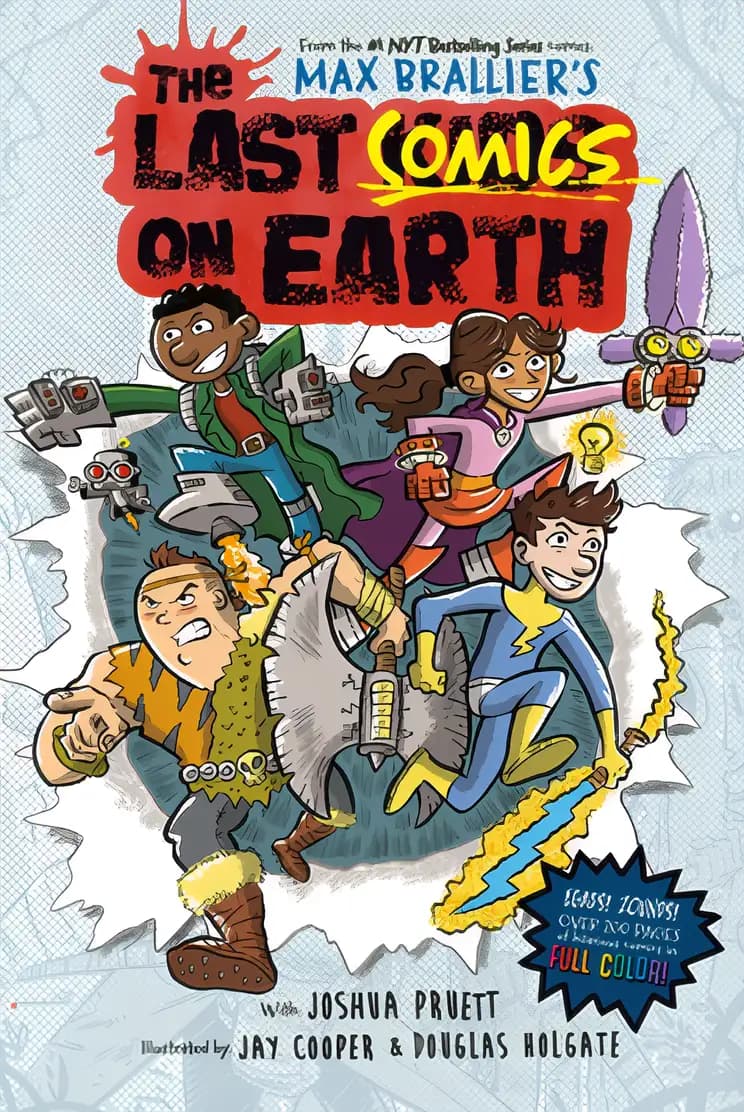
The Last Comics on Earth: From the Creators of The Last Kids on Earth
#1 of 9 in The Last Kids on Earth Series
What’s inside...
The Last Kids on Earth are creating their own comic book in a full-color graphic novel spin-off series. Jack, Quint, June, and Dirk face a new challenge when they discover that their favorite comic, Z-Man, has ended with no new issues in sight due to the apocalypse. Determined to continue the legacy, they decide to write and illustrate their own comic book, casting themselves as the superhero protectors of the mysterious city of Apocalyptia. However, their journey is filled with unexpected challenges and humorous mishaps.
Character compass
Jack Sullivan
June Del Toro
Dirk Savage
Quint Baker
Discussion points
How do you think the characters felt when they discovered they were the last comics on Earth?
What would you do if you were in the situation of the main characters?
Which character do you relate to the most and why?
How do the friendships in the story change or grow throughout the book?
What lessons can we learn about teamwork and resilience from the story?
Tip: Role play these questions
Use expressive reading to keep your child engaged and help them understand the emotions of the characters.
Pause at suspenseful moments to ask your child what they think might happen next, encouraging predictive thinking.
After finishing the book, encourage your child to draw or write what they imagine could be the next adventure for the characters.
Discuss the problem-solving tactics used by the characters and relate them to real-life scenarios your child could face.
Highlight the value of friendship and teamwork shown in the book and relate it to your child’s experiences with friends or in school.
Key lessons
Example Lesson: Teamwork and Collaboration
Explanation: The characters in 'The Last Comics on Earth' must work together to overcome challenges and obstacles, demonstrating the power of teamwork.
Real-World Application: Children can apply this lesson by participating in group activities or projects at school, learning how to collaborate and value each team member's contribution.
Example Lesson: Creativity and Innovation
Explanation: The story showcases characters using their imaginative skills to solve problems, emphasizing the importance of creativity.
Real-World Application: Children are encouraged to use their imagination in play or academics, potentially leading to innovative solutions to everyday challenges.
Example Lesson: Resilience in the face of adversity
Explanation: Characters in the book often encounter difficult situations but learn to persevere and not give up, highlighting resilience.
Real-World Application: This teaches children to remain determined and resilient despite setbacks or failures in tasks such as learning a new skill or dealing with schoolwork.
Example Lesson: Importance of Humor
Explanation: The use of comics and humor in the book demonstrates how laughing can ease tensions and improve situations, underscoring the importance of finding joy even when times are tough.
Real-World Application: Children learn to approach life's challenges with a positive attitude and find moments of joy and laughter to help cope with stress.