
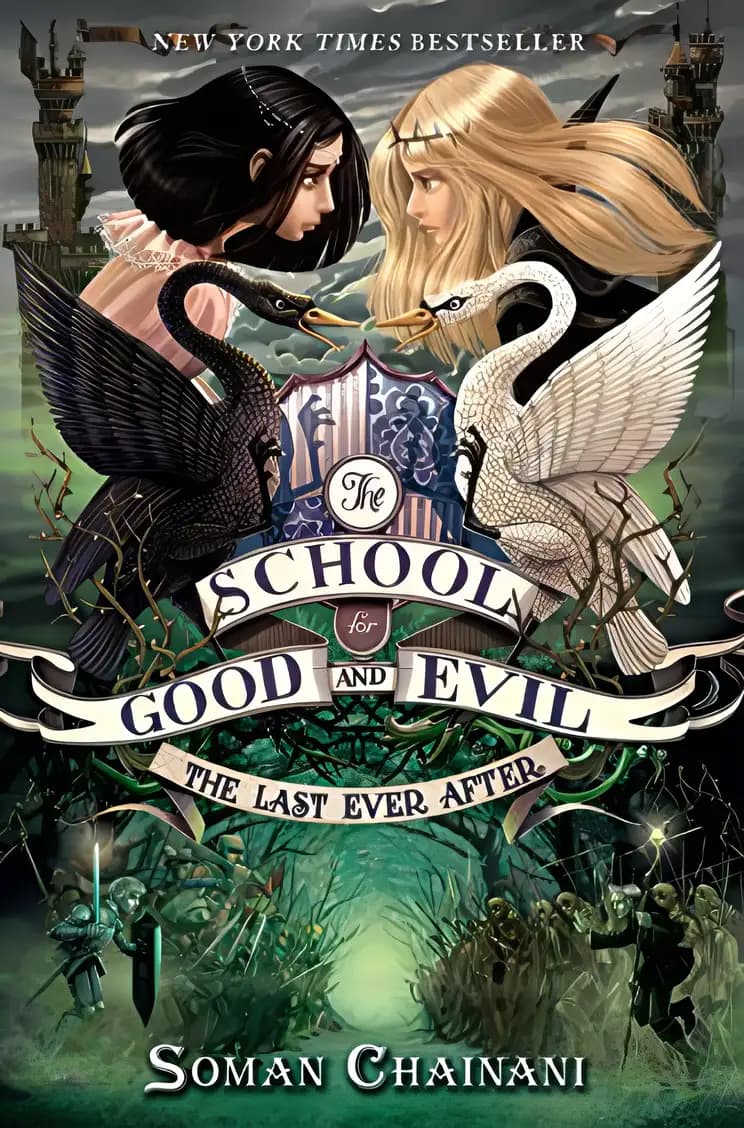
The Last Ever After
#3 of 6 in The School for Good and Evil Series
on Goodreads (45,429)
What’s inside...
In the epic conclusion to Soman Chainani's New York Times bestselling School for Good and Evil trilogy, everything old is new again, as Sophie and Agatha fight the past as well as the present to find the perfect end to their fairy tale. Former best friends Sophie and Agatha thought their ending was sealed when they went their separate ways, but their storybook is about to be rewritten, and this time theirs isn't the only one. With the girls apart, Evil has taken over and the forces of Good are in deathly peril. Will Agatha and Sophie be able to work together to save them? Will they find their way to being friends again? And will their new ending be the last Ever After they've been searching for? Soman Chainani delivers action, adventure, laughter, romance, and more twists than ever before in this extraordinary end to his epic series. Additionally, THE SCHOOL FOR GOOD AND EVIL has been adapted into a movie, now streaming on Netflix, starring Academy Award winner Charlize Theron, Kerry Washington, Laurence Fishburne, Michelle Yeoh, Sofia Wylie, Sophie Anne Caruso, Jamie Flatters, Earl Cave, Kit Young, and many others.
Character compass
Agatha
Tedros
Dot
Hester
Anadil
Professor Clarissa Dovey
Merlin
Sophie
Rafal (The School Master)
Pollux the Dog
School Master
Ravan
Professor Bilious Manley
Yuba the Gnome
Castor the Dog
Stefan
Hort
Aric
August Sader
Nimue- Lady of the Lake
Leonora Lesso
Professor Aleksander Lukas
Professor Rumi Espada
Professor Emma Anemone
Professor Sheeba Sheeks
Princess Uma
Callis
Nicholas
Guinevere
Lady Pocus
Lancelot du Lac
Reaper Cat
Discussion points
How did Sophie and Agatha's friendship change throughout the story? What does this teach us about the nature of true friendship?
What choices did the characters make that showed their true values? How can we apply this to our own decisions?
Do you think good and evil are always clearly defined? How do the characters in the story challenge the traditional notions of these concepts?
How does the ending reshape your thoughts about 'happily ever after'? What alternative endings could you imagine for the characters?
Tip: Role play these questions
Encourage your child to express their thoughts and feelings about the characters’ journeys, focusing on moments where they faced difficult choices. Ask them how they would have acted in similar situations. Highlight the importance of understanding multiple perspectives by discussing the motivations behind different characters’ actions. Emphasize the growth and evolution of characters over time, asking your child to reflect on moments that signified personal development or changes in perspective.
Key lessons
Example Lesson: The importance of friendship and loyalty
Explanation: In 'The Last Ever After,' the characters demonstrate unwavering support and loyalty to each other amidst challenges, reinforcing the value of true friends.
Real-World Application: Children can learn to value and nurture their friendships, understanding the significance of standing by their friends in various situations in their daily lives.
Example Lesson: Courage and perseverance
Explanation: The protagonists face numerous obstacles but persist in their quest, teaching readers that courage and perseverance are key to overcoming difficulties.
Real-World Application: This lesson can inspire children to tackle challenges in their academics or personal pursuits with determination and not be easily discouraged by setbacks.
Example Lesson: The complexity of good and evil
Explanation: The book explores the gray areas between good and evil, showing characters grappling with moral dilemmas, which highlights the complexity of these concepts.
Real-World Application: Children can learn to think critically about ethics and morality, and apply these considerations when making choices, understanding that not every decision is clear-cut.
Example Lesson: The power of choice and consequences
Explanation: Throughout the story, characters make choices that lead to significant consequences, illustrating the impact of decisions.
Real-World Application: This lesson helps children understand that their choices matter and encourages them to think about potential outcomes before deciding.
Example Lesson: Resilience in the face of adversity
Explanation: Characters often rebound from defeats, demonstrating resilience, which is crucial for personal growth and success.
Real-World Application: By observing this resilience, children can learn to adapt and bounce back from their own challenges and failures in life, fostering a resilient mindset.