
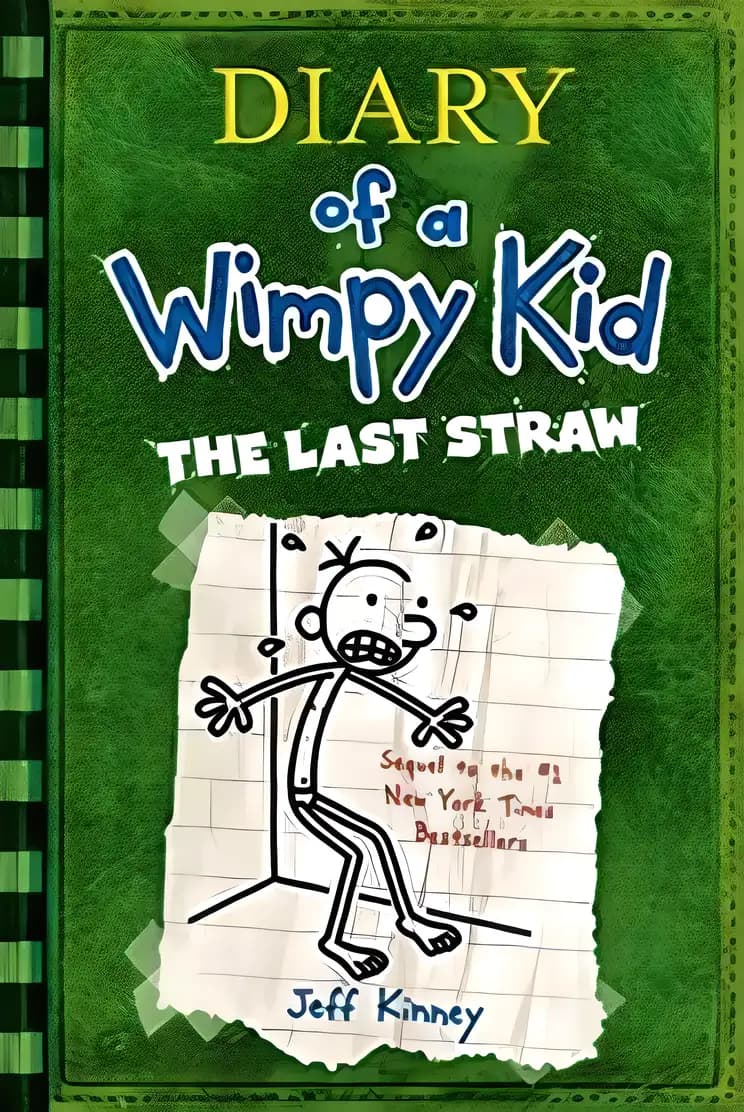
The Last Straw
#3 of 19 in The Diary of a Wimpy Kid Series
on Goodreads (164,583)
What’s inside...
The book is the third installment in the Diary of a Wimpy Kid series. It follows the protagonist, Greg Heffley, as he navigates the pressures of boyhood. His father threatens to send him to military school if he doesn't shape up. Amidst all this, Greg is determined to prove that he can be responsible and tough, but his actions often lead to hilarious consequences. Greg’s father, Frank Heffley, thinks he can get his son to toughen up by enlisting him in organized sports and other 'manly' endeavors. However, Greg is able to easily sidestep his father’s efforts. But when the threat of military academy becomes real, Greg realizes he has to shape up or get shipped out.
Character compass
Greg Heffley
Rowley Jefferson
Frank Heffley
Holly Hills
Discussion points
How does Greg handle challenges differently from his friends or family, and what can we learn from that?
In what ways do Greg's creative plans and ideas lead to unexpected outcomes, and what does that tell us about thinking things through?
How do the actions of Greg's older brother affect him, and what does this book teach us about sibling relationships?
Can you think of a time when you felt like everything was piling up like 'the last straw'? How did you deal with it?
What lesson do you think Greg learned by the end of the story, and how can we apply this lesson in our own lives?
Tip: Role play these questions
Draw parallels between Greg's experiences and your child's personal life to deepen their connection with the story.
Encourage your child to consider different perspectives by asking how they might feel in Greg’s shoes.
Discuss the consequences of actions with your child, using examples from the book to highlight the outcomes of various choices.
Promote empathy by exploring the emotions of different characters and asking your child how they might support a friend in similar situations.
Reinforce the understanding of cause and effect through discussing how Greg’s actions lead to various events in the story.
Key lessons
Example Lesson: Responsibility
Explanation: The protagonist, Greg, faces several situations where he has to take responsibility for his own actions. When his plans often backfire, he learns the importance of accountability.
Real-World Application: Children can learn to own their actions and understand the consequences, which is essential for personal development and forming trust in relationships.
Example Lesson: Perseverance
Explanation: Throughout the story, Greg faces numerous challenges but continues to try and achieve his goals, demonstrating the value of perseverance despite difficulties or setbacks.
Real-World Application: This lesson can help children understand that difficulties are a part of life, and persisting through them is crucial for achieving goals.
Example Lesson: Honesty
Explanation: Greg learns that being truthful is important after his dishonesty leads to complications, showing that honesty often simplifies situations rather than complicates them.
Real-World Application: Children can learn to be honest in their daily interactions, which helps in building integrity and gaining trust from others.
Example Lesson: Empathy
Explanation: In the book, Greg sometimes struggles to understand his friends and family’s feelings, but he gradually learns to see things from other people's perspectives.
Real-World Application: This can encourage children to consider others' feelings and viewpoints, fostering empathy and improving social interactions.
Example Lesson: Dealing with Change
Explanation: Greg has to adapt to several changes, whether it’s dealing with family dynamics or school. This highlights the inevitability and acceptance of change.
Real-World Application: It helps children learn to adapt to changes in their own lives, whether at school or at home, promoting resilience and flexibility.