
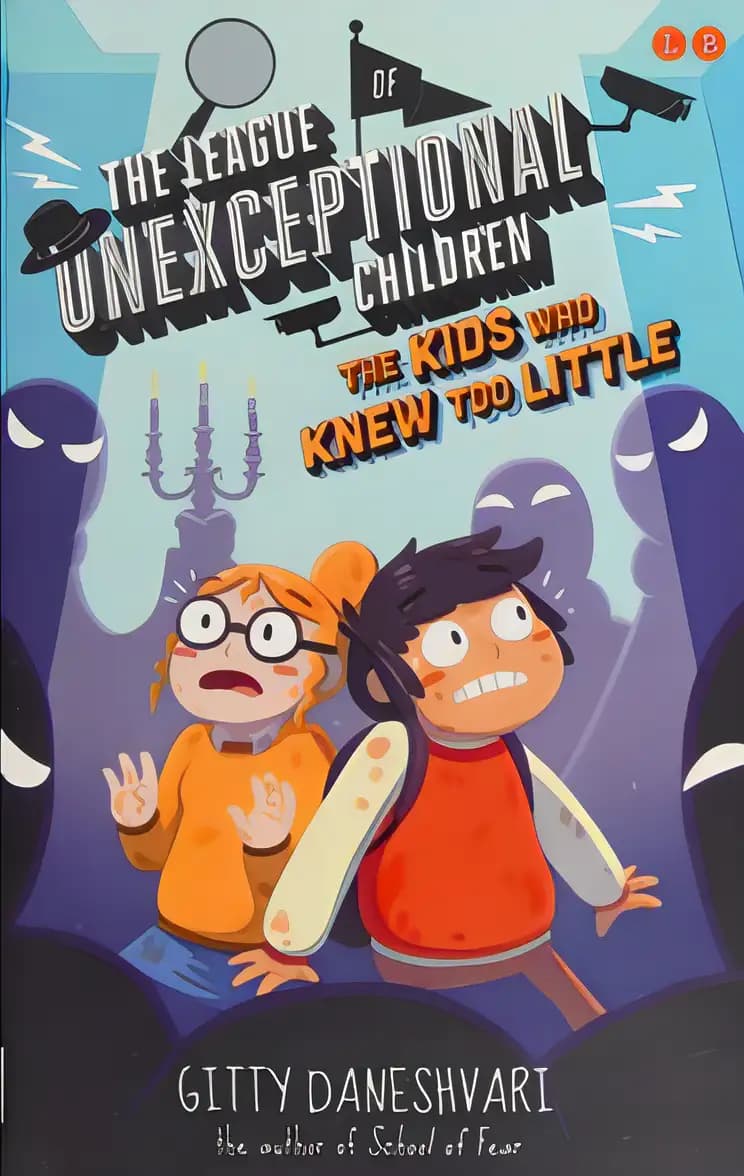
The League of Unexceptional Children: Get Smart-ish
#2 in The League of Unexceptional Children Series
on Goodreads (118)
What’s inside...
In the sequel to The League of Unexceptional Children, twelve-year-olds Jonathan Murray and Shelley Brown are called upon by the Prime Minister of the United Kingdom to catch a criminal who has stolen a virus that makes people less smart. As the world's most average spies, they must embrace their unexceptional side and see if they can save the day again, or if their first success was just a fluke. This action-packed and hilarious adventure encourages readers to embrace their own unexceptional qualities.
Character compass
Jonathan Murray
Shelly Brown
Manny
Discussion points
What did you think about the characters' adventures and how they approached their challenges?
How did the characters' uniqueness help them in their mission? Can you think of a time when being different helped you?
What lessons do you think the characters learned by the end of the story?
If you were part of the league, what unique skill would you contribute and why?
How do you think teamwork played a role in the characters' success?
Tip: Role play these questions
Use open-ended questions to allow your child to express their thoughts and feelings about the story, encouraging deeper engagement.
Relate the themes of the book to your child’s personal experiences to make the discussion more relevant and immersive.
Discuss each character with your child, focusing on their strengths and how they contribute to the team, reinforcing the value of diversity and cooperation.
Encourage your child to imagine themselves in the story and ask them what they would do differently, fostering creativity and critical thinking.
Key lessons
Example Lesson: Teamwork and collaboration
Explanation: The main characters, Jonathan and Shelley, frequently use teamwork to overcome challenges, showcasing how combined efforts can achieve greater results than individual endeavors.
Real-World Application: Children can apply this lesson by participating in group activities at school or collaborating on projects with siblings or friends, learning the value of cooperation and collective problem-solving.
Example Lesson: Embracing individuality and unique talents
Explanation: Each member of the League of Unexceptional Children possesses unique, albeit seemingly average, skills that contribute to their successes, teaching that every individual talent has its importance.
Real-World Application: Kids can learn to appreciate their own unique abilities and those of others, fostering a positive self-image and respect for diverse skills in their peer group.
Example Lesson: Critical thinking and problem-solving
Explanation: The plot encourages characters to think critically and solve puzzles to advance in their mission, emphasizing the importance of intellectual engagement.
Real-World Application: This can inspire children to approach their own challenges with a problem-solving mindset, enhancing their analytical skills and decision-making capabilities in school and beyond.
Example Lesson: Persistence in facing obstacles
Explanation: Throughout their adventures, Jonathan and Shelley encounter numerous obstacles but continuously persevere, underlining the value of persistence.
Real-World Application: Children are encouraged to persist in their own pursuits, whether it be academic challenges, sports, or personal projects, instilling resilience and determination.