
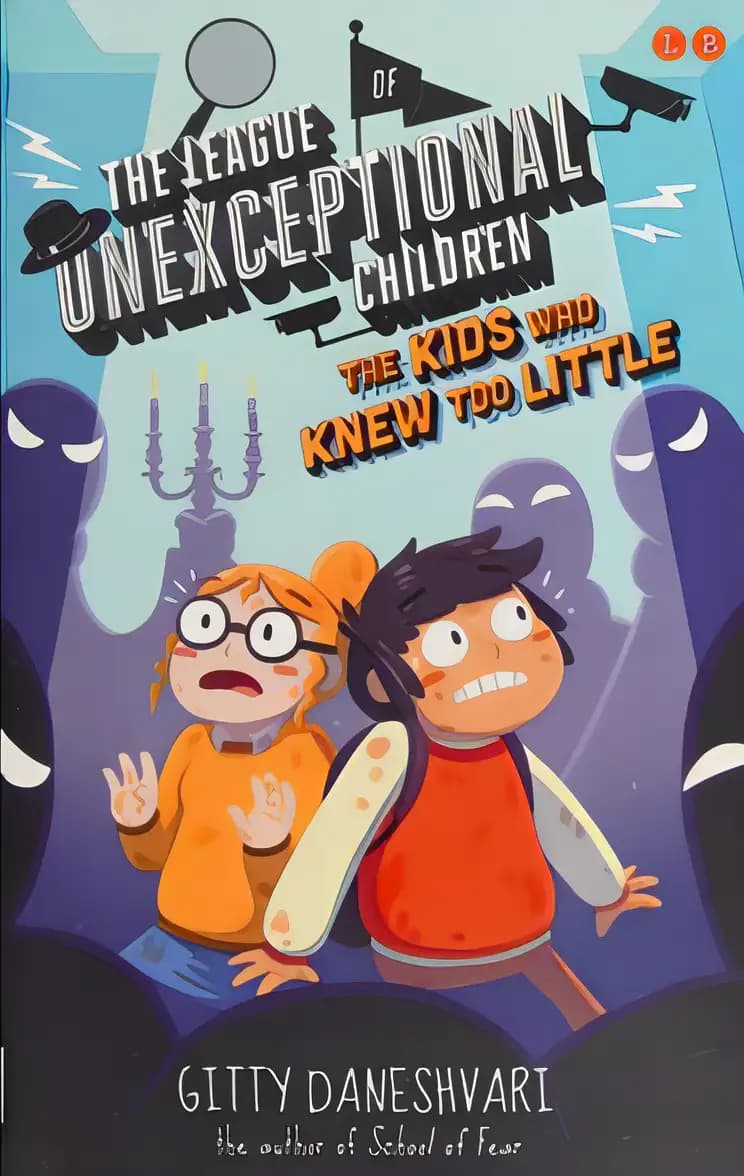
The League of Unexceptional Children: The Kids Who Knew Too Little
#3 in The League of Unexceptional Children Series
on Goodreads (38)
What’s inside...
The final book in a smart, funny, and exceptional middle grade series about unexceptionals from School of Fear author Gitty Daneshvari. Since being recruited by the League of Unexceptional Children, Jonathan Murray and Shelley Brown have rescued the vice president and stopped the outbreak of a virus capable of dimming human intelligence. Against all odds, these totally average spies have somehow managed to save the day twice. Now, Jonathan's parents have been arrested by the CIA for treason, and liberating them means going head-to-head with a secret organization so powerful it has literally changed the course of history. It's Jonathan and Shelley's most dangerous mission yet, and one that will decide their fate as members of the League. Will they be able to accidentally sort of save the day one last time?
Character compass
Jonathan Murray
Shelley Brown
Discussion points
What do you think makes a person exceptional, and how do the characters in the book challenge this idea?
If you could have any secret mission like the characters, what would it be and why?
How do the characters in the book use their so-called 'unexceptional' skills to solve problems?
Do you think being 'average' or 'unexceptional' is a bad thing after reading this story? Why or why not?
How do the friendships in the book change or grow? How important is teamwork in achieving their goals?
Tip: Role play these questions
Start by asking your child what they thought about the book, ensuring an open and relaxed conversation about the story’s themes.
Encourage your child to think of times they felt 'unexceptional' and relate those feelings to the characters in the book.
Discuss with your child the importance of everyone's unique qualities and how even perceived weaknesses can be strengths in certain situations.
Link discussions to real-life scenarios where being 'average' might be advantageous, enhancing their connection to the book's message.
Highlight the significance of teamwork as illustrated in the book, and ask your child about times they had to work with others to achieve a goal.
Key lessons
Example Lesson: Teamwork and Cooperation
Explanation: The protagonists in 'The League of Unexceptional Children: The Kids Who Knew Too Little' learn to work together, relying on each other's unique skills to solve the mystery and succeed in their mission.
Real-World Application: Children can apply this lesson by engaging in collaborative activities with peers, learning to value different perspectives and abilities in group projects at school or during play.
Example Lesson: Embracing Individuality
Explanation: The story highlights how ordinary children with seemingly no extraordinary talents can achieve great things, teaching that everyone has value regardless of their strengths or weaknesses.
Real-World Application: This lesson helps children recognize and appreciate their own unique traits and those of others, boosting self-esteem and encouraging a more inclusive attitude towards classmates and friends.
Example Lesson: Problem-Solving
Explanation: Throughout the book, the characters are faced with challenges that require critical thinking and decision-making skills to navigate.
Real-World Application: Children can utilize these problem-solving approaches in real life when dealing with academic challenges, personal conflicts, or new tasks.
Example Lesson: Responsibility and Reliability
Explanation: As the children in the book take on a mission of national importance, they demonstrate responsibility and the importance of being reliable when others are counting on you.
Real-World Application: This can teach children the importance of keeping promises and being dependable in both school assignments and personal relationships.
Example Lesson: Courage to Face the Unknown
Explanation: The characters often step out of their comfort zones and face uncertain situations bravely.
Real-World Application: This encourages children to be open to new experiences and face fear with bravery, whether trying out a new activity or standing up for what is right.