
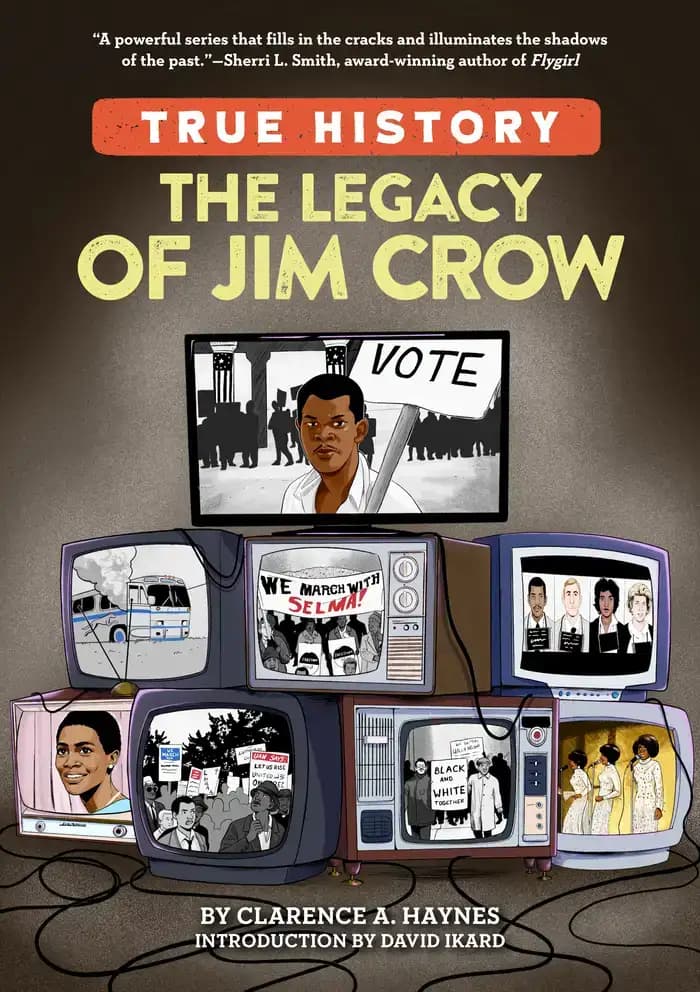
The Legacy of Jim Crow
#3 of 4 in True History Series
on Goodreads (45)
What’s inside...
The Legacy of Jim Crow explores the lasting impact of racial segregation and discrimination in the United States. Author Clarence A. Haynes delves into the history of Jim Crow laws and their effects on African Americans, as well as the ongoing struggle for civil rights and equality. Through in-depth analysis and personal narratives, Haynes sheds light on the enduring legacy of this dark period in American history. The series is a new nonfiction series that serves as a tool for activists, uncovering hidden history of the United States through an anti-racist lens, and discussing the widespread effects of discriminatory laws and ideas across America, including in education, criminal justice system, and media portrayal.
Discussion points
How do the laws and rules described in 'The Legacy of Jim Crow' differ from the rules we follow today?
Why do you think it was important for people to challenge these unfair laws?
What feelings do you think people had living under Jim Crow laws, and how would you feel in a similar situation?
Can you think of a time when you saw someone being treated unfairly? How did that make you feel?
What are some ways we can ensure everyone is treated equally today?
Tip: Role play these questions
Begin the conversation by summarizing key points from the book, simplifying complex concepts about Jim Crow laws into age-appropriate explanations.
Validate your child’s emotions and thoughts as they discuss the content, reassuring them that it’s okay to feel upset or confused about the injustices described.
Encourage your child to relate the historical events to their own experiences with fairness and equality, prompting them with personal questions.
Use visual aids like pictures or timelines if available to help your child visualize the historical context and its changes over time.
End the conversation with a positive note on progress and the role each person can play in promoting equality and fairness.
Key lessons
Example Lesson: Understanding historical injustice
Explanation: The book outlines the era of Jim Crow laws and the struggles faced by African-Americans, illustrating the harsh realities of racial segregation.
Real-World Application: Children can learn the importance of equality and justice, and be encouraged to stand against any form of discrimination they witness in their surroundings.
Example Lesson: Resilience in adversity
Explanation: Characters in the story demonstrate perseverance in the face of systemic oppression, showing how they cope and strive for a better life despite the circumstances.
Real-World Application: This teaches children the value of resilience and persistence when facing their own challenges, encouraging them to push forward and overcome obstacles.
Example Lesson: Empathy and understanding
Explanation: By exposing readers to the difficulties faced by individuals during the Jim Crow era, the book fosters a sense of empathy and understanding towards people who are different from themselves.
Real-World Application: Children can apply this understanding in their interactions with peers from diverse backgrounds, helping to cultivate a more inclusive and compassionate environment.
Example Lesson: The power of activism
Explanation: The story highlights the role of activists who fought against racial injustices, showcasing how collective action can lead to social change.
Real-World Application: This can inspire children to participate in or support causes they believe in, understanding that their actions, no matter how small, can contribute to societal improvements.
Example Lesson: Importance of education
Explanation: Through its narrative, the book illustrates how education served as a crucial tool for African-Americans to advance themselves despite legal and societal barriers.
Real-World Application: Children can recognize the value of education in transforming lives and be motivated to pursue their own educational goals diligently.