
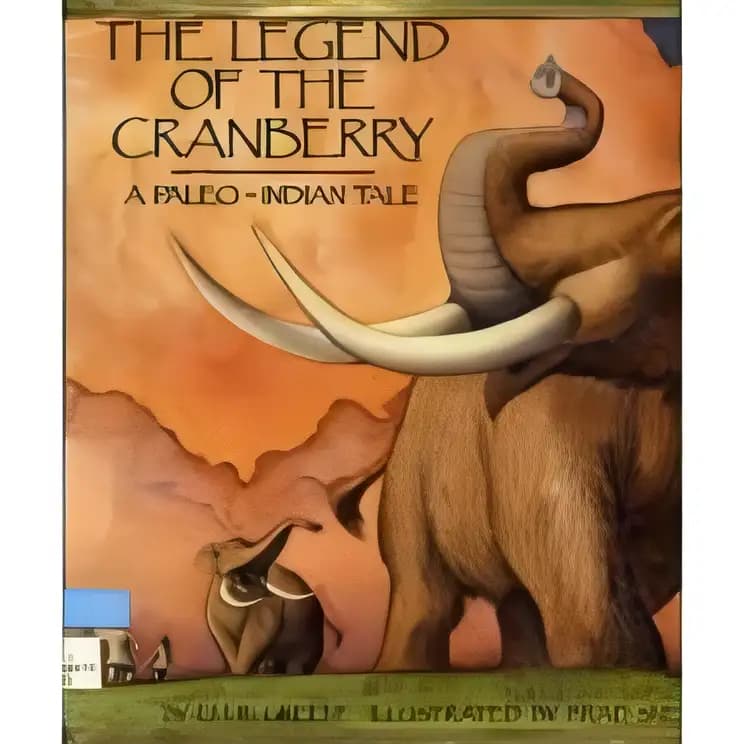
The Legend of the Cranberry: A Paleo-Indian Tale
What’s inside...
A moving Delaware Indian legend tells how the Great Spirit gave the gift of the cranberry to his People. Ellin Greene's dramatic retelling, with glowing paintings by Brad Sneed, captures all the simple power of this legend. An author's note provides historical and scientific background for this tale set in the Ice Age. Full-color illustrations.
Age
7-9
Length
32 pages
Text complexity
Discussion points
How do you think the Paleo-Indians felt when they discovered the cranberries?
What can we learn from the way the community worked together in the story?
Why do you think cranberries are important in this tale?
How would you solve a problem like the characters did in the book?
What is your favorite part of the legend and why?
Tip: Role play these questions
Start by asking your child to summarize the story in their own words, to gauge their understanding and attention to detail. Use follow-up questions to delve deeper into the themes of community and cooperation shown in the story. Connect the story to personal experiences or similar situations in real life to make the discussion more relatable. Encourage children to express their opinions and feelings about the story, fostering a sense of empathy and critical thinking.
Key lessons
Example Lesson: Respect for nature
Explanation: The story emphasizes the Paleo-Indians' deep connection to and respect for their natural environment, showcasing how they responsibly gathered resources without depleting them.
Real-World Application: Children can learn to appreciate nature and understand the importance of conserving resources, such as recycling and reducing waste in their daily lives.
Example Lesson: Importance of storytelling
Explanation: The tale is passed down through generations, highlighting the role of storytelling in preserving culture and history.
Real-World Application: Children can be encouraged to listen to stories from their own families and communities, fostering a sense of identity and continuity.
Example Lesson: Cooperation and teamwork
Explanation: The story depicts the community working together to harvest cranberries, demonstrating the power of collective effort.
Real-World Application: Kids can apply this lesson by participating in group activities and understanding the value of teamwork in achieving common goals, such as in sports or group projects at school.
Example Lesson: Gratitude for life's gifts
Explanation: The Paleo-Indians show gratitude for the cranberries, which are vital to their survival, using them in a celebratory feast.
Real-World Application: This can teach children to be thankful for the things they have, such as food, family, and health, and to express that gratitude in their daily lives.
Example Lesson: Courage to face challenges
Explanation: The characters in the story face various challenges while gathering cranberries but overcome them through bravery and perseverance.
Real-World Application: Children can learn to approach their own challenges, whether at school or in personal development, with courage and determination.