
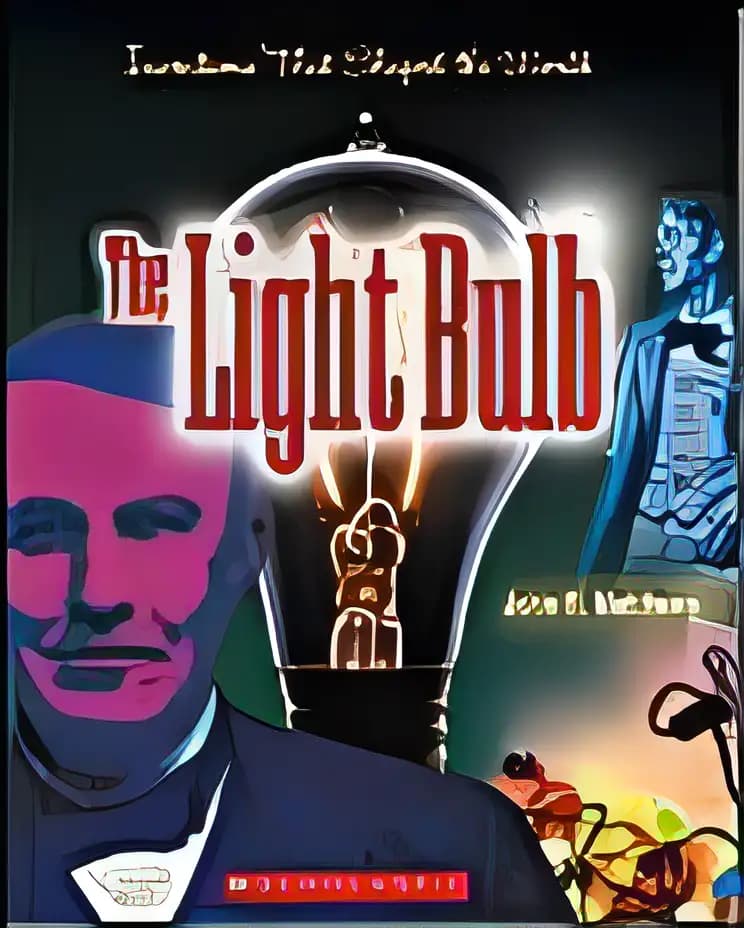
The Light Bulb (Inventions That Shaped the World)
#2 in Inventions That Shaped The World Series
on Goodreads (3)
What’s inside...
In 'The Light Bulb (Inventions That Shaped the World),' John R. Matthews illuminates the history and impact of one of the most significant inventions of the modern era. The book traces the evolution of artificial light, from the early experiments of Humphry Davy to Thomas Edison's revolutionary incandescent bulb. Matthews explores the scientific challenges overcome by inventors and the profound changes the light bulb brought to society, extending productive hours and transforming homes, cities, and industries. The narrative also delves into the environmental and economic implications of electric lighting and discusses the future of illumination technology, including LED and smart lighting systems. This insightful work sheds light on how a simple yet groundbreaking invention has shaped the world we live in today.
Discussion points
Why do you think the invention of the light bulb was important for people around the world?
How do you imagine life would be different if the light bulb had never been invented?
What are some other inventions that you think are important? Why?
Can you think of ways we can use light bulbs to help us do things besides just lighting our homes?
What qualities do you think an inventor should have? Do you see any of those qualities in yourself?
Tip: Role play these questions
Start the conversation by sharing what life was like before light bulbs and how this invention changed everyday life. Encourage your child to think critically by comparing past and present scenarios. Relate the discussion to current electricity use in your home to make it more tangible. Praise creative or thoughtful responses to bolster confidence and interest in innovation.
Key lessons
Example Lesson: Innovation and Persistence
Explanation: The book chronicles the challenges and breakthroughs in the development of the light bulb, highlighting the persistent efforts of inventors like Thomas Edison.
Real-World Application: Children can learn the value of perseverance and continuous effort in overcoming obstacles and achieving their goals.
Example Lesson: Importance of Science and Technology
Explanation: Through the story of the light bulb, the book introduces children to basic principles of electricity and science, emphasizing its impact on modern life.
Real-World Application: This encourages children to explore scientific interests and understand the practical applications of technology in everyday life.
Example Lesson: Teamwork and Collaboration
Explanation: The invention of the light bulb was not solely the achievement of one person but a collective effort involving many contributors which is discussed in the book.
Real-World Application: Children learn the importance of working with others to achieve common goals and how collaboration can lead to success.
Example Lesson: Curiosity and Learning
Explanation: The book shows how curiosity drove inventors to ask questions and seek solutions, leading to the invention of the light bulb.
Real-World Application: This can inspire children to be curious about how things work and to embrace learning as a continuous, lifelong process.
Example Lesson: Impact of Inventions on Society
Explanation: The book explains how the light bulb revolutionized daily life and industrial activities, transforming societies.
Real-World Application: Children can understand how innovations can significantly alter lifestyles and improve the quality of life, encouraging them to appreciate and value creativity and invention.