
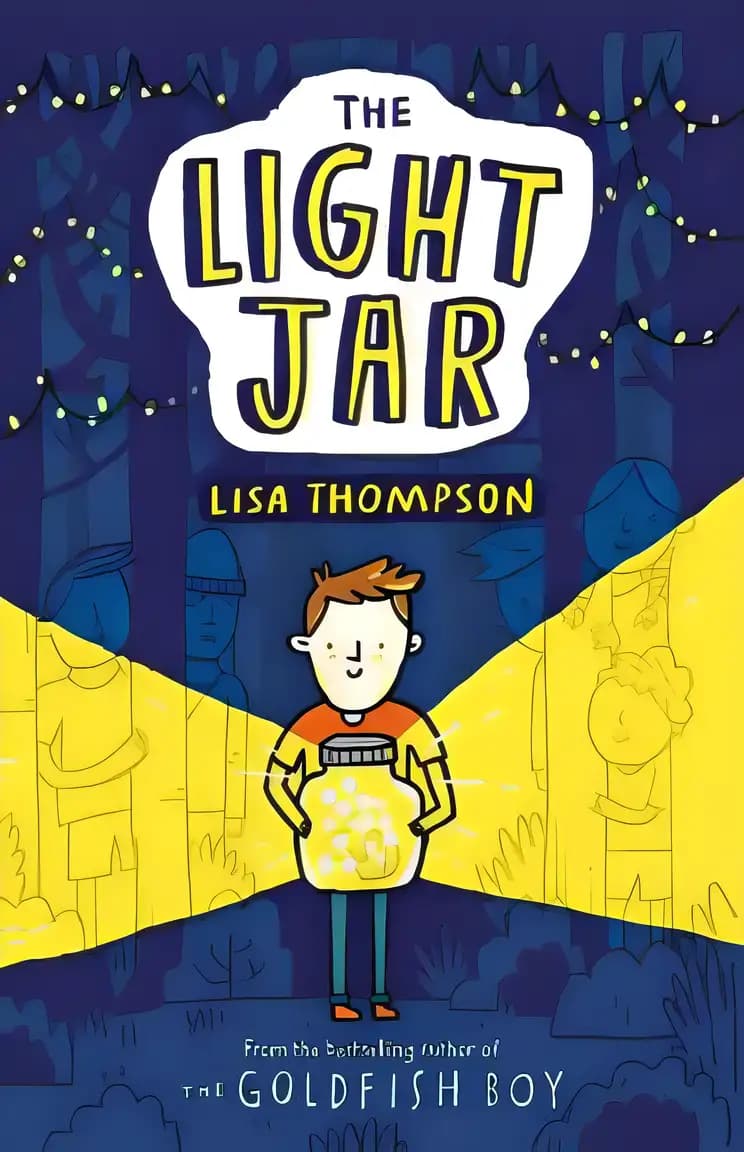
The Light Jar
on Goodreads (1,881)
What’s inside...
Nate and his mother are running away from an emotionally abusive situation and hide out in an abandoned cottage in the middle of a forest. When Nate's mother goes out for groceries and doesn't return, he is left alone and scared. Comfort comes from unexpected places, a strange girl on a treasure hunt and a friend from his past. Nate must find the bravery to face his fears, survive on his own, and ultimately illuminate his future. 'The Light Jar' is a story of fear and hope, loneliness and friendship, filled with engaging characters and a propulsive, page-turning mystery.
Age
8-12
Length
298 pages
Text complexity
Character compass
Nate
Kitty
Discussion points
What do you think Nate learned about friendship and trust throughout his adventure?
How did the light jar help Nate feel less alone? Can you think of something that gives you comfort when you're feeling scared?
Why do you think the author chose to include both real and imaginary characters in the story?
What would you do if you were in Nate's situation and needed to solve a mystery?
How do you think the story would change if it took place in a city instead of a rundown cottage?
Tip: Role play these questions
Encourage your child to express their feelings about Nate's journey, focusing on moments of fear and bravery to help them connect with their own experiences.
Discuss the significance of the light jar as a symbol of hope and security. Ask your child to think about or create their own 'light jar'—a mental or physical place where they can store their fears and hopes.
Explore the concept of friendship and trust depicted in the book by drawing parallels with your child’s own friendships and what trust means to them.
Prompt your child to use their imagination by asking how they would handle the mysterious elements of the story.
After reading the book, engage in a creative activity where your child can draw or describe an imaginary friend who could help them in difficult times, similar to how Nate was helped in the story.
Key lessons
Example Lesson: Resilience in the face of adversity
Explanation: The protagonist, Nate, demonstrates resilience by navigating challenges after running away from home. He deals with fear and loneliness but gradually learns to find strength within himself.
Real-World Application: Children can learn to handle difficult situations with courage, understanding that they can overcome hardships with determination and internal strength.
Example Lesson: Importance of friendship and trust
Explanation: Nate develops a friendship with a girl named Kitty. Their relationship, based on mutual trust and support, helps them face their fears together.
Real-World Application: This story encourages children to value and foster trustworthy relationships, understanding that a good friend can provide support during tough times.
Example Lesson: Using creativity to solve problems
Explanation: Throughout the book, Nate uses his imagination and creativity to create a 'light jar' that symbolizes hope and comfort, helping him deal with his challenges.
Real-World Application: Children can apply creativity in their own lives to solve problems or cope with emotions, learning that imaginative solutions can be both effective and comforting.
Example Lesson: The power of confronting one’s fears
Explanation: As the story progresses, Nate confronts his fears directly, which is a crucial step in his emotional growth and development.
Real-World Application: This teaches children the importance of facing fears rather than avoiding them, promoting growth and confidence in their abilities to handle life’s challenges.
Example Lesson: Healing from emotional wounds
Explanation: The book delicately explores themes of abandonment and emotional pain, while showing how characters like Nate begin to heal and find strength after confronting these issues.
Real-World Application: Children learn that healing is possible after emotional hurts and that seeking help and facing their problems can lead to emotional recovery and strength.