
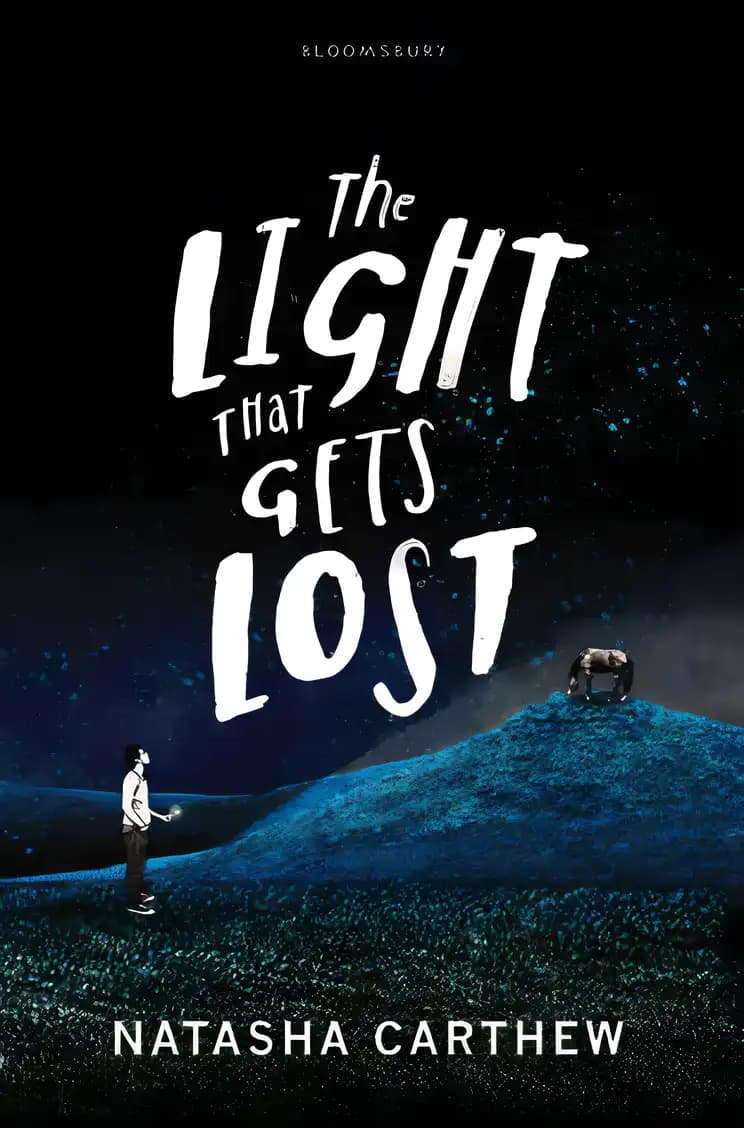
The Light That Gets Lost
on Goodreads (164)
What’s inside...
A small boy hiding in a cupboard witnesses the murder of his parents and vows to get revenge one day. Years later, Trey enters a camp for troubled teenagers, where he's not interested in salvation, but in finding the man who killed his parents. Amidst a mix of crazies, god-botherers, felons, and broken kids, Trey finds himself drawn to a girl, a dream, and the offer of friendship in the dark, as he navigates the dangerous mix of revenge, healing, salvation, and hell.
Age
11-12
Length
320 pages
Text complexity
Character compass
Trey
Sheep Lamb
Bill
Discussion points
What do you think the light represents in the story, and how does it change the main character's outlook?
How do the characters in the book show resilience in the face of challenges?
Can you think of a time when you felt lost and what helped you find your way?
What role do friendship and trust play in the story?
How do the setting and atmosphere affect the events and emotions in the book?
Tip: Role play these questions
Before discussing, let your child express their initial thoughts and feelings about the book to gauge their understanding and emotional response.
Use comparisons to real-life situations or personal experiences to make the discussion more relatable and insightful.
Highlight the emotional and psychological journeys of the characters to explore complex themes in a sensitive manner.
Encourage your child to imagine alternative scenarios or endings to foster creative thinking and a deeper connection with the narrative.
Acknowledge and validate your child’s opinions and feelings about the story to promote open and honest discussion.
Key lessons
Example Lesson: Resilience in the face of adversity
Explanation: The protagonist of 'The Light That Gets Lost' faces significant challenges, persisting despite difficult circumstances.
Real-World Application: Children can learn to maintain determination and a positive attitude even when facing personal challenges or obstacles in their own lives.
Example Lesson: The importance of forgiveness
Explanation: Throughout the story, themes of forgiveness and reconciliation play a critical role as characters work through their past traumas.
Real-World Application: This teaches children the power and importance of forgiving others, helping them to build and maintain healthy relationships.
Example Lesson: Self-discovery and personal growth
Explanation: The main character embarks on a journey that leads to self-discovery and personal development.
Real-World Application: Children are encouraged to explore their own identities and to embrace growth, learning more about themselves through their own life experiences.
Example Lesson: Consequences of actions
Explanation: The narrative demonstrates how characters' choices influence their futures, highlighting the cause and effect nature of decisions.
Real-World Application: This can help children understand that their choices have impacts and teach them to think about potential outcomes before acting.
Example Lesson: The value of hope
Explanation: Despite the harsh realities depicted, the book's underlying message is one of hope and the possibility of redemption.
Real-World Application: It instills in children an understanding that no matter how tough situations get, there's always a reason to hold onto hope and strive for a better future.