
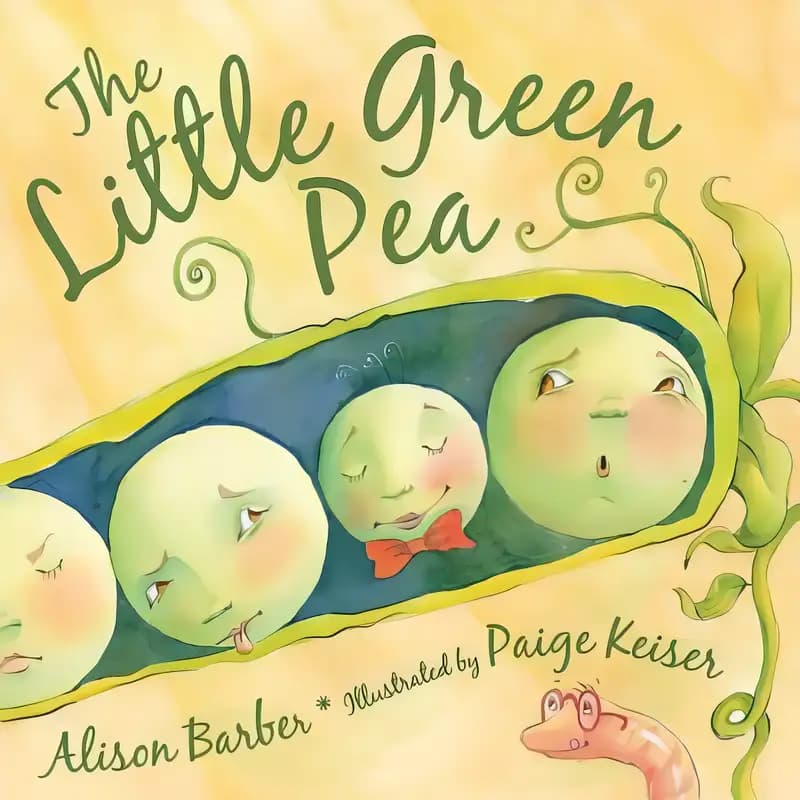
The Little Green Pea
What’s inside...
A tiny pea, scorned by the other peas because he dreams of growing into a tree, begins to lose hope when he is picked to be part of a tuna casserole. However, fate and a helpful worm come to the rescue, helping the pea realize his dream in a roundabout way through an adventure that involves a mud pile. This eco fable, with illustrations by Paige Keiser and written by Alison Barber, highlights the themes of persistence, hope, and the unexpected ways dreams can come true.
Age
6-9
Length
28 pages
Text complexity
Discussion points
How do you think the Little Green Pea felt when it was on its own?
What changes did you notice in the Little Green Pea throughout the story?
Why is it important to have friends who support and help each other?
If you were a character in the book, how would you help the Little Green Pea?
What did you learn about being different from others from this story?
Tip: Role play these questions
Encourage your child to express their feelings about the story, mirroring the emotions of the Little Green Pea.
Use a nurturing tone to discuss the themes of friendship and acceptance, fostering a safe space for sharing.
Relate the story’s messages to real-life situations in your child's life to enhance understanding and empathy.
Discuss the diverse characters and settings in the book, emphasizing the beauty of uniqueness and diversity.
Praise your child for insightful comments or connections made, enhancing their confidence and involvement in the conversation.
Key lessons
Example Lesson: The importance of individuality
Explanation: In 'The Little Green Pea', the main character, a small green pea, learns to embrace its unique qualities despite being different from the others.
Real-World Application: Children will understand that their differences make them special and should be celebrated, helping to boost self-esteem and acceptance among peers.
Example Lesson: Growth and transformation
Explanation: Throughout the story, the pea undergoes a transformation journey, emphasizing that growth is a natural and positive part of life.
Real-World Application: This lesson can reassure children facing changes, such as moving to a new school or home, illustrating that growth leads to new opportunities.
Example Lesson: The value of perseverance
Explanation: The little green pea faces challenges but continues to try and overcome them, showing determination.
Real-World Application: Kids will learn the importance of not giving up when faced with difficulties, whether it's in their studies, sports, or personal goals.
Example Lesson: Understanding and acceptance of others
Explanation: As the pea interacts with different garden characters, it learns to understand and accept the differences in others.
Real-World Application: Children will be encouraged to be open-minded and inclusive, fostering a kind and accepting environment at school and in other social settings.