
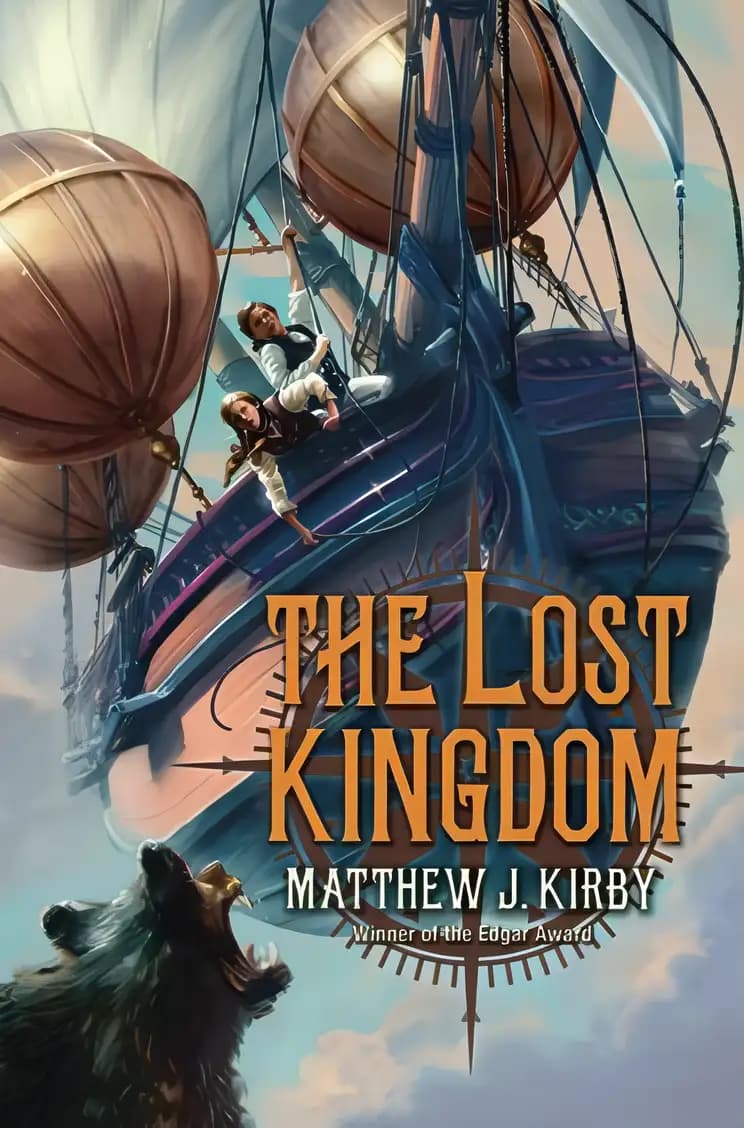
The Lost Kingdom
#2 in The Quantum League Series
on Goodreads (728)
What’s inside...
A remarkable adventure by award-winning author Matthew J. Kirby brings a fantastical American West filled with secrets and spies and terrifying creatures to vivid life. In this extraordinary adventure story, Billy Bartram, his father, and a secret society of philosophers and scientists venture into the American wilderness in search of the lost people of the Welsh Prince Madoc, seeking aid in the coming war against the French. Traveling in a flying airship, the members of the expedition find their lives frequently endangered in the untamed American West by terrifying creatures, a party of French soldiers hot on their trail, and the constant threat of traitors and spies. Billy will face hazards greater than he can ever imagine as, together with his father, he gets caught up in the fight for the biggest prize of America. THE LOST KINGDOM is an epic journey filled with marvelous exploits, courage and intrigue, and a bold reimagining of a mythical America. Matthew J. Kirby brings his signature storytelling prowess and superb craft to this astonishing story of fathers and sons, the beginnings of a nation, and wonder-filled adventure.
Character compass
Billy Bartram
Benjamin Franklin
John Bartram
Discussion points
What do you think about the world that the characters live in? How is it similar or different from our world?
Which character did you admire the most and why?
The characters face many challenges in 'The Lost Kingdom'. What can we learn from how they dealt with these obstacles?
How do you think the story would change if it were set in present times?
What role do friendships play in 'The Lost Kingdom'? How do they affect the outcome of the story?
Tip: Role play these questions
While discussing the characters, encourage your child to compare their traits with people they know or other characters they like. This can help deepen their understanding of character development.
Ask your child to draw their favorite scene from the book. This can help them express their understanding and perspective visually.
Create a 'what-if' scenario by changing key elements of the plot, and have your child predict the new outcomes. This helps develop critical thinking skills.
After reading, watch interviews or videos of the author discussing the book. It can provide more background and initiate further discussion about the story.
Encourage your child to write a short letter to their favorite character asking them questions or giving them advice. This promotes empathy and diagnostic thinking.
Key lessons
Example Lesson: The importance of teamwork
Explanation: In 'The Lost Kingdom', the characters must work together to navigate treacherous environments and solve complex puzzles.
Real-World Application: Children learn the value of collaborating with others to achieve common goals, which can be applied in school projects or team sports.
Example Lesson: Courage in the face of adversity
Explanation: The protagonist shows bravery while facing unknown dangers in the quest to find the lost kingdom, inspiring others along the way.
Real-World Application: This encourages children to tackle their fears and stand up in challenging situations, be it during exams, public speaking, or standing up for what is right.
Example Lesson: Importance of curiosity and learning
Explanation: The characters' quest is driven by the desire to discover new knowledge and unravel historical mysteries.
Real-World Application: This can be mirrored in a child's life by fostering a love for reading, exploring, and learning new things about the world around them.
Example Lesson: Resilience through setbacks
Explanation: Throughout the book, characters face numerous setbacks but continue to persevere towards their goal.
Real-World Application: This teaches children the importance of resilience and not being disheartened by failures, instead learning and pushing forward.
Example Lesson: Respect for different cultures and history
Explanation: As the adventurers explore new lands, they learn about and respect the cultures and histories of the people they encounter.
Real-World Application: This can help children appreciate and embrace diversity in their own communities and learn the value of historical knowledge.