
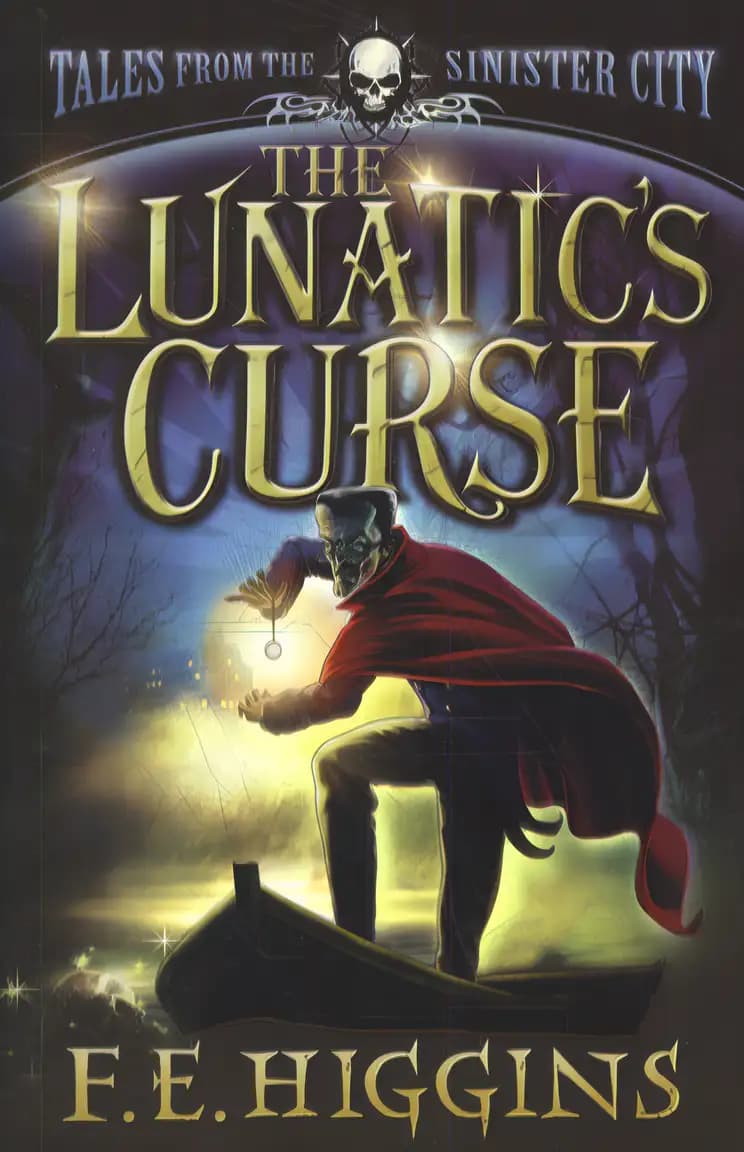
The Lunatic's Curse
#4 of 4 in Tales From The Sinister City Series
on Goodreads (416)
What’s inside...
The town of Opum Oppidulum is home to the freezing Lake Beluarum and its rumored monster. On an island at the center of the lake is an asylum from which no one has ever escaped. So how will Rex, whose father, Ambrose Grammaticus, has been imprisoned there under false pretenses, prove that Ambrose is not insane? And if Rex can free his father, will his evil stepmother drive them both to madness? Higgins' fans will devour this deliciously scary tale, a 'polyquel' to her previous books, all of which can be read singly or together. But not in the dark . . .
Character compass
Rex Grammaticus
Acantha Grammaticus
Ambrose Oswald Grammaticus
Ambrose Grammaticus
Discussion points
What do you think motivated Rex to uncover the secrets of the asylum? How would you have approached the situation?
How do the characters in the story show courage and perseverance? Can you share a personal experience where you demonstrated similar qualities?
The setting of the asylum adds a lot to the atmosphere of the book. How did it make you feel, and why do you think the author chose such a setting?
Can you think of ways how understanding and compassion are shown in the story? Why are these important traits to have?
If you could change one thing about the story, what would it be and why?
Tip: Role play these questions
Encourage your child to express their feelings about the book’s themes and characters without fear of judgement. Use open-ended questions that prompt deeper thinking and connection to personal experiences. Highlight the importance of resilience and empathy as demonstrated in the story. Discuss the influence of setting on a story’s mood and how it contributes to the overall narrative. Connect the book’s themes to real-life situations to help your child understand the relevance and applications of such lessons.
Key lessons
Example Lesson: The importance of empathy and understanding
Explanation: In 'The Lunatic's Curse,' characters show compassion towards those who are misunderstood or perceived as different, helping to unravel the true story behind the lunatic’s curse.
Real-World Application: Children can learn to empathize with their peers who might seem different, fostering a more inclusive and supportive environment at school and in social settings.
Example Lesson: The value of courage and resilience
Explanation: The protagonist faces many challenges and dangers, yet continues to persevere in order to uncover the truth and protect loved ones.
Real-World Application: This lesson teaches children the importance of standing up for what they believe in and not giving up in the face of adversity, skills that are applicable in overcoming personal challenges.
Example Lesson: The power of curiosity and critical thinking
Explanation: The story encourages questioning and not taking things at face value, as the young protagonist seeks to uncover the mysteries surrounding the curse.
Real-World Application: Children learn to question the world around them and not accept information without evidence, promoting analytical thinking and problem-solving skills.
Example Lesson: The impact of loyalty and trust
Explanation: Trust is a central theme in the book, influencing the characters' relationships and decisions, highlighting both its value and the consequences of betrayal.
Real-World Application: This underscores the importance of being reliable and trustworthy to friends and family in a child's daily interactions, helping to strengthen their interpersonal relationships.
Example Lesson: Accepting and learning from failure
Explanation: Characters in the book often fail at their initial attempts to solve problems but learn valuable lessons from these failures that guide their future actions.
Real-World Application: This can teach children that failure is a natural part of learning and personal growth, encouraging them to embrace challenges without fear of making mistakes.