
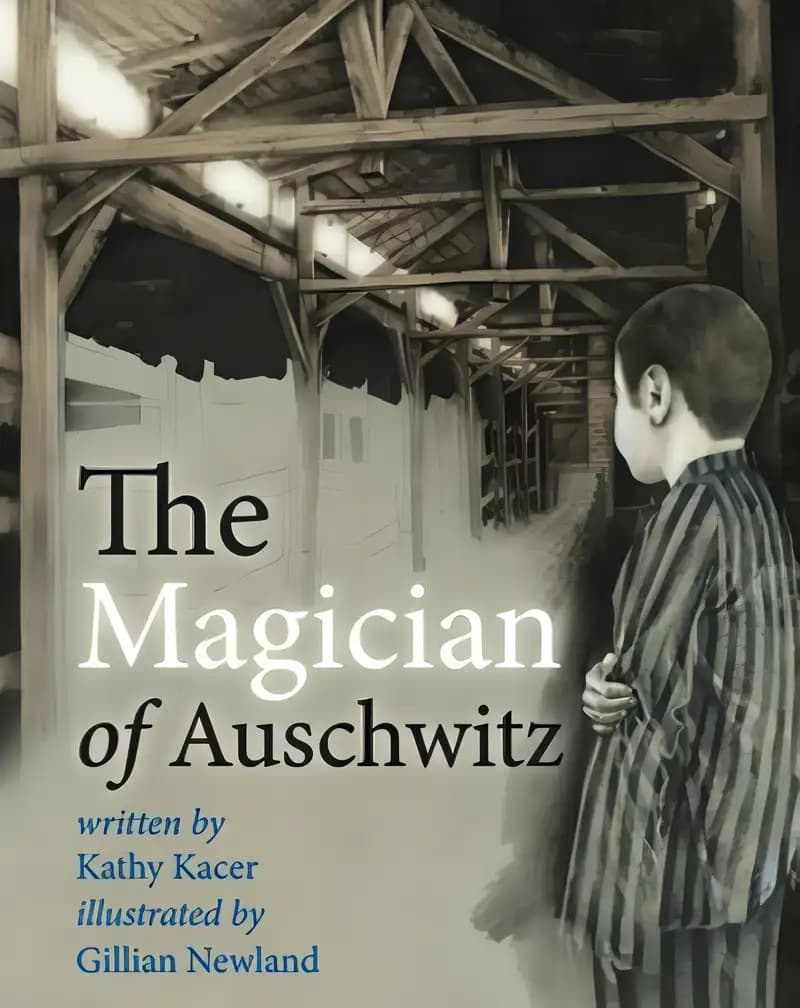
The Magician of Auschwitz
What’s inside...
During the Second World War, a young boy named Werner finds himself alone in the Auschwitz concentration camp. Separated from his family and without friends, he shares a bunk with Herr Levin, a gentle man who seems out of place in such a harsh environment. One night, the prison guards demand that Herr Levin perform magic. Werner is surprised to discover that Levin is a magician and finds hope and friendship through Levin's magical abilities. The story includes a special section with photographs about the real-life Werner and the Great Nivelli. Once there was a renowned magician called Nivelli, who performed before packed audiences in the grandest theaters of Berlin. Night after night, his fans applauded and called out for more astonishing feats of magic. 'Bravo!' they would shout, as Nivelli bowed low with a great flourish. But that was in a different, happier time, before the Jews of Europe were rounded up and sent to concentration camps. This is the true story of a young boy on the inside of Auschwitz, whose life is changed by the actions of a prisoner who performs magic for the guards and who the boy later learns was the famous Nivelli.
Age
9-12
Length
32 pages
Text complexity
Character compass
Werner Reich
Herbert Levin (Nivelli)
Discussion points
What emotions did you feel while reading about Werner's experiences in the concentration camp?
How do you think magic helped Werner and others in the story cope with their circumstances?
What does the story teach us about the importance of hope and friendship during tough times?
Why is it important to remember and learn about historical events like the Holocaust?
How would you help a friend if they were in a difficult situation like Werner?
Tip: Role play these questions
Prior to discussing, provide a brief context of the Holocaust to ensure the child understands the historical backdrop of the story.
Encourage empathy by asking the child how they would feel in Werner’s shoes, fostering a deeper personal connection to the narrative.
Highlight the acts of kindness and bravery in the story, and relate them to everyday situations your child might encounter.
Discuss the role of magic and imagination as tools for resilience and escape during challenging times, prompting your child to think about what brings them comfort.
Reinforce that it’s okay to express feelings of sadness or confusion about the events in the story, affirming the book as a safe space for emotional exploration.
Key lessons
Example Lesson: The power of hope and resilience
Explanation: The story showcases a young boy in Auschwitz who finds solace and distraction in the magical performances of a fellow prisoner, demonstrating the human spirit's ability to find hope and strength even in the darkest times.
Real-World Application: Children can learn to remain hopeful and resilient in challenging situations, understanding the importance of finding something positive to focus on, thus improving their emotional strength.
Example Lesson: The importance of friendship and solidarity
Explanation: Amidst the horrors of the concentration camp, the protagonist forms a protective bond with the magician, showing how critical friendships are in providing support and help in times of need.
Real-World Application: Children can be encouraged to support their friends, stand together during tough times, and understand the value of compassion and empathy towards others.
Example Lesson: Bravery in the face of adversity
Explanation: The characters in the book display immense courage by maintaining their humanity and supporting each other, even when faced with unimaginable fear and danger.
Real-World Application: This can inspire children to act bravely and stand up for what is right, even when they are afraid, and to always strive to do the right thing.
Example Lesson: The impact of art and creativity
Explanation: The magician uses his skills to bring moments of joy and distraction to others in the camp, illustrating how art and creativity can serve as powerful tools for coping and survival.
Real-World Application: Children can learn to use their own creative talents as a positive outlet for expression and coping with their own challenges, fostering a sense of self-efficacy and personal growth.