
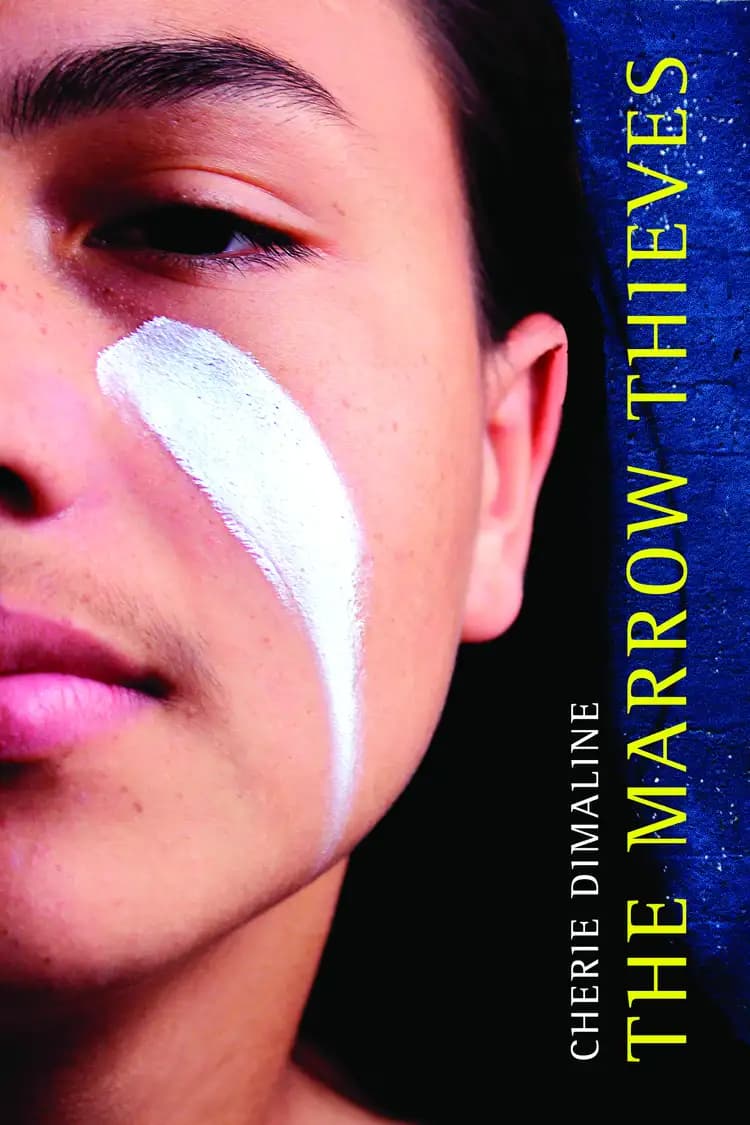
The Marrow Thieves
#1 in The Marrow Thieves Series
What’s inside...
In a futuristic world ravaged by global warming, people have lost the ability to dream, leading to widespread madness. The only ones still able to dream are North America's Indigenous people, whose marrow contains the cure for the rest of the world. However, extracting the marrow means death for the donors. A fifteen-year-old and his companions are forced to flee, struggling for survival, attempting to reunite with loved ones, and evading 'recruiters' who aim to take them to marrow-stealing 'factories.'
Character compass
Frenchie
Zheegwon
Tree
Slopper
Chi-Boy
Wab
Rose
Miigwans
Minerva
Miigwans Kiwenzie
Francis
RiRi
Discussion points
How does the concept of survival play a significant role in the characters' lives in 'The Marrow Thieves'? What qualities help them endure?
What are some ways in which the characters maintain their cultural heritage? Why do you think this is important to them?
How do the relationships between characters change throughout the story? What do these relationships teach us about trust and community?
Imagine you were a character in 'The Marrow Thieves.' What would you do differently and why?
How does the environment affect the story and the choices characters make? Can you think of any real-world parallels?
Tip: Role play these questions
Encourage your child to express their feelings about the book's events, especially in terms of right and wrong. This can help them develop their moral compass.
Before discussing the questions, allow the child to recount the story in their own words; this enhances comprehension and retention.
Connect the story's themes to the child’s everyday experiences, such as how they treat their peers or handle conflict, to make the discussion more relatable.
Be open to your child’s interpretations of the book; there is no right or wrong answer, and different perspectives can lead to deep insights.
Praise your child for their thoughts and insights as this reinforces their confidence in expressing and defending their opinions.
Key lessons
Example Lesson: Resilience in Adversity
Explanation: In 'The Marrow Thieves', the characters face immense challenges in a dystopian world but demonstrate resilience and determination.
Real-World Application: Children can learn to face difficulties in their lives with courage and persistence, understanding that overcoming obstacles is part of personal growth.
Example Lesson: Importance of Cultural Heritage
Explanation: The protagonist, along with others, strives to protect their indigenous heritage against external threats, highlighting the importance of one's cultural background.
Real-World Application: This story encourages children to explore and take pride in their own cultural roots and history, fostering a sense of identity and belonging.
Example Lesson: Value of Community and Cooperation
Explanation: Throughout their journey, the characters rely heavily on each other, demonstrating that teamwork and connections with others are essential for survival.
Real-World Application: Children can learn the significance of collaboration and supporting one another in group activities at school or in the community.
Example Lesson: Empathy and Compassion
Explanation: Characters in the story often face moral dilemmas that require empathy and compassion towards others, even in tough situations.
Real-World Application: This teaches children the importance of understanding and caring for the feelings of others, helping them develop into empathetic individuals in real-life interactions.