
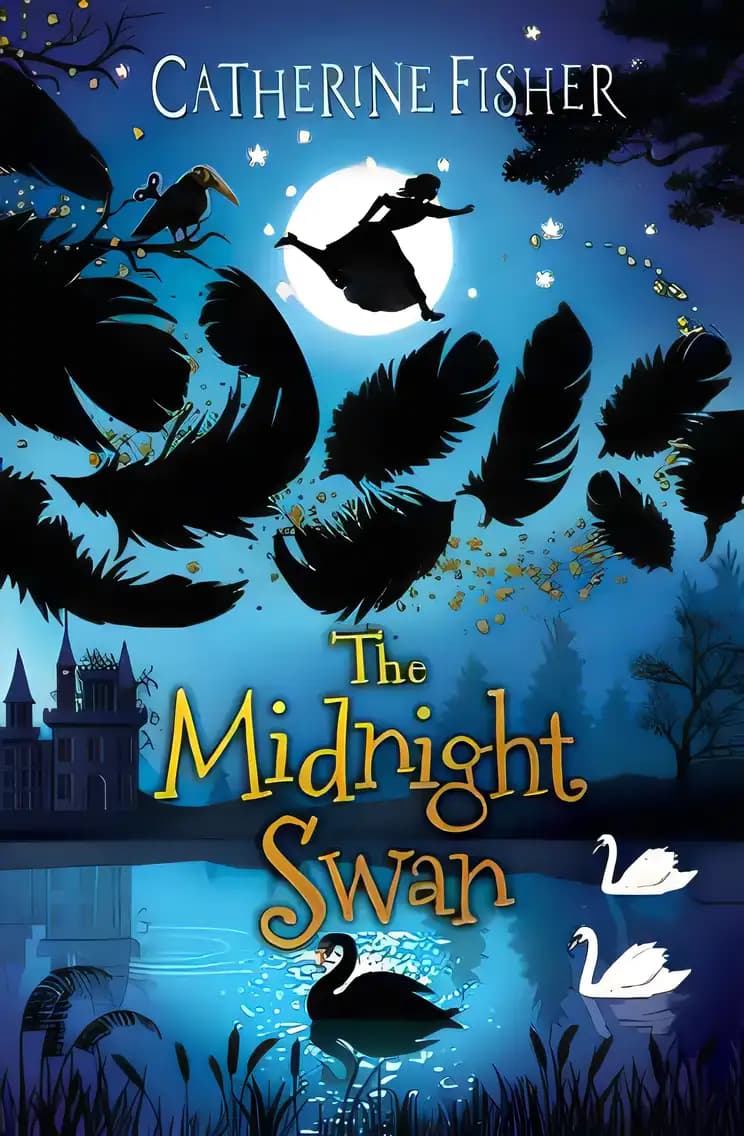
The Midnight Swan
#3 of 3 in The Clockwork Crow Series
What’s inside...
With an invisible girl, a parliament of owls and a pen that writes by itself, the journey to the Garden of the Midnight Swan might be Seren's most dangerous adventure yet. In this third book of the award-winning The Clockwork Crow series, Seren and Tomos must try to help the Crow find the way back to his human form. But why is Captain Jones enquiring about Seren's past? How have the sinister Fair Family gate-crashed the Midsummer Ball, and what is the one desire of the mysterious Midnight Swan?
Character compass
Seren Rhys
The Clockwork Crow
Tomos
Discussion points
How do you think Seren feels when she encounters the mystical Midnight Swan? What would you do in her place?
What lessons can we learn from the friendship between Seren and Tomos? Have you ever had a friend who helped you in a difficult time?
In what ways do the characters in the book show courage? Can you share a time when you had to be brave?
How does the setting of the story contribute to the mood? Can you imagine what the magical world looks like?
What do you think is the significance of the swan in the story? What do you think it represents?
Tip: Role play these questions
Encourage your child to express their feelings about the characters and situations in the book, relating them to their own experiences.
Use descriptive language from the book to paint vivid pictures and ask your child to imagine and describe scenes from their perspective.
Discuss the moral dilemmas faced by the characters to teach empathy and problem-solving skills.
After reading, ask your child to draw their favorite scene, helping them connect visually and emotionally with the story.
End your discussion with what your child thinks might happen next or how they would like the story to continue, fostering creativity and forward thinking.
Key lessons
Example Lesson: The importance of understanding and empathy
Explanation: In the story, the characters often face situations where they need to understand each other’s feelings and perspectives, leading to stronger relationships.
Real-World Application: Children learn to consider the feelings and viewpoints of others, promoting empathy and kindness in their interactions with friends and classmates.
Example Lesson: The value of courage and resilience
Explanation: Throughout the book, characters encounter various challenges and adversities, demonstrating courage and resilience by overcoming them.
Real-World Application: This lesson encourages children to face their own challenges with bravery and to persevere through difficulties, fostering resilience in their personal growth.
Example Lesson: The significance of friendship and loyalty
Explanation: The story shows characters forming deep bonds and supporting each other, which plays a crucial role in overcoming the obstacles they face.
Real-World Application: Children are taught the importance of building strong, supportive relationships and being loyal friends, skills that are vital throughout life.
Example Lesson: Acceptance of change and personal growth
Explanation: Characters in the book often undergo personal transformations, learning to accept changes within themselves and their environment.
Real-World Application: This lesson helps children understand that change is a natural part of life and personal growth, teaching them to embrace it positively.