
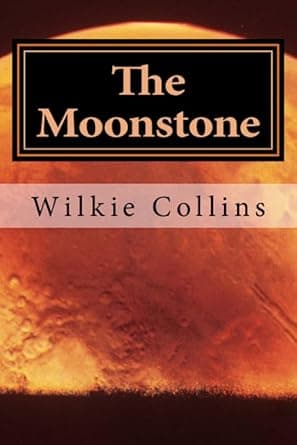
The Moonstone (Classics Illustrated)
Classics illustrated Series
on Goodreads (96,707)
What’s inside...
Wilkie Collins’s The Moonstone—often called the first modern detective novel—revolves around the disappearance of a priceless Indian diamond on the night of Rachel Verinder’s eighteenth-birthday. Told through a series of first-person narratives, the story moves from a tranquil Yorkshire estate to bustling London streets and back to a far-off Indian temple, gradually piecing together clues that expose jealousy, colonial greed, and personal redemption. The Classics Illustrated edition retells Collins’s intricate plot with accessible prose and vivid artwork, introducing younger readers to a celebrated Victorian mystery while retaining the suspense, humor, and social commentary of the 1868 original.
Series reading
Non-Sequential
Age
12-13
Length
572 pages
Text complexity
Character compass
Franklin Blake
Rosanna Spearman
Rachel Verinder
Matthew Bruff
Lady Julia Verinder
Ezra Jennings
Sergeant Cuff
Gabriel Betteredge
Miss Drusilla Clack
Godfrey Ablewhite
Dr. Candy
Penelope Betteredge
Mr. Murthwaite
Drusilla Clack
Discussion points
Which narrator did you believe first, and why?
How might the story differ if told by the Indian priests?
What role does honesty play in solving the mystery?
How do cultural misunderstandings escalate the conflict?
Tip: Role play these questions
Pause after each narrator to predict solutions together.
Draw a timeline of clues found; revisit as new facts emerge.
Key lessons
Example Lesson: Honesty is essential for trust.
Explanation: Rachel’s secrecy breeds suspicion, while confession resolves tension.
Real-World Application: Admit mistakes at school to prevent bigger problems.
Example Lesson: Different perspectives reveal fuller truths.
Explanation: Multiple narrators piece the mystery together.
Real-World Application: Listen to friends’ viewpoints before judging.
Example Lesson: Actions carry lasting consequences.
Explanation: Theft in India triggers turmoil decades later in England.
Real-World Application: Think about how choices today affect others tomorrow.