
The Nameless City
#1 of 3 in The Nameless City Series
on Goodreads (8,214)
What’s inside...
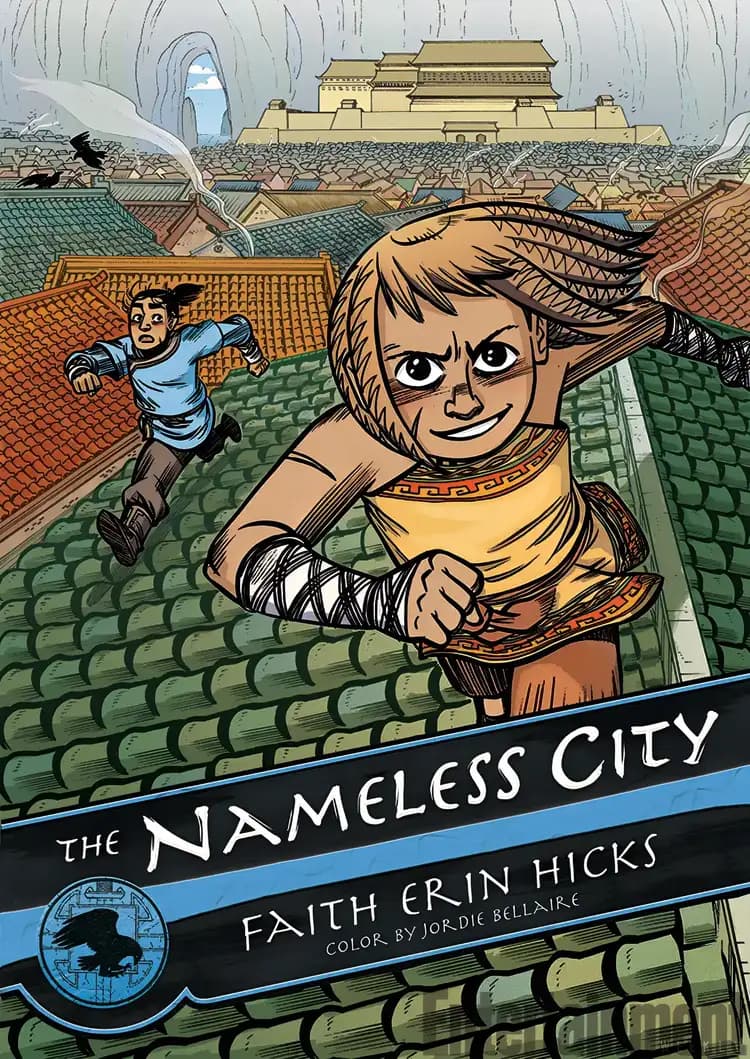
The Nameless City is an adventure-filled graphic novel set in a culturally rich city that experiences frequent changes in power due to various clans trying to occupy it. The story revolves around Kaidu, a boy from the Dao clan, and his unlikely friendship with Rat, a native girl who has lived in the city her whole life. Together, they navigate through the complexities of the city's history and their own backgrounds, trying to unite in order to protect their home from endless invasions and turmoil. The City has many names and no name. Built on an ancient mountain pass, the City is forever being invaded by one nation or another, and every new master gives it a new name. But for the natives, their home is the Nameless City, and those who try to name it are forever outsiders. Dreamy, sheltered Kaidu is one such outsider. He's a Dao born and bred—a son of the latest nation to occupy the Nameless City. Cynical, street-smart Rat is a native, and at first she hates Kai for everything he stands for. But Kai's love of his new home may be the one thing that can unite these two unlikely friends. And they will need to stand together at all costs because the fate of the Nameless City rests in their hands.
Character compass
Kaidu
Rat
The General Of All Blades
Mura
Discussion points
What do you think life would be like if you lived in the Nameless City? How would it be similar or different to your own life?
The characters in the book come from different backgrounds. How do they learn to understand and respect each other?
Why do you think the city is called the 'Nameless City'? What significance does the name hold throughout the story?
If you could be friends with any character from the book, who would you choose and why?
What lessons did you learn from the story that you can apply in your own life?
Tip: Role play these questions
Encourage your child to express their thoughts and feelings about the book by asking them to relate the story to their own experiences. Highlight the importance of empathy and understanding different perspectives, just like the characters in the book. After discussing the questions, encourage your child to draw a scene or a character from the book, helping them connect visually and creatively with the story.
Key lessons
Example Lesson: The importance of friendship and collaboration
Explanation: In 'The Nameless City,' different cultural groups must collaborate to overcome challenges, illustrating the value of teamwork and unity.
Real-World Application: Children learn to work cooperatively with others, respecting differences and achieving common goals in school projects or sports teams.
Example Lesson: Respect for diversity and cultural differences
Explanation: The story showcases a city with diverse inhabitants where understanding and respecting cultural differences is central to the plot.
Real-World Application: This teaches children to appreciate and celebrate diversity among their classmates and community, promoting inclusivity.
Example Lesson: Courage to stand up for what is right
Explanation: Characters in the book often face tough decisions and demonstrate bravery by choosing what they believe to be right, despite potential consequences.
Real-World Application: Encourages children to act with integrity and stand up against wrongdoing, whether in dealing with bullying or making fair choices.
Example Lesson: The impact of history on present events
Explanation: The book delves into the city's complex history, showing how past events shape the current social and political climate.
Real-World Application: This helps children understand the significance of history in shaping current events and encourages interest in historical study and awareness.
Example Lesson: The power of dialogue over violence
Explanation: Characters often resort to communication and negotiation instead of violence, highlighting effective conflict resolution.
Real-World Application: Teaches children to resolve conflicts through discussion and compromise, rather than aggression, fostering peaceful interactions.