
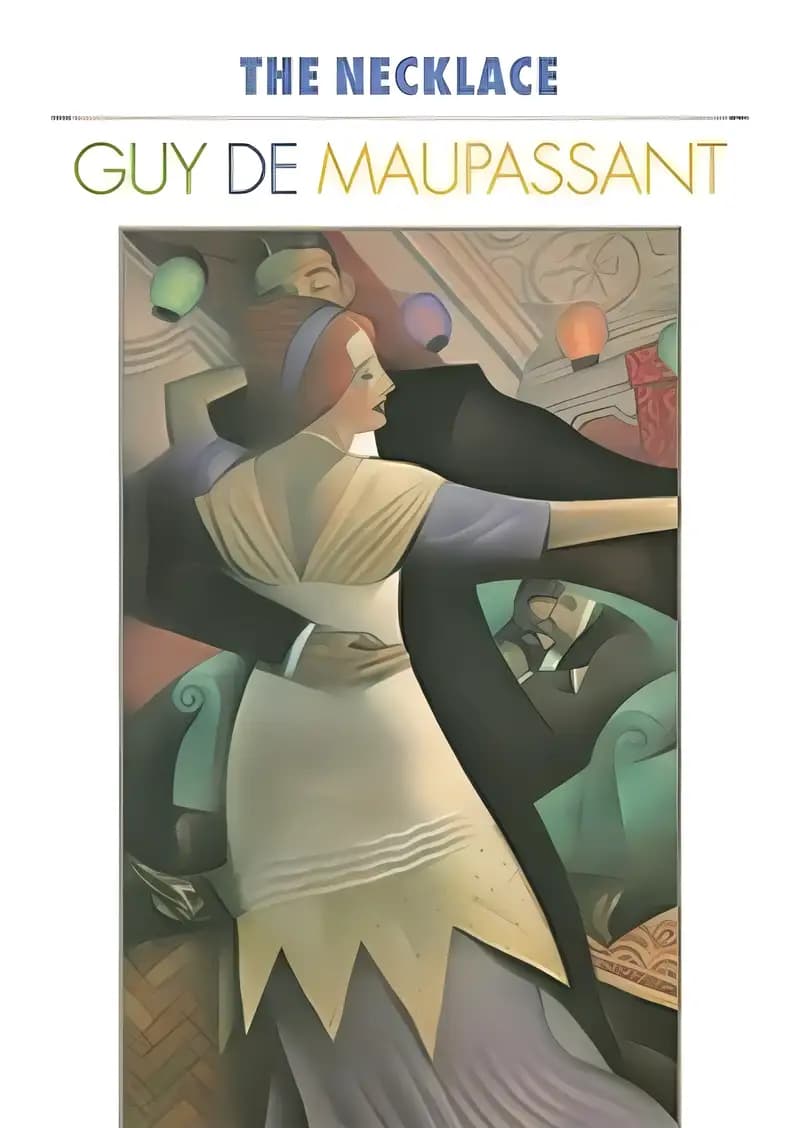
The Necklace
illustrations by
on Goodreads (8,122)
What’s inside...
After devoting their energies and income for ten years to replacing a borrowed diamond necklace which they have lost, a woman and her husband learn the irony of their efforts. A beautiful woman imagines she is married below her station. In an effort to make her happy, her husband brings home an invitation to a ball attended by the upper crust of Paris society. To his chagrin, she is only disappointed, and explains she has nothing to wear to the ball. The husband sacrifices his savings to buy her a dress. She has no jewelry, but she has a wealthy friend who will lend her a beautiful accoutrement to accompany the beautiful dress. She dances madly, drunk with pleasure: her time has come. She is the belle of the ball. It is the happiest night of her life, until they arrive at home and the necklace is missing.
Age
13-16
Length
47 pages
Text complexity
Character compass
Mathilde Loisel
Monsieur Loisel
Discussion points
How did the necklace change the main character's life? What does this tell us about the value of material things?
Can you think of a time when you wanted something very badly, like the character wanted the necklace? How did you feel after you got it?
What would you have done differently if you were in the main character's shoes?
How do you think the story would have ended if the necklace was never lost?
What did the main character learn by the end of the story? Have you learned something similar in your own life?
Tip: Role play these questions
Encourage your child to think deeply about the consequences of the character's actions and relate them to their own experiences.
Use expressions and voice modulations to reflect the emotions in the story, making the reading session more engaging and immersive.
Ask your child to imagine alternative endings to the story based on different choices the characters might make, fostering creative thinking.
Discuss the moral of the story and its applicability to everyday life, making the conversation relevant and educational.
Key lessons
Example Lesson: Value of honesty
Explanation: The story highlights the consequences of dishonesty when the main character lies about losing a borrowed necklace and replaces it, leading to years of hardship.
Real-World Application: Children learn the importance of telling the truth, even when it may be difficult, to avoid more complicated problems later.
Example Lesson: Understanding the impact of materialism
Explanation: The protagonist's desire for a lavish appearance leads to her downfall, showcasing the dangers of placing too much value on material possessions.
Real-World Application: This lesson helps children appreciate what they have and focus on more meaningful aspects of life, like relationships and personal integrity.
Example Lesson: Accepting responsibility for one’s actions
Explanation: The book teaches accountability as the character faces the long-term consequences of her decision to not be truthful about the necklace.
Real-World Application: Children learn the importance of taking responsibility for their actions and dealing with the results in a constructive way.