
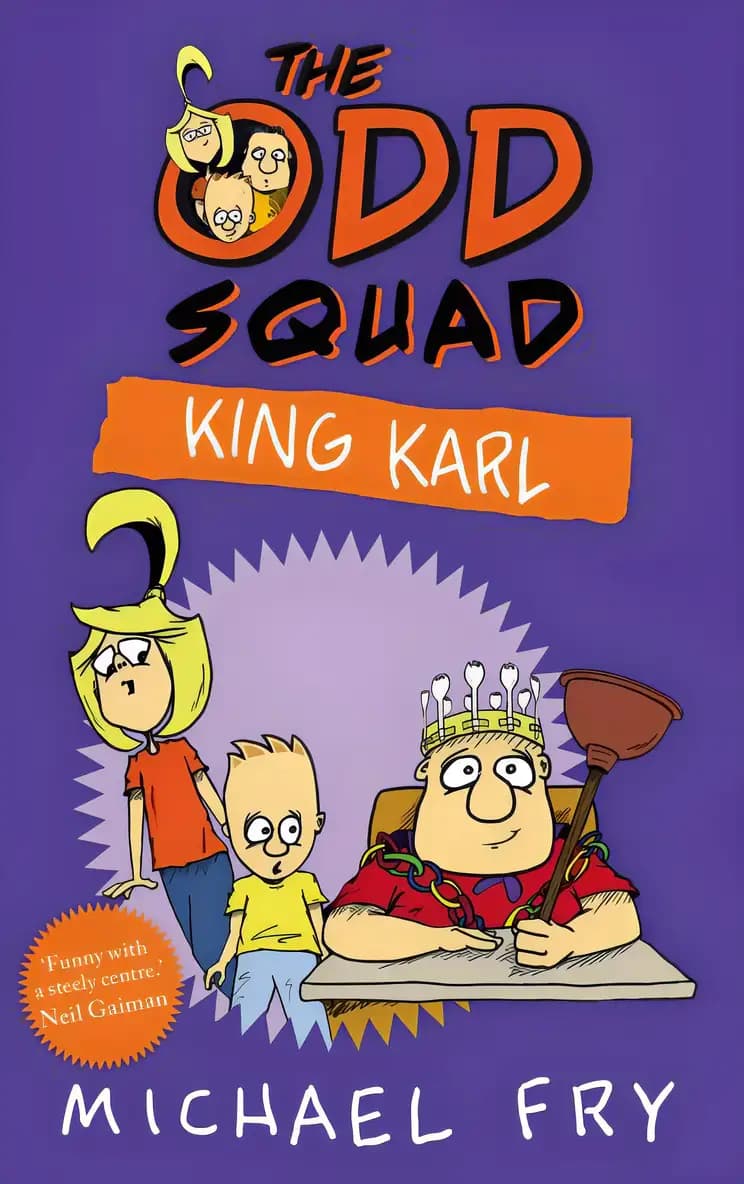
The Odd Squad, King Karl (An Odd Squad Book)
#3 of 3 in Odd Squad Book, An Series
on Goodreads (77)
What’s inside...
Nick, Molly and Karl have nowhere to turn but to each other in the latest Odd Squad adventure, and they'll need every ounce of wit, resourcefulness and help they can get in order to rise above their biggest challenge yet. Published in thirteen countries worldwide, this is the third in the brilliant series from Michael Fry. Karl is invited to join MLEZ, the secret organization that runs the school. Molly and Nick must save Karl from himself and the school from weird Karl. Age 8–12
Character compass
Nick
Molly
Karl
Discussion points
What do you think makes someone a true friend, like how Karl and Nick navigate their friendship?
How did Karl's feelings change throughout the story, and what do you think caused those changes?
Why is teamwork important, as seen through the challenges faced by the Odd Squad?
What would you have done differently if you were in Karl’s shoes during the big competition?
How can we help someone who feels left out or different, just like some characters in the book?
Tip: Role play these questions
Encourage your child to express their thoughts and feelings about the book’s events and characters. Use examples from the book to discuss values such as friendship, teamwork, and empathy. Relate the characters' experiences to real-life situations your child might encounter to deepen their understanding. Praise your child’s insights and perspectives to foster an open, enjoyable discussion.
Key lessons
Example Lesson: Teamwork and Cooperation
Explanation: Throughout 'The Odd Squad, King Karl', the characters must work together to solve problems and overcome obstacles, demonstrating the importance of cooperation.
Real-World Application: Children learn that collaborating with others can help them achieve goals and solve problems more effectively in school projects or team sports.
Example Lesson: Embracing Individual Differences
Explanation: The book showcases a variety of characters, each with unique traits and abilities, highlighting the value of accepting and celebrating individual differences.
Real-World Application: This lesson teaches children to appreciate diversity among their peers, promoting inclusivity and respect in their interactions.
Example Lesson: Problem Solving
Explanation: The protagonists face various challenges that require critical thinking and creativity to navigate, illustrating effective problem-solving strategies.
Real-World Application: Children can apply these problem-solving techniques to their own life challenges, enhancing their ability to think critically and creatively.
Example Lesson: Responsibility
Explanation: Characters in the story are tasked with important missions and responsibilities, teaching the importance of being dependable and accountable.
Real-World Application: This encourages children to take responsibility for their actions and duties, such as homework or chores, fostering a sense of accountability.
Example Lesson: Perseverance
Explanation: Despite difficulties, the characters persist in their endeavors, showcasing the virtue of perseverance in achieving goals.
Real-World Application: Children learn the importance of not giving up in the face of adversity, whether it’s in their academic pursuits, hobbies, or personal goals.