
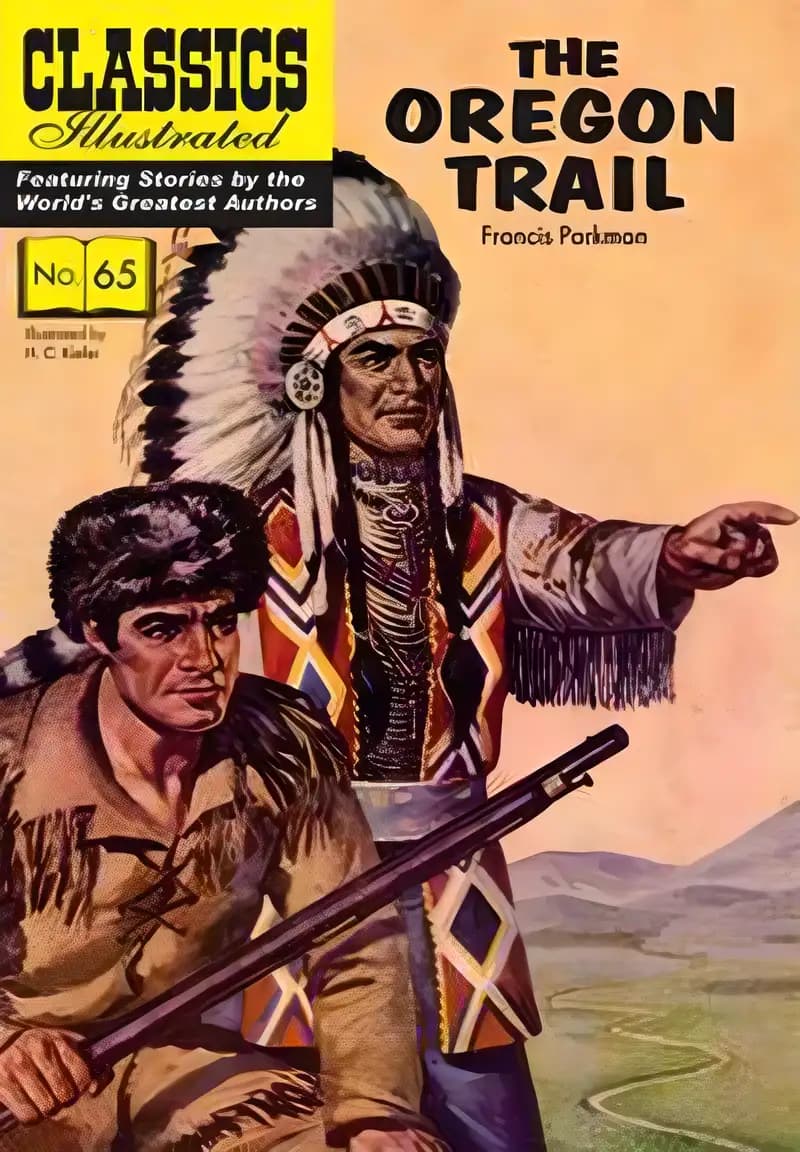
The Oregon Trail
Classics illustrated Series
on Goodreads (3,605)
What’s inside...
The Oregon Trail is a historical account of the journey in the 1840s and 1850s of American pioneers traveling west to settle the Oregon Country. The book by John O'Rourke provides a narrative history of the trail, the pioneers, the path followed, and challenges faced along the over 2,000 miles from Missouri to Oregon. Additionally, 'The Oregon Trail' by Parkman recounts his travels with traders, interactions with Native American tribes, and the hardships encountered. His detailed writing offers insights into the mid-19th century American West, its landscapes, people, and cultures, emphasizing the historical and literary significance of the book as a classic of Western American literature.
Series reading
Non-Sequential
Age
11-12
Length
48 pages
Text complexity
Character compass
Francis Parkman
Delorier
Quincy Adams Shaw
Henry Chatillon
Discussion points
What challenges did the travelers face on the Oregon Trail, and how did they overcome them?
How did the different landscapes described in the book affect the journey of the pioneers?
What role did teamwork and cooperation play in the travelers' journey across the Oregon Trail?
How do you think you would have reacted to some of the situations faced by the pioneers?
What have you learned about perseverance and determination from this story?
Tip: Role play these questions
Set the scene before reading by discussing what life was like in the 19th century, helping your child understand the historical context of the story.
As you read, pause to explore the illustrations or descriptions of the landscapes and ask your child how they imagine such scenes.
Encourage your child to put themselves in the pioneers' shoes, asking them how they would feel or react in similar circumstances.
After reading, use a map to trace the route the pioneers took and discuss the different states and environments they passed through.
Connect the themes of the book to your child’s life by discussing times when they needed to work in a team or persevere through a challenge.
Key lessons
Example Lesson: Resilience and Perseverance
Explanation: Throughout 'The Oregon Trail,' the characters face numerous hardships and challenges as they navigate the rugged terrain and unknown territories. Their determination to overcome obstacles highlights the importance of resilience.
Real-World Application: Children can apply this lesson by persisting through difficulties in school or in learning new skills, understanding that setbacks are part of growth.
Example Lesson: Cultural Awareness and Respect
Explanation: The book provides detailed descriptions of the interactions between the travelers and the Native American tribes they encounter. This offers an opportunity to understand and respect different cultures and perspectives.
Real-World Application: This encourages children to be open and respectful towards people from different backgrounds they meet in everyday life, promoting inclusivity and mutual respect.
Example Lesson: Teamwork and Cooperation
Explanation: The success of the journey often relies on the travelers working together and supporting each other. The story illustrates how cooperation can lead to overcoming challenges more effectively.
Real-World Application: Children can learn to collaborate with their peers in group projects or team sports, understanding that collective efforts can achieve great results.
Example Lesson: Adaptability
Explanation: The characters in 'The Oregon Trail' frequently have to adapt to new environments and unexpected situations. This highlights the importance of being flexible and adaptable.
Real-World Application: This lesson equips children to adjust to changes such as moving to a new school or dealing with alterations in their daily routines.
Example Lesson: Appreciation for Nature
Explanation: Parkman's vivid descriptions of the landscapes and environments evoke a deep appreciation and respect for nature.
Real-World Application: Encourages children to explore and value the natural world around them, fostering a sense of responsibility towards environmental conservation.