
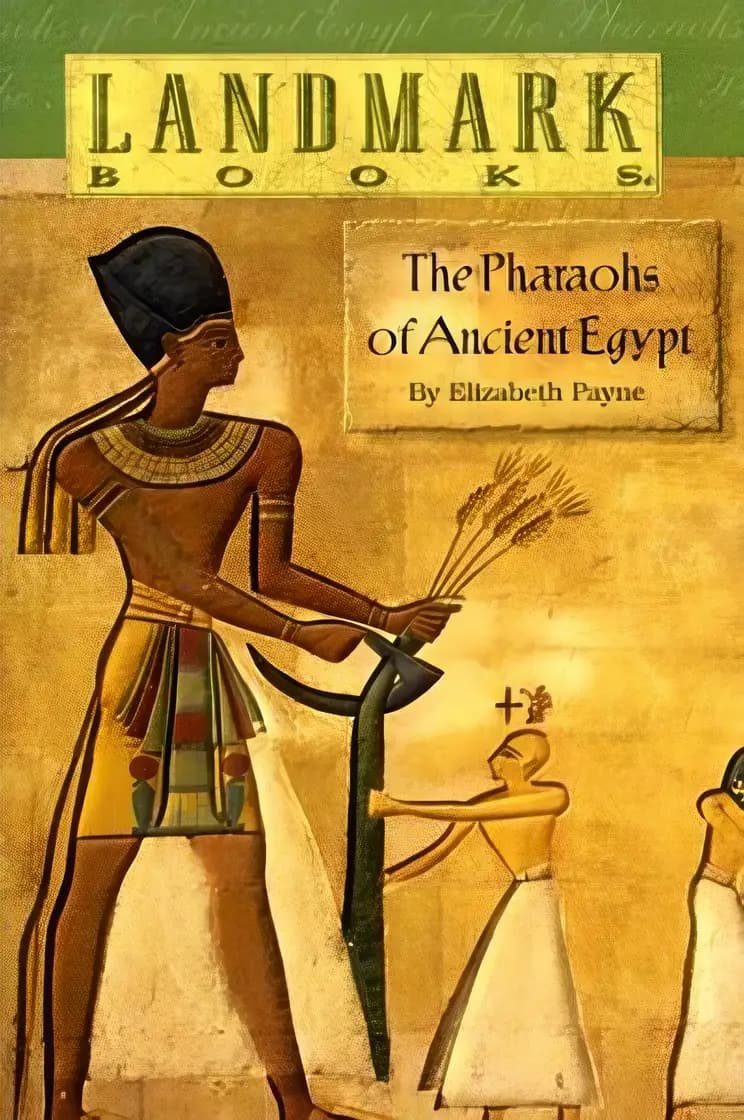
The Pharaohs of Ancient Egypt (Landmark Books)
Landmark Books Series
on Goodreads (644)
What’s inside...
For more than 3,000 years, Egypt was a great civilization thriving along the banks of the Nile River. However, when its cities crumbled, Egypt's culture and the secrets of its hieroglyphic writings were lost. 'The Pharaohs of Ancient Egypt' details how archaeologists have pieced together their discoveries, gradually uncovering the history of Egypt's people, its pharaohs, and its golden days.
Series reading
Non-Sequential
Age
8-12
Length
192 pages
Text complexity
Discussion points
What do you think it was like to live in Ancient Egypt during the time of the Pharaohs?
Why do you think the Pharaohs built such large pyramids?
How do the roles of people in Ancient Egypt compare to our roles in society today?
What can we learn from the culture and advancements of Ancient Egypt?
If you were a Pharaoh, what kind of ruler would you be and why?
Tip: Role play these questions
Utilize visual aids like maps or pictures of Ancient Egyptian artifacts to make the discussion more vivid and engaging.
Encourage your child to imagine themselves in various roles in Ancient Egypt, such as a farmer, a builder, or even a Pharaoh, to deepen their understanding of the society.
Connect themes from the book to current events or personal experiences to make the content more relatable.
Ask follow-up questions based on your child's responses to encourage deeper thinking and exploration of the subject.
Praise your child's insights and contributions to the conversation to boost their confidence and engagement.
Key lessons
Example Lesson: Leadership and Responsibility
Explanation: The book explores the reigns of various pharaohs, showcasing their responsibilities and decision-making processes.
Real-World Application: Children can learn the importance of taking responsibility in their tasks and understanding the impact of their decisions on others.
Example Lesson: Cultural Appreciation
Explanation: Through detailed historical narratives, the book provides insights into Egyptian culture, customs, and traditions.
Real-World Application: This lesson helps children respect and value different cultures and histories, enhancing their social awareness and empathy.
Example Lesson: The Value of Historical Knowledge
Explanation: The book traces significant historical events and figures, emphasizing the importance of understanding the past.
Real-World Application: Children can apply this understanding by recognizing how history shapes our present environment and future possibilities.
Example Lesson: Resilience in Adversity
Explanation: The pharaohs often faced significant challenges, including political upheaval and natural disasters, demonstrating resilience.
Real-World Application: Children can learn to persevere through personal challenges and setbacks, using historical figures as role models for resilience.
Example Lesson: Importance of Governing and Law
Explanation: The book discusses the development of laws and governance systems in ancient Egypt.
Real-World Application: This lesson can teach children the significance of rules and laws in creating order and fairness in society.