
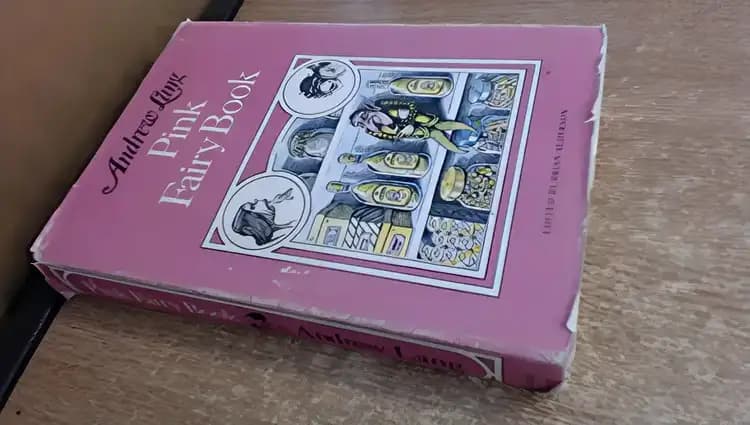
The Pink Fairy Book
#5 in The Coloured Fairy Books Series
on Goodreads (1,760)
What’s inside...
The Pink Fairy Book, compiled by Andrew Lang, is part of the Fairy Books of Many Colors series and features a collection of fairy tales from diverse cultures including Japanese, Scandinavian, African, Sicilian, and more. The book contains 41 stories such as 'The Snow Queen' and 'The House in the Wood', showcasing a mix of enchanting, comic, tragic, and occasionally disturbing tales. These stories, retold by Lang and translated for an English-speaking audience, explore themes of bravery, love, and justice, often involving magical creatures and adventurous heroes. Illustrated by Debra McFarlane, this edition offers a beautiful and timeless experience of world folklore, appealing to both children and adults.
Character compass
Urashimataro
Turtle
The Princess
Discussion points
What do you think is the most important lesson you learned from one of the stories in 'The Pink Fairy Book'?
Which fairy tale character did you find the most interesting, and why?
If you could change one thing about any of the stories, what would it be and why?
How do you think the characters felt during their adventures?
Which story would you like to be a part of, and what role would you play?
Tip: Role play these questions
Encourage your child to imagine themselves in the fantastical worlds of 'The Pink Fairy Book'. Ask them to describe what they see, hear, and feel in those settings. This not only enhances their engagement but also boosts their descriptive abilities. Share your own interpretations or favorite stories from the book to foster a deeper connection and discussion. Lastly, relate the morals or lessons from the fairy tales to real-life situations to help your child apply the stories' wisdom in their everyday life.
Key lessons
Example Lesson: Resilience
Explanation: Many stories in 'The Pink Fairy Book' portray characters who persevere through difficult challenges.
Real-World Application: Children learn that facing challenges with courage can lead to positive outcomes, encouraging them to tackle their own difficulties with resilience.
Example Lesson: Kindness and compassion
Explanation: Characters often show kindness to others, which results in rewards or reciprocal acts of kindness.
Real-World Application: Teaching children the value of being kind and helping others, fostering a sense of empathy and community in their everyday interactions.
Example Lesson: The importance of cleverness and wit
Explanation: Several tales highlight characters using their intelligence and wit to solve problems, outsmart adversaries, or achieve their goals.
Real-World Application: Children learn the importance of using their minds to navigate obstacles and think critically about the solutions to problems they encounter.
Example Lesson: Consequences of actions
Explanation: Stories within the book illustrate how characters’ choices have consequences, both good and bad.
Real-World Application: Helps children understand that their actions have impacts and teaches them to consider the outcomes before acting.
Example Lesson: Value of honesty
Explanation: Characters who display honesty are often rewarded, while those who deceive tend to face negative repercussions.
Real-World Application: Encourages children to be truthful and honest in their dealings and relationships, highlighting how trust is crucial in forming healthy interactions.