
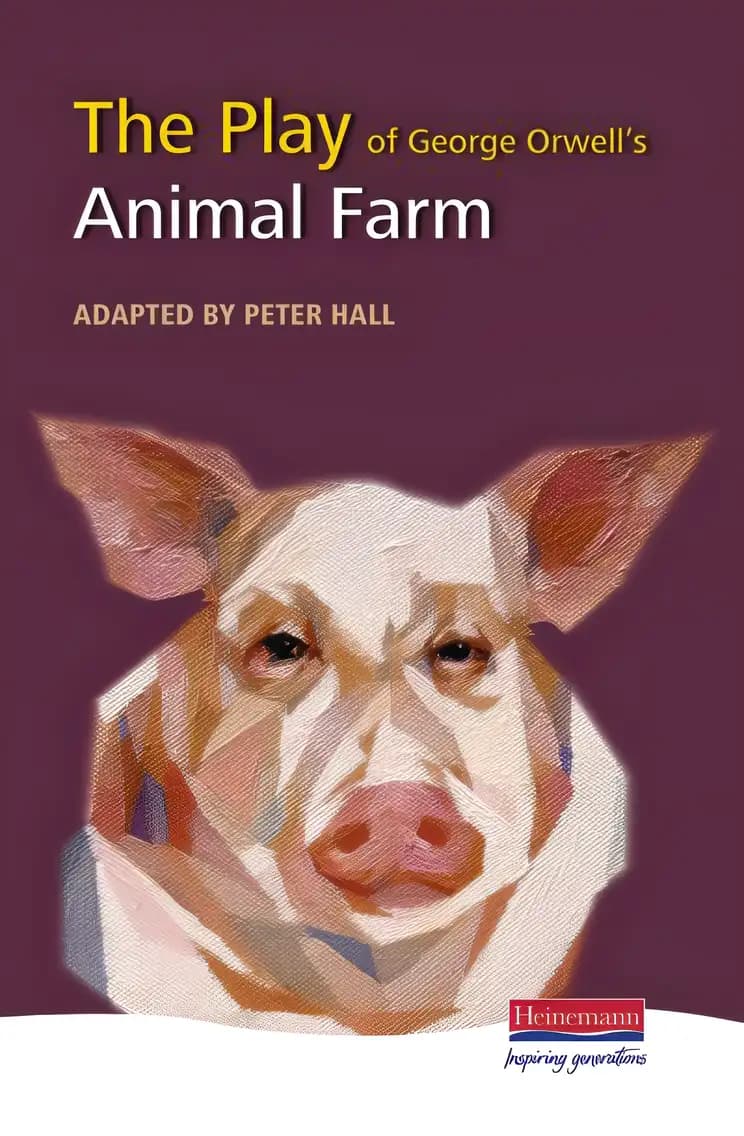
The Play of Animal Farm (Heinemann Plays For 14-16+)
The New windmill series
on Goodreads (63)
What’s inside...
The 'Heinemann Plays' series offers contemporary drama and classic plays in durable classroom editions. Many have large casts and an equal mix of boy and girl parts. This dramatization of George Orwell's 'Animal Farm' features lyrics by Adrian Mitchell and music by Richard Peaslee.
Series reading
Non-Sequential
Age
14-16
Length
143 pages
Text complexity
Character compass
Snowball
Clover
Benjamin
Boxer
Squealer
Mr. Jones
Napoleon Bonaparte
Discussion points
How do the events in 'Animal Farm' mirror the events of real historical revolutions?
Why do you think George Orwell chose animals to represent the characters in the story?
Which character did you find the most compelling, and why?
How do you think the story would change if it were set in today's world?
What did you learn about power and leadership from this play?
Tip: Role play these questions
Start the conversation by sharing your own thoughts on the themes presented in 'Animal Farm', such as leadership and societal structure. This can make the discussion more accessible and less intimidating for your child.
Encourage your child to express their opinions and thoughts by asking follow-up questions based on their responses to the open-ended questions. Show genuine interest and avoid judgment to keep the conversation flowing.
Connect the themes of the book to current events or personal experiences to make the discussion more relatable and meaningful. This can help your child see the relevance of the story in today's world.
Discuss the motives behind each character’s actions and decisions. This will help your child develop critical thinking and empathy by understanding different perspectives.
Wrap up the discussion by asking your child how the story could apply to their own life or the lives of those around them, fostering a deeper personal connection to the book’s themes.
Key lessons
Example Lesson: The dangers of totalitarianism
Explanation: The story demonstrates how a seemingly fair system can become corrupt under totalitarian rule, as the pigs manipulate the other animals to consolidate power.
Real-World Application: It teaches children the value of democratic principles and the importance of speaking out against unfair treatment and injustice.
Example Lesson: The importance of critical thinking
Explanation: Through the character of Boxer, who blindly follows the pigs, the book highlights the consequences of not questioning authority.
Real-World Application: Children learn to question inconsistencies and think critically about the motives of those in power rather than accepting everything at face value.
Example Lesson: The role of literacy and knowledge
Explanation: The pigs' control over the farm's commandments and the other animals' lack of literacy skills show how knowledge is power.
Real-World Application: This underscores the importance of education and encourages children to seek knowledge to better understand the world around them.
Example Lesson: Unity and the strength of community
Explanation: The book shows how divisions within the animal community contribute to their downfall, highlighting the strength in unity.
Real-World Application: Children can see the importance of teamwork and supporting each other in achieving common goals.