
The Prince Won't Go to Bed!
What’s inside...
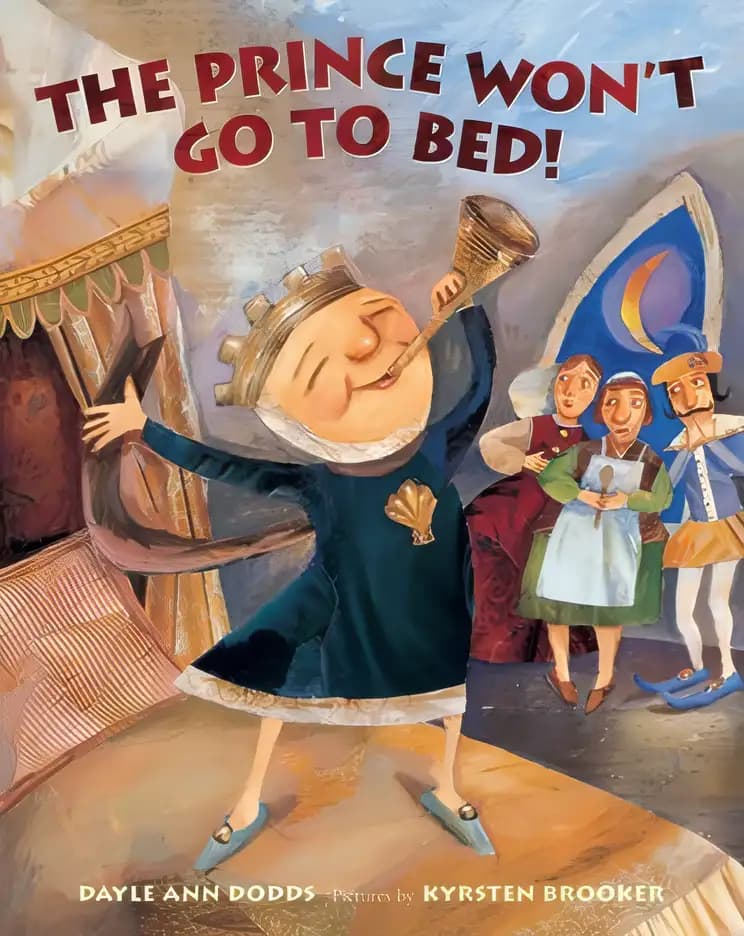
In this whimsical tale set in a medieval world, a young Prince refuses to go to bed, driving his Nanny and the entire royal household to distraction. As they attempt various solutions, from a fluffy pillow to a gentle lullaby, the castle becomes increasingly chaotic. It isn't until Princess Kate, awakened by the noise, asks her brother what he needs that they discover all he wanted was a good-night kiss. With ingeniously crafted collage illustrations and lively rhyming text, the story captures the humorous antics of this royal bedtime drama.
Age
6-8
Length
32 pages
Text complexity
Character compass
Prince
King
Queen
Discussion points
Why do you think the prince doesn't want to go to bed? What are some reasons you sometimes don't want to go to bed?
How do the other characters in the castle try to help the prince fall asleep? Which way do you think was the most fun?
If you were in the story, what would you do to help the prince go to sleep?
What do you think finally made the prince feel sleepy? Have you ever felt the same way?
How do you think the story would change if it was a princess instead of a prince?
Tip: Role play these questions
Encourage your child to express their feelings about bedtime by comparing their own routines with the prince’s situation.
Use the characters' attempts to help the prince sleep as a way to discuss the importance of sleep and a bedtime routine.
Ask your child to imagine alternative solutions for the prince’s sleep problem, enhancing their problem-solving skills.
Discuss the emotions the prince might be feeling. This can help your child understand and articulate their own emotions better.
After reading, encourage your child to draw their favorite scene or a new bedtime routine for the prince, boosting creativity and engagement with the story’s themes.
Key lessons
Example Lesson: Problem-Solving
Explanation: The story showcases the young prince and the castle staff trying various methods to get him to sleep, demonstrating problem-solving skills.
Real-World Application: Children can learn to think of different solutions when faced with a challenge, whether it's a disagreement with a friend or completing a difficult task.
Example Lesson: Empathy
Explanation: As characters in the book strive to understand and soothe the prince's feelings, it depicts the importance of considering others' emotions.
Real-World Application: This lesson can help children understand the impact of their actions on others and encourage them to be considerate in their daily interactions.
Example Lesson: Persistence
Explanation: Characters repeatedly attempt different strategies to achieve their goal, highlighting the value of persistence even when initial efforts fail.
Real-World Application: Kids can apply this to sticking with difficult tasks at school or while learning new skills, understanding that not giving up is key to success.
Example Lesson: Creativity
Explanation: The imaginative solutions the castle staff come up with to try to get the prince to bed reflect creative thinking.
Real-World Application: This encourages children to use their imagination to solve problems and think outside the box in both play and academic settings.
Example Lesson: Family and Community Support
Explanation: The collective effort of the castle staff to help the prince reflects themes of community support and teamwork.
Real-World Application: Children can learn the importance of seeking help from others and working together to overcome obstacles, reinforcing the value of community in personal growth and success.