
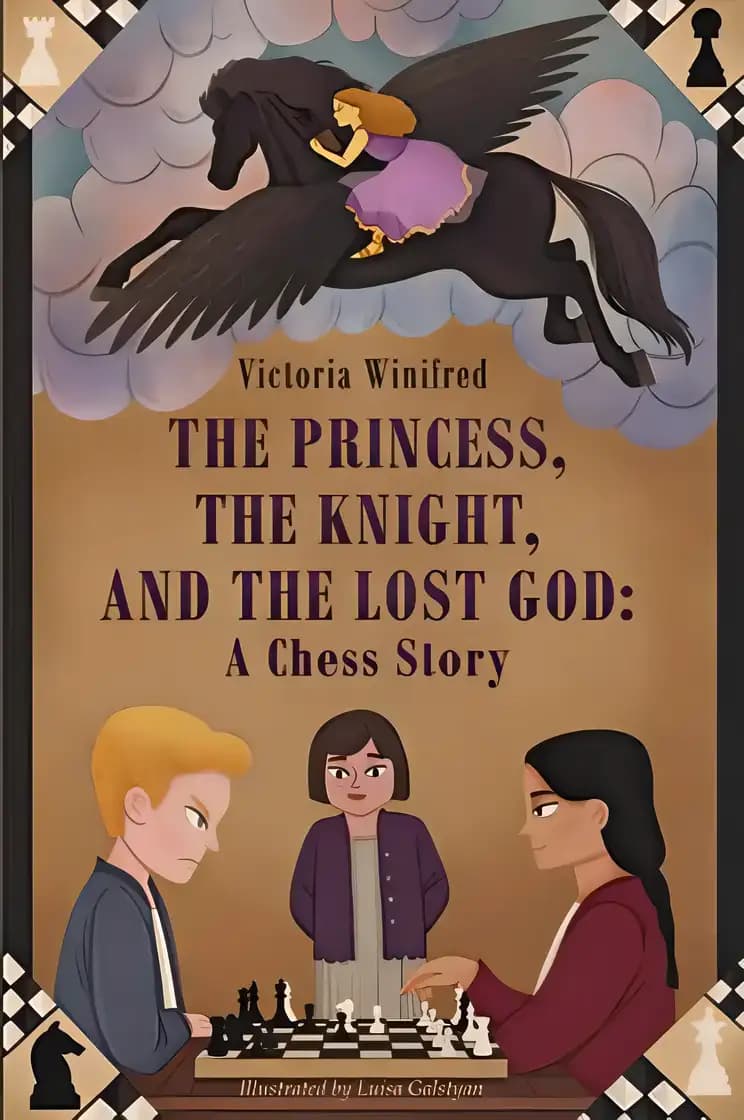
The Princess, the Knight, and the Lost God: A Chess Story
not part of a series
What’s inside...
An Award-Winning Mythological Fantasy for Kids of All Ages!
Princess Kassie, the 12-year-old daughter of the gods Caïssa and Mars, lives a charmed life in the dazzling kingdom of Chess Mountain. In this realm, chess pieces are living beings and flourish as loyal citizens. However, on Kassie's birthday, her best friend Dimitri mysteriously disappears and her parents are wrongly accused. This event shatters Kassie's world.
As war is declared, the princess escapes to Earth on a special mission to strengthen her kingdom and gain her goddess title. Accompanied by a trusted knight, Kassie assumes the identity of a mortal student and attends an unusual and diverse classroom led by a quirky teacher.
To her surprise, Kassie discovers that she has much in common with her human classmates. Through the power of chess thinking, she empowers her newfound friends to confront their own challenges, including family issues, physical challenges, and a relentless class bully.
However, mysterious clues suggest kingdom enemies may be lurking nearby. Kassie must decide whether to cut her mission short or risk everything to protect Chess Mountain. And when the ultimate face-off occurs, she must make her final move—with no time to spare.
In a world filled with countless distractions, this wholesome book filled with adventure, mystery, and a dash of the holiday spirit will capture your child's attention and nurture a love for reading. While spurring imagination and creativity, it also fosters the development of STEM/critical thinking and problem-solving skills. The narrative can be fully enjoyed without any prior knowledge of chess, although it may be a beneficial influence and motivate readers to learn the game.
Series reading
Non-Sequential
Age
8-11
Length
216 pages
Text complexity
Discussion points
What do you think each character learned by the end of the story?
How did the characters work together to solve the problem?
If you were in the story, what would you have done differently?
Why do you think understanding each other's strengths was important for the characters?
What parts of the story made you feel excited or curious?
Tip: Role play these questions
Encourage your child to express their thoughts about the story by asking them what their favorite part was and why.
Discuss the importance of teamwork and strategy, and relate these themes to real-life situations that your child may encounter.
Ask your child to draw or act out their favorite scene, which can help them connect more deeply with the story.
Together, guess what might happen next if the story continued, encouraging creative thinking and imagination.
Highlight the moral lessons from the book, such as perseverance and cooperation, and ask how they can apply these lessons in their own life.
Key lessons
Example Lesson: Strategic Thinking
Explanation: Through the chess-themed adventure, children observe the characters making deliberate moves to solve problems, similar to a game of chess.
Real-World Application: Children learn to think ahead and evaluate consequences before acting, aiding them in making better decisions in real-life situations.
Example Lesson: Teamwork
Explanation: The characters must cooperate to overcome obstacles and find the Lost God, showcasing the power of working together.
Real-World Application: This encourages children to value collaborative efforts in group tasks at school or in sports.
Example Lesson: Responsibility
Explanation: The knight and the princess take on roles that require them to be accountable for their actions in their quest, embodying the concept of responsibility.
Real-World Application: Children understand the importance of being reliable and accountable in their duties, whether it be in completing homework or in household chores.
Example Lesson: Resilience
Explanation: Amidst challenges, the characters persist and adapt their strategies, demonstrating resilience.
Real-World Application: This lesson helps children to not be discouraged by setbacks and to persevere through their own challenges.
Example Lesson: Critical Thinking
Explanation: The plot involves solving riddles and navigating through difficult scenarios, which enhances critical thinking.
Real-World Application: Promotes the ability in children to analyze situations and solve problems creatively and efficiently.