
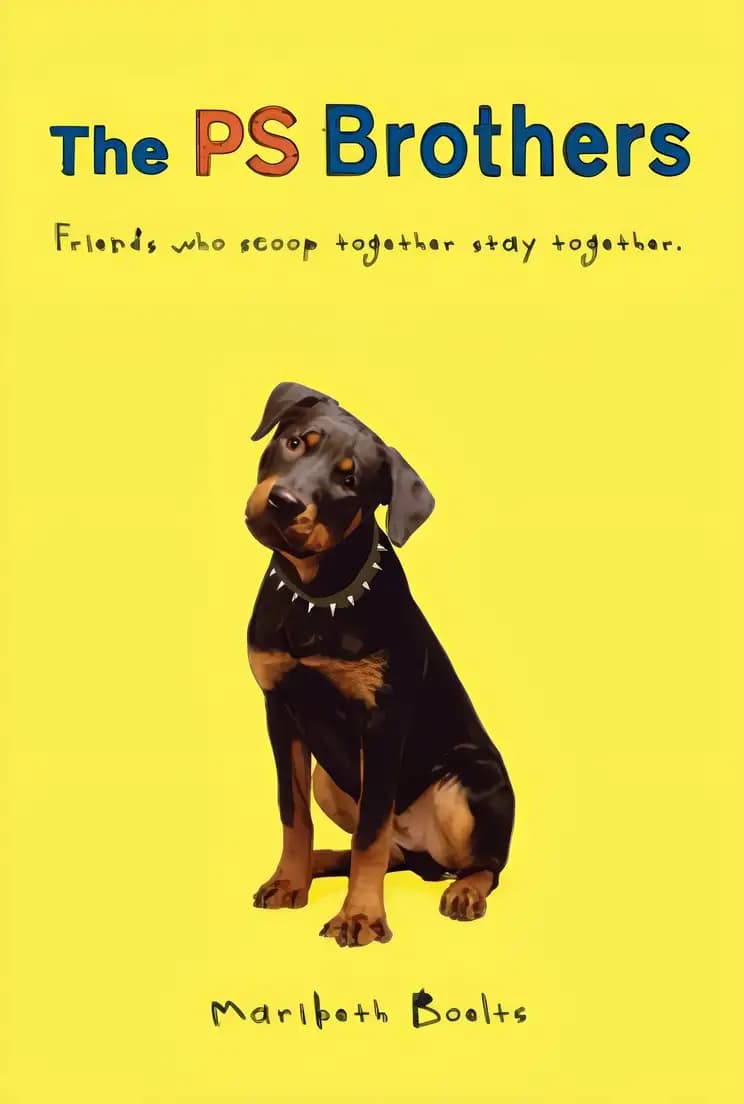
The Ps Brothers
on Goodreads (387)
What’s inside...
Russell and Shawn, best friends who call themselves the PS Brothers (P for poop, S for scoop), are determined to earn money by scooping poop to buy a puppy. They believe having a tough dog will prevent them from being bullied for being weak or poor. However, their journey takes an unexpected turn when they stumble upon a dog-fighting ring. Despite the obstacles, the boys learn that doing the right thing could lead to achieving their dreams and more.
Age
8-12
Length
144 pages
Text complexity
Character compass
Russell
Shawn
Troy
Discussion points
What do you think made Russell and Shawn want to start their own business?
How did the boys handle challenges and setbacks in their pest control business?
What do you think about the way Russell and Shawn treated each other and their friends?
How do you think the story would change if it took place in our town?
What did you learn about friendship and teamwork from 'The Ps Brothers'?
Tip: Role play these questions
Use open-ended questions that encourage your child to think deeply about the characters and their motivations.
Relate the boys’ entrepreneurial spirit to any time your child wanted to start something new, such as a lemonade stand or a new hobby, to make the conversation more relatable.
Discuss the moral choices characters face, asking your child what they would do in similar situations.
Point out moments in the book where characters show growth or learn from their mistakes, prompting your child to think about how they can apply these lessons in their own life.
After discussing a question, share your own thoughts and feelings about the topic to model thoughtful engagement and show that their opinions are valued.
Key lessons
Example Lesson: The importance of honesty
Explanation: In 'The Ps Brothers', the protagonists grapple with truth and deceit as they navigate their business and personal relationships. Their journey highlights the consequences of dishonesty and the ultimate relief and positive outcomes when they choose honesty.
Real-World Application: Children can apply this to their daily interactions by understanding the value of being truthful with friends and family, which fosters trust and strong relationships.
Example Lesson: Empathy and compassion
Explanation: Throughout the book, the characters experience various challenges and misunderstandings. These situations serve as a catalyst for the brothers to develop empathy as they learn to see the world from others' perspectives.
Real-World Application: Kids can use empathy in real-life by considering others' feelings and viewpoints in school or during play, promoting inclusiveness and understanding.
Example Lesson: Resilience and problem-solving
Explanation: The brothers face several obstacles in their venture but they continually brainstorm solutions and alternatives. This resilience in the face of adversity demonstrates the importance of perseverance and creative problem-solving.
Real-World Application: This lesson is applicable when children encounter challenges in homework or conflicts with peers. Learning to think through problems and not giving up easily can be crucial life skills.
Example Lesson: Value of hard work
Explanation: The protagonists start a business in the story and their success is directly tied to their dedication and hard work. This correlation showcases the impact of effort towards achieving goals.
Real-World Application: This encourages children to be diligent and industrious in their tasks, whether in academic, extracurricular, or personal endeavors, teaching them that success often follows hard work.
Example Lesson: Importance of teamwork
Explanation: Throughout the book, the brothers learn that working together with family and friends makes them stronger than when they face problems alone. The value of teamwork in achieving common goals is a recurring theme.
Real-World Application: Children can apply this lesson in group activities at school, sports teams, or family chores, learning that cooperation and collaboration can lead to successful outcomes.