
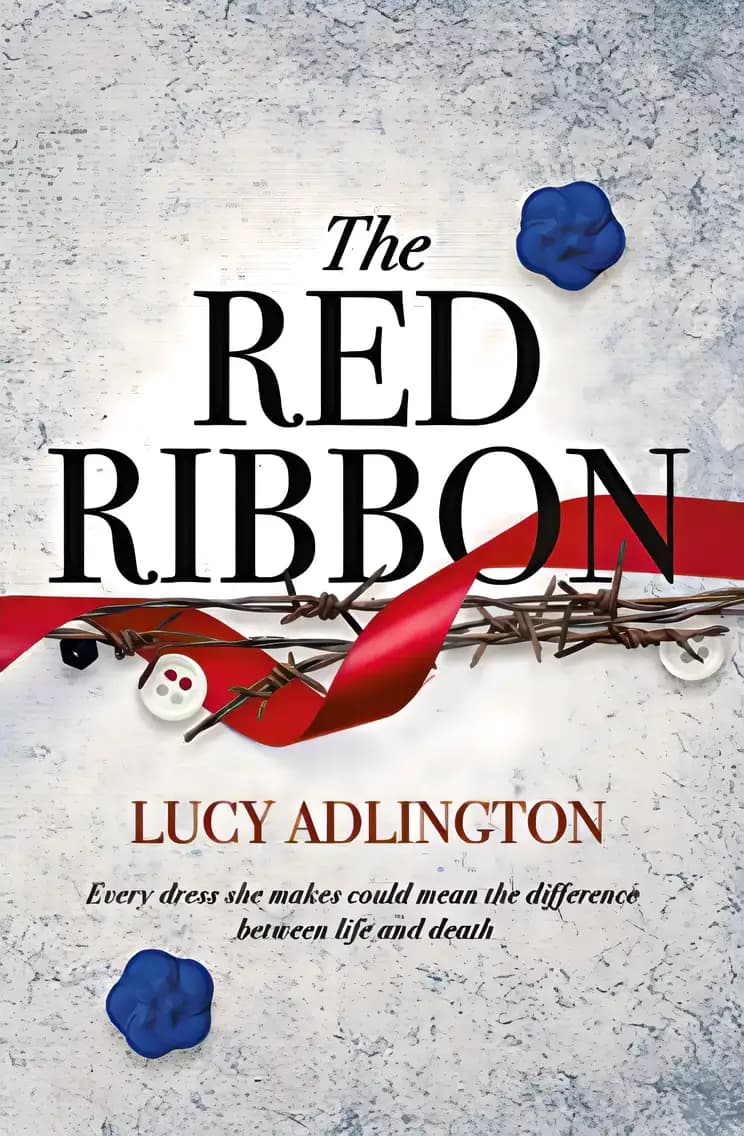
The Red Ribbon
on Goodreads (5,074)
What’s inside...
Rose, Ella, Marta, and Carla find themselves in Birchwood, a place far from a normal life where they might have been friends. Fourteen-year-old Ella starts her first day as a dressmaker in a sewing workshop at Birkenau-Auschwitz, where each garment she crafts could mean the difference between life and death. The workshop serves no ordinary clients, but those in the concentration camp, making every stitch a part of the fight for survival. As Ella faces haunting memories and tough decisions about how far she's willing to go to survive, she finds solace in her work and the world of fashion. She grapples with whether her creative passion is merely a way to collaborate with her captors or a vital means to stay alive. Her deepening friendship with Rose, and the symbolic red ribbon of hope, play crucial roles in her journey of strength and survival, illuminating a lesser-known aspect of the Holocaust.
Age
12-17
Length
304 pages
Text complexity
Character compass
Ella
Rose
Marta
Carla
Discussion points
How did the story make you feel about the importance of friendship and resilience?
What did you learn about the challenges people faced during the war times depicted in the book?
Why do you think the red ribbon was so important to the characters in the story?
How do you think the main character changed by the end of the book?
Tip: Role play these questions
Before starting the conversation, encourage your child to think about the symbolism of objects in stories, like the red ribbon in this book.
Share your own thoughts and feelings about the book’s events and characters to foster an open dialogue.
Ask your child to relate the struggles of the characters to any challenges they face and discuss how bravery and support can help overcome them.
Highlight the historical context of the book, providing a gentle introduction to significant historical events relevant to the storyline.
Key lessons
Example Lesson: Empathy and compassion
Explanation: The story revolves around the protagonist, Ella, who helps others in dire circumstances despite her own struggles.
Real-World Application: Children can learn to understand and share the feelings of others, acting with kindness and compassion towards their peers and adults.
Example Lesson: Resilience and perseverance
Explanation: Ella faces numerous challenges and adversities but continues to strive for survival and to protect her friends.
Real-World Application: This highlights the importance of perseverance through tough times and teaches children to remain strong and hopeful, regardless of obstacles.
Example Lesson: The value of friendship
Explanation: The bond between Ella and her friends in the story showcases how friendships can provide support and comfort in the most difficult times.
Real-World Application: It teaches children the importance of building and maintaining strong friendships and being a supportive friend in both good and bad times.
Example Lesson: The danger of indifference
Explanation: The story indirectly addresses the consequences of societal indifference to the suffering of others, highlighting the impact of bystander behavior.
Real-World Application: Children can learn the importance of taking action and speaking out against injustice, rather than remaining passive observers.
Example Lesson: Historical awareness
Explanation: Set against the backdrop of a World War II concentration camp, the book provides a historical context that is crucial for children to understand past atrocities.
Real-World Application: This can help nurture a sense of historical awareness and the importance of learning from history to prevent future mistakes.