
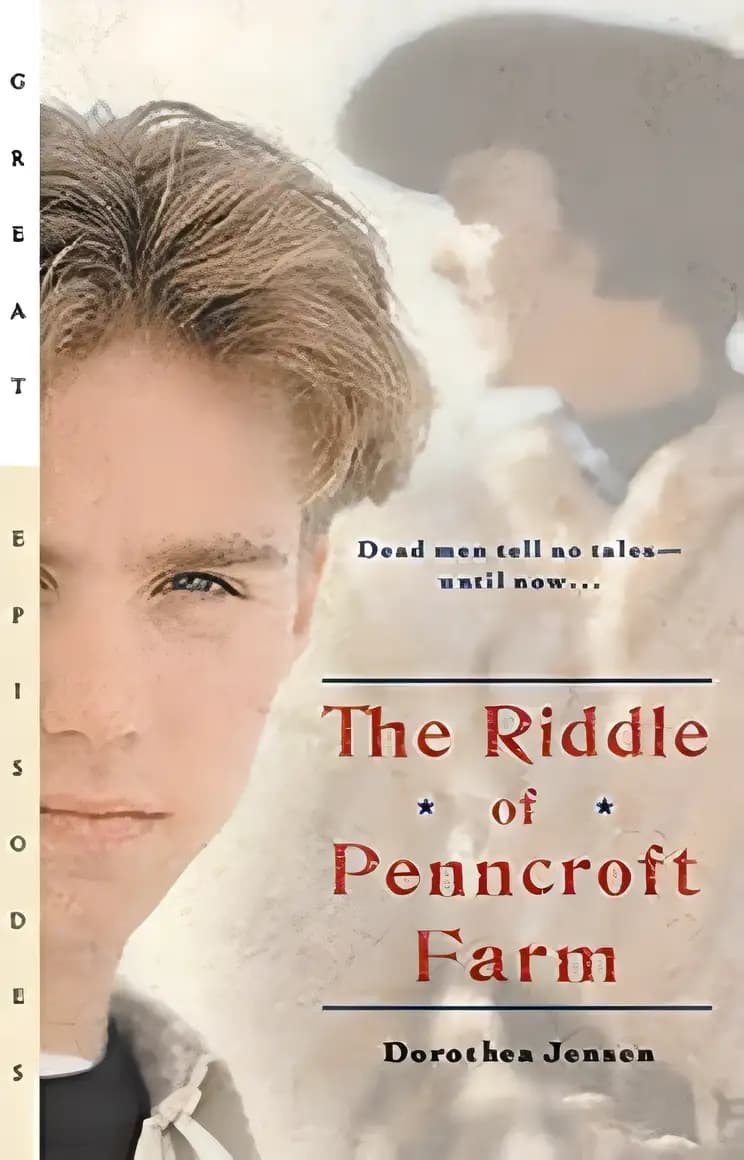
The Riddle of Penncroft Farm (Great Episodes)
Great Episodes Series
on Goodreads (286)
What’s inside...
Twelve-year-old Lars Olafson's move to his great-aunt's farm near Valley Forge, Pennsylvania, brings him friendship with the ghost of an eighteenth-century ancestor who recounts his adventures during the American Revolution, helping Lars adjust to his new home and playing a part in the search for a missing will. Lars Olafson moves with his parents to the old family farm near Valley Forge, Pennsylvania, to live with his aged aunt Cass. Lars is miserable--until he meets Geordie, a ghost whose stories of the Revolutionary War are as exciting as those of an eyewitness. When Aunt Cass dies suddenly, Lars is faced with a mystery linked to the Revolutionary War--and Geordie’s ghostly stories are his only chance of solving it.
Series reading
Non-Sequential
Age
10-12
Length
192 pages
Text complexity
Character compass
Lars Olafson
Geordie
Discussion points
How do you think Lars felt when he discovered his family's connection to the Revolutionary War? What would you feel if you found out something similar about your family?
What are some of the main differences between life during the Revolutionary War and our life today? Why do you think those changes happened?
Why do you think it is important for Lars to solve the riddle of Penncroft Farm? How does solving the riddle change him?
What lessons can we learn from the characters' actions and decisions in the story? Can you think of a situation where you could apply one of these lessons?
If you could ask any character in the book a question, who would you choose and what would you ask them?
Tip: Role play these questions
Use the historical context of the book to encourage your child to compare and contrast the past and present. Discuss everyday life, technology, and communication differences.
Encourage your child to talk about their emotions as they relate to the experiences of Lars and other characters. This builds empathy and understanding.
Ask your child to imagine themselves as a new character in the book. Have them describe how they would interact with Lars and what role they would play in solving the riddle.
Create a family tree together and discuss your own family's history and any stories from the past. This makes the connection to the book's themes more personal and engaging.
Key lessons
Example Lesson: Understanding history
Explanation: The story weaves historical events from the American Revolution into the narrative, allowing the young protagonist and readers alike to learn through the eyes of their ancestors.
Real-World Application: Children can develop a deeper appreciation for history and understand the importance of past events in shaping present circumstances.
Example Lesson: The value of courage and resilience
Explanation: The protagonist encounters various challenges but learns to overcome them bravely, mirroring the determination of historical figures he learns about.
Real-World Application: This can motivate children to face their own challenges with courage and understand that overcoming difficulties is a part of life.
Example Lesson: Importance of family and heritage
Explanation: The book highlights family relationships across generations, emphasizing the importance of understanding one's heritage and the legacy of family values.
Real-World Application: Children are encouraged to connect with their own families, learn about their history, and carry forward the values taught by their ancestors.
Example Lesson: Critical thinking and problem solving
Explanation: As the protagonist solves the riddle of Penncroft Farm, he engages in critical thinking and problem-solving which are key to understanding the complex historical context.
Real-World Application: Children can learn to apply critical thinking skills in their daily situations, enhancing their decision-making and problem-solving abilities.