
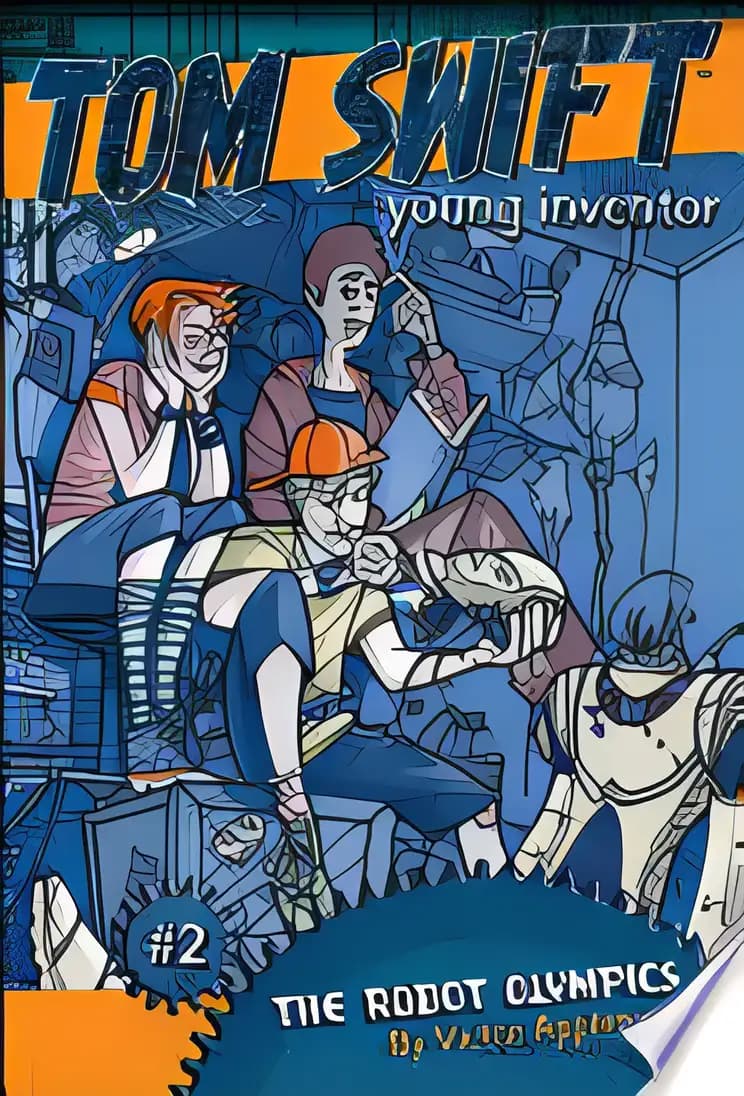
The Robot Olympics (Tom Swift, Young Inventor Book 2)
#2 of 6 in Tom Swift Young Inventor Series
on Goodreads (68)
What’s inside...
Tom has been training his robot, SwiftBot, for the Robot Olympics, an event sponsored by the White House's Office of Science and Technology. Teenage inventors from around the country are bringing their homemade robots to compete in athletic competitions. The Road Back, an antiscience terrorist group, condemns the event and despite tight security, someone is playing dirty, making the situation dangerous.
Character compass
Tom Swift
Discussion points
What challenges did Tom Swift face during the Robot Olympics and how did he overcome them?
How do you think teamwork contributed to the success in the story?
What would you invent if you could create any gadget or robot? Why?
How do the robots in the book compare to real-life robots you know about?
What lessons did you learn from Tom Swift's adventures in the Robot Olympics?
Tip: Role play these questions
Encourage your child to relate the story to their own experiences by asking how they would handle similar challenges.
Discuss the importance of perseverance and creativity, as demonstrated by Tom Swift.
Explore the concept of innovation together by brainstorming fun new inventions or improvements to existing gadgets at home.
Foster a deeper understanding by comparing real-world technology with the fictional inventions in the book.
Celebrate your child’s responses and ideas, reinforcing their confidence and enthusiasm for problem-solving and reading.
Key lessons
Example Lesson: Teamwork and Collaboration
Explanation: In 'The Robot Olympics,' Tom Swift works collaboratively with others to compete in the event. The story showcases how teamwork leads to success in achieving goals.
Real-World Application: Children can learn the importance of working together, whether in school projects, sports, or family activities, emphasizing that collective effort can lead to greater results.
Example Lesson: Innovation and Creativity
Explanation: The protagonist, Tom, uses his inventive skills to create robots for the competition. This highlights the role of creativity and thinking outside the box in solving problems.
Real-World Application: This lesson can inspire children to engage in creative thinking and problem-solving in their own lives, whether it's in academics, hobbies, or everyday challenges.
Example Lesson: Perseverance
Explanation: Throughout the book, Tom faces numerous challenges but remains determined to succeed. His perseverance is a key factor in overcoming obstacles.
Real-World Application: Children learn the value of persistence in any endeavor they undertake, teaching them not to give up easily and to keep striving towards their goals despite difficulties.
Example Lesson: Ethical Competition
Explanation: Tom demonstrates fair play and integrity in the competition, showing that winning isn’t everything. He respects his competitors and the spirit of the games.
Real-World Application: This can teach children the importance of fairness and integrity in all competitive situations, including sports and academics, encouraging them to always compete ethically.
Example Lesson: Learning from Failure
Explanation: The book shows that failures are a stepping stone to success, as Tom learns from his mistakes and improves his designs.
Real-World Application: This lesson helps children understand that making mistakes is a vital part of learning and growth, and that each failure can lead to better future performance.