
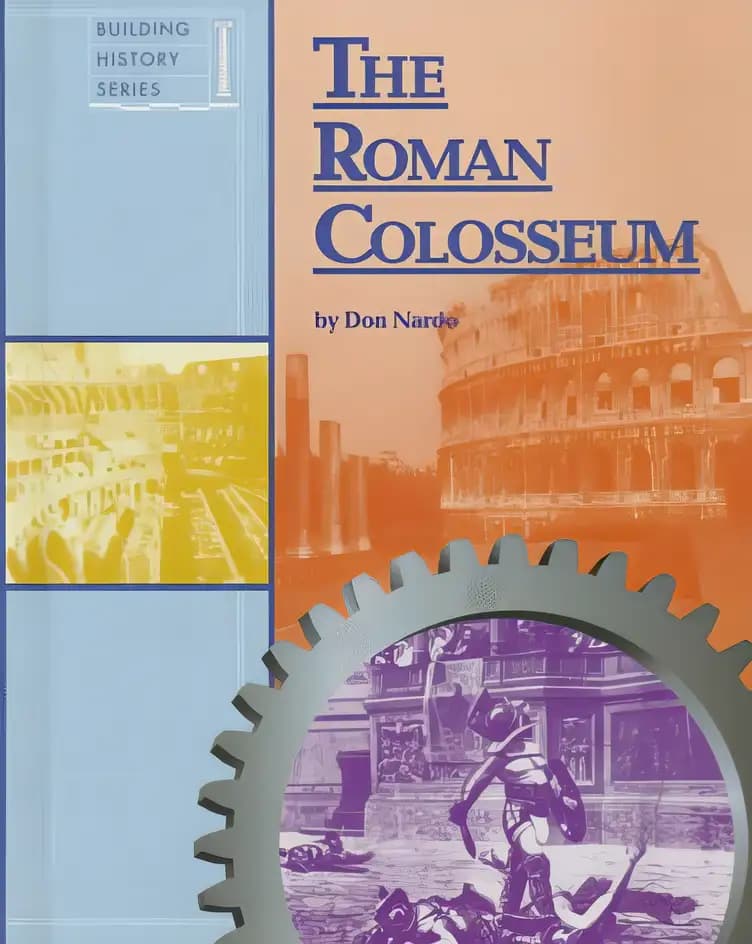
The Roman Colosseum
Building history Series
on Goodreads (7)
What’s inside...
This title describes the planning and construction of the Colosseum in ancient Rome and traces its history through subsequent centuries.
Series reading
Non-Sequential
Age
10-14
Length
96 pages
Text complexity
Discussion points
What do you think daily life was like for a gladiator living in ancient Rome?
Can you imagine how spectators felt watching events at the Colosseum? What emotions might they have experienced?
Why do you think the Colosseum was so important in Roman society?
How do you think building the Colosseum affected the city of Rome and its people?
If you could ask a Roman one question about the Colosseum, what would it be?
Tip: Role play these questions
Before reading, explore what your child already knows about ancient Rome or the Colosseum to create a base for new knowledge.
Use illustrations or photographs in the book to help visualize the scale and grandeur of the Colosseum, fostering a deeper understanding.
Encourage your child to compare the events that took place in the Colosseum with modern sports or entertainment events to make the content more relatable.
After reading, ask your child to draw the Colosseum or create a simple project that reflects what they’ve learned, reinforcing the information.
Connect the historical significance of the Colosseum to its influence on modern architecture and culture to expand the conversation beyond the book.
Key lessons
Example Lesson: History and Culture Awareness
Explanation: The book guides children through the historical significance of the Roman Colosseum, illustrating its role in ancient Roman culture.
Real-World Application: Children can appreciate and respect diverse cultures and histories, fostering a global perspective from a young age.
Example Lesson: Engineering and Architecture Appreciation
Explanation: Don Nardo explores the architectural marvels of the Colosseum, highlighting ancient engineering techniques.
Real-World Application: This can inspire interest in subjects like engineering and architecture, encouraging children to explore how things are built and designed.
Example Lesson: Critical Thinking
Explanation: The book prompts readers to think about why the Colosseum was built and its role in society then versus now.
Real-World Application: Children learn to analyze and question the purpose and function of structures in their own communities.
Example Lesson: Understanding the Value of Preservation
Explanation: ‘The Roman Colosseum’ discusses the efforts to preserve this ancient monument.
Real-World Application: This teaches children the importance of preserving cultural heritage, which can translate to valuing and maintaining their own local and family traditions.
Example Lesson: Empathy and Humanity
Explanation: The book does not shy away from the darker aspects of the Colosseum, such as the gladiatorial contests.
Real-World Application: Children can understand the value of human life and the evolution of societal norms towards more humane practices.