
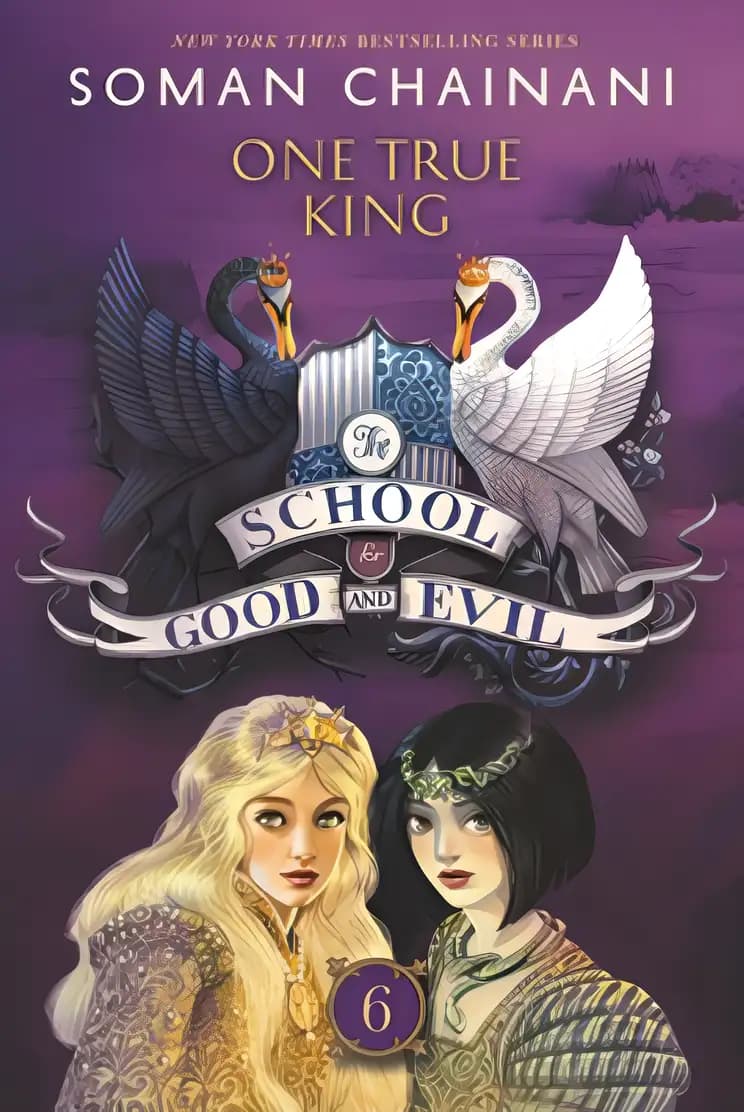
The School for Good and Evil #6: One True King: Now a Netflix Originals Movie
#6 of 6 in The School for Good and Evil Series
on Goodreads (18,137)
What’s inside...
THE SCHOOL FOR GOOD AND EVIL is currently the #1 movie streaming on Netflix, featuring an all-star cast including Charlize Theron, Kerry Washington, Laurence Fishburne, and more. This film marks the sixth and final installment of Soman Chainani's epic fantasy fairy tale series, where the fate of Camelot’s crown and the Endless Woods hang in the balance. Sophie and Agatha's story reaches a thrilling climax as they face the Tournament of Kings—a series of three trials culminating in a race to determine the true king. The sword Excalibur will crown the winner and seal the loser's fate, making this a fight for both power and survival. The movie includes an exclusive preview of Chainani's upcoming book, BEASTS AND BEAUTY.
Character compass
Agatha
Sophie
Tedros
Dot
Anadil
Hester
Hort
Guinevere
Merlin
Japeth
Bogden
Willam
Kei
Rafal Japeth
Ravan
Professor Bilious Manley
Yuba the Gnome
Castor the Dog
Reaper Cat
Vex
Kiko
Beatrix
Reena
Nimue- Lady of the Lake
Professor Emma Anemone
Professor Sheeba Sheeks
Princess Uma
Laithan
Devan
Laralisa
Priyanka
Alpa
Bethna
Bossam
Emilio
Omeida
Bettina
Empress Vaisilla
Albemarle
Jorin
Sephyr
Dean Friedegund Brunhilde
Kaveen
Jeevan
Pierre-Eve
Brycin
Pospisil
Brone
King Dutra
Jacinda
Maid Marian
Arjun
Jorgen
Aja
Bodhi
Nicola
Beckett
Wesley
Cedric
Valentina
Robin Hood
Caleb
Bert
Mona
Rhian
Discussion points
How do you think Sophie and Agatha’s friendship evolved throughout the series, and what does it teach us about true friendship?
What qualities do you think make someone a hero or a villain, and who do you see as the true hero in 'One True King'?
How does the concept of 'good' and 'evil' change or remain the same in the story, and what does that tell us about moral choices?
If you could possess any magical power from the book, what would it be and why?
What lessons can we learn about leadership and responsibility from the character of Tedros in his role as king?
Tip: Role play these questions
Encourage your child to put themselves in the shoes of different characters, asking how they would react in similar situations.
Discuss the moral dilemmas presented in the book and ask your child how they would resolve these issues in real life.
Use examples from the book to talk about the importance of teamwork and cooperation in achieving common goals.
Highlight the transformations of characters throughout the series to discuss personal growth and the impact of choices.
Create a fun environment for discussion. Maybe reenact some scenes or use creative props that relate to the book’s magical elements.
Key lessons
Example Lesson: The importance of friendship and loyalty
Explanation: Throughout the story, characters demonstrate strong bonds of friendship and allegiance when facing challenges, showing how trust and support can overcome obstacles.
Real-World Application: Children can learn to value and nurture their friendships, understanding that loyalty and trust are foundational in helping each other succeed.
Example Lesson: The value of courage and leadership
Explanation: The protagonist faces various trials that require bravery and decision-making skills, highlighting the significance of stepping up in difficult times.
Real-World Application: This teaches children to be courageous in their own lives and to take initiative when faced with challenges, whether in school, sports, or in social situations.
Example Lesson: The consequences of good and evil actions
Explanation: Characters in the book are often faced with moral dilemmas and the story explores the repercussions of their choices between good and evil.
Real-World Application: Children are encouraged to think about the impact of their actions on themselves and others, promoting ethical decision-making and personal responsibility.
Example Lesson: The power of selflessness and sacrifice
Explanation: Key moments in the book involve characters making sacrifices for the greater good, showing the profound impact of selfless behavior.
Real-World Application: This can inspire children to consider how their actions can benefit others, fostering a sense of empathy and community involvement.
Example Lesson: Understanding and celebrating differences
Explanation: The diverse set of characters in the book, each with unique traits and backgrounds, emphasizes the strength found in diversity and the importance of acceptance.
Real-World Application: Children can learn to appreciate and embrace differences in their peers, promoting inclusive behavior and reducing prejudices.