
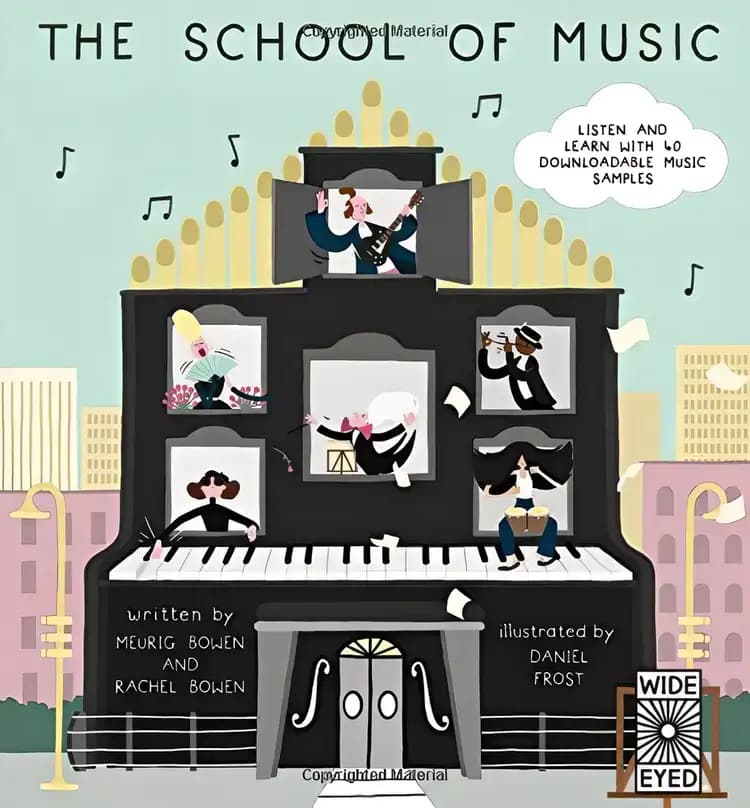
The School of Music
#1 of 4 in The School of Series
What’s inside...
This book provides an insider's perspective on the world of music education, exploring the challenges and opportunities facing music schools and conservatoires today. Meurig Bowen, a renowned music educator and administrator, offers practical advice and strategies for music teachers, students, and institutions, drawing on his extensive experience as a teacher, performer, and leader in the field. The book covers a range of topics, including teaching and learning, curriculum design, assessment and evaluation, performance, and the role of technology in music education. It also features interviews with leading figures in the music profession, offering valuable insights and perspectives on the future of music education. The School of Music is an essential resource for anyone involved in music education, from students and teachers to administrators and policymakers.
Discussion points
What instrument would you like to learn to play and why?
How do you think learning music can help you in other areas of your life?
What was your favorite part of the book and which musician did you find most interesting?
How does the book make you feel about music and musicians?
If you could meet one of the musicians from the book, who would it be and what would you ask them?
Tip: Role play these questions
Encourage your child to explore different types of music and instruments mentioned in the book.
Discuss how dedication and practice in music can translate to skills in other areas, such as mathematics and reading.
Share your own experiences with music, whether playing an instrument or a memorable concert you attended, to make the conversation more relatable.
Create a supportive environment for discussing each musician's journey, emphasizing that challenges are part of learning and growth.
Key lessons
Example Lesson: Appreciation of diverse music genres
Explanation: The book takes readers on a tour through various types of music, exploring classical, jazz, rock, and more, highlighting their unique characteristics and histories.
Real-World Application: Children can develop an open-minded attitude towards different music styles, enhancing their cultural literacy and promoting inclusivity.
Example Lesson: Understanding the basics of music theory
Explanation: Through engaging dialogues and scenarios, the book introduces fundamental concepts of music such as rhythm, pitch, and harmony.
Real-World Application: This knowledge can help children in learning to play instruments, read music, and participate more fully in musical activities at school.
Example Lesson: Importance of practice and dedication
Explanation: Characters in the book demonstrate how regular practice and commitment lead to improvement in their musical skills.
Real-World Application: Children can apply this lesson to any area of interest, understanding that persistence and hard work are key to achieving goals.
Example Lesson: Collaboration and teamwork in music
Explanation: The story shows musicians working together in orchestras and bands, emphasizing harmony and cooperation to create beautiful music.
Real-World Application: This lesson encourages children to value teamwork in group projects or sports, recognizing that collective efforts often result in greater achievements.
Example Lesson: Creativity and self-expression through music
Explanation: The book celebrates the creative process involved in composing and performing music, encouraging the expression of emotions and ideas.
Real-World Application: Children learn that music is a powerful outlet for self-expression and emotional health, inspiring them to explore creative activities.