
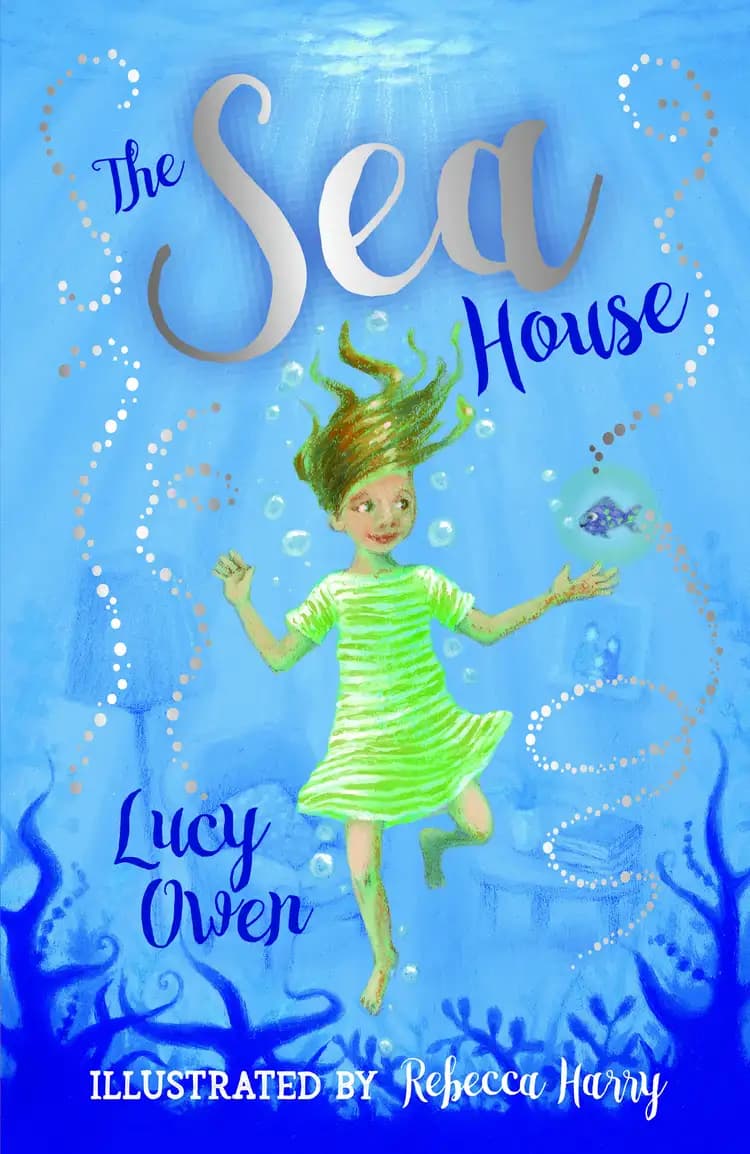
The Sea House
What’s inside...
One night grieving nine-year-old Coral cries so much, she fills her house with tears and wakes to find a magical underwater world packed with exciting sea creatures, right inside her own home! But there are some terrifying creatures who have come to the sea house too. Can Coral find the strength to overcome their darkness, with the help of her new friends?
Age
7-9
Length
160 pages
Text complexity
Discussion points
How do you think the characters felt when they discovered the magical elements in the sea house?
What would you do if you found a place like the sea house?
Can you think of a time when you helped someone and how it made you feel?
What do you think is the most important message of the story?
How would you describe the sea house using your own imagination?
Tip: Role play these questions
Encourage your child to imagine their own version of a 'sea house' and describe what magical elements it would contain.
Discuss the emotions of the characters at different points in the story, linking them to personal experiences or feelings your child may have had.
Highlight the themes of friendship and adventure in the story, asking your child how they connect with these themes in their own life.
Use descriptive scenes from the book as a prompt for creative drawing or storytelling activities to deepen the connection with the narrative.
Reinforce the idea that helping others is an important and rewarding part of life by relating it to incidents where your child or someone they know has helped another person.
Key lessons
Example Lesson: The importance of courage and overcoming fears
Explanation: In 'The Sea House', the main character faces her fears of the ocean to save her new marine friends, demonstrating bravery and perseverance.
Real-World Application: Children can apply this lesson by tackling their own fears, whether it’s trying a new activity or standing up for themselves or others in challenging situations.
Example Lesson: Value of friendship and teamwork
Explanation: Throughout the book, characters work together to solve problems, showing that collaboration and supporting one another can achieve great results.
Real-World Application: This teaches children the importance of cooperating with peers, be it in school projects or during play, promoting harmony and collective success.
Example Lesson: Respect and care for the environment
Explanation: The story highlights the beauty and fragility of the ocean ecosystem, prompting characters to take actions to protect their underwater world.
Real-World Application: Children learn to be more environmentally conscious, understanding the impact of their actions on nature and fostering behaviors like recycling and conservation at an early age.
Example Lesson: Curiosity and the joy of discovery
Explanation: The protagonist’s exploration of the sea house and its mysterious past fuels the adventure, encouraging a sense of wonder and eagerness to learn more.
Real-World Application: This can inspire children to be inquisitive about the world around them, engage in reading and research activities, and explore new interests.
Example Lesson: Coping with change
Explanation: Characters in 'The Sea House' adapt to changes in their environment and relationships, illustrating resilience.
Real-World Application: This helps children understand that change is a part of life and learning to adapt is crucial for personal growth and happiness.