
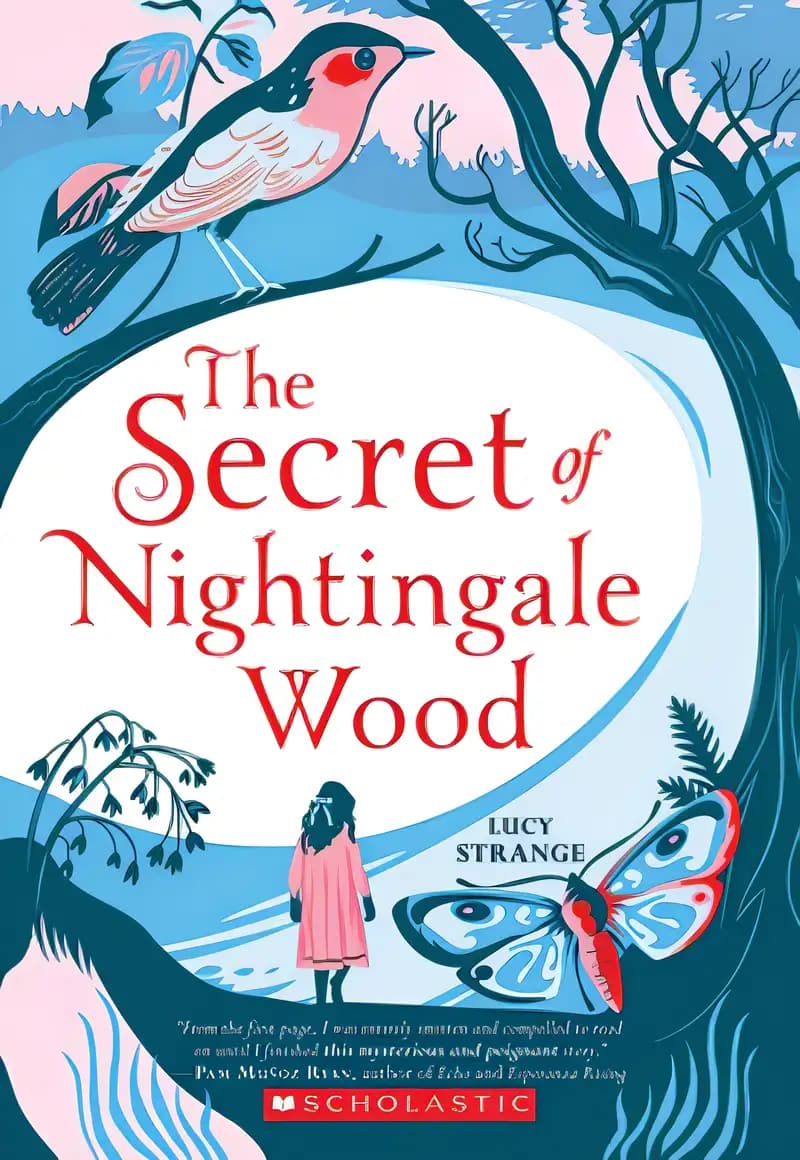
The Secret of Nightingale Wood
on Goodreads (4,658)
What’s inside...
A beautifully tangled story of friendship, fairy tales, and family secrets. For those who loved Pax and The War That Saved My Life. A Kirkus Best Middle Grade Book of 2017, An Amazon Best Book of 2017, A 2018 Bank Street College Best Book of the Year, A Telegraph Top 50 Book of the Year. Everyone is too busy to pay attention to Henrietta and the things she sees -- or thinks she sees -- in the shadows of their new home, Hope House. Mama is ill. Father has taken a job abroad. Nanny Jane is busy taking care of her younger sister. All alone, with only stories for company, Henry discovers that Hope House is full of strange secrets: a forgotten attic, ghostly figures, mysterious firelight that flickers in the trees beyond the garden. One night she ventures into the darkness of Nightingale Wood. What she finds there will change her whole world.
Age
10-13
Length
304 pages
Text complexity
Character compass
Henrietta (Henry)
Mother
Moth
Dr. Hardy
Miss Gray
Discussion points
How did Henry's character change throughout the story, and what caused these changes?
Why do you think the author chose a forest as the setting for much of the story? How does the forest affect the mood and the events?
What are the main themes of 'The Secret of Nightingale Wood,' and which one resonated with you the most?
How do the relationships between family members influence the events in the book? Can you relate to any of these relationships?
Imagine you were in Henry's situation; what would you have done differently and why?
Tip: Role play these questions
Encourage your child to express their thoughts and feelings about the book, relating it to their own experiences whenever possible.
Discuss the historical context of the story (post-WWI England) to enhance understanding and appreciation of the characters' challenges and actions.
Highlight the aspects of courage and resilience shown by Henry, asking your child to think of moments when they have had to be brave.
Ask your child to draw parallels between the forest in the book and personal places where they find comfort or adventure.
End discussions with asking what your child thought about the book’s ending and how they might have written it differently. This encourages critical thinking and creativity.
Key lessons
Example Lesson: Resilience in times of adversity.
Explanation: The protagonist, Henry, faces numerous challenges throughout the story including loss and feeling misunderstood. She shows resilience by courageously navigating her emotional and physical journey in the woods.
Real-World Application: Children can learn to cope with difficult situations and emotions by seeking solutions and not giving up, despite challenges they may face in their own lives.
Example Lesson: Importance of family and support systems.
Explanation: Throughout the novel, the importance of family is emphasized, as Henry is driven by the need to reunite and protect her family during troubling times.
Real-World Application: Children are encouraged to appreciate and rely on their families or support systems for love and security, recognizing the strength that comes from familial bonds.
Example Lesson: Courage to confront fears.
Explanation: Henry shows immense courage when exploring Nightingale Wood and confronting her family’s issues, despite her fears and the uncertain circumstances.
Real-World Application: This encourages children to face their fears and speak up about their problems, which is essential for personal growth and overcoming obstacles.
Example Lesson: Empathy towards others.
Explanation: Henry’s interactions with Moth and her understanding of Moth's mysterious circumstances show her empathy and kindness towards others who are in difficult situations.
Real-World Application: Children learn the importance of being kind and empathetic towards others, which fosters positive relationships and a supportive community.