
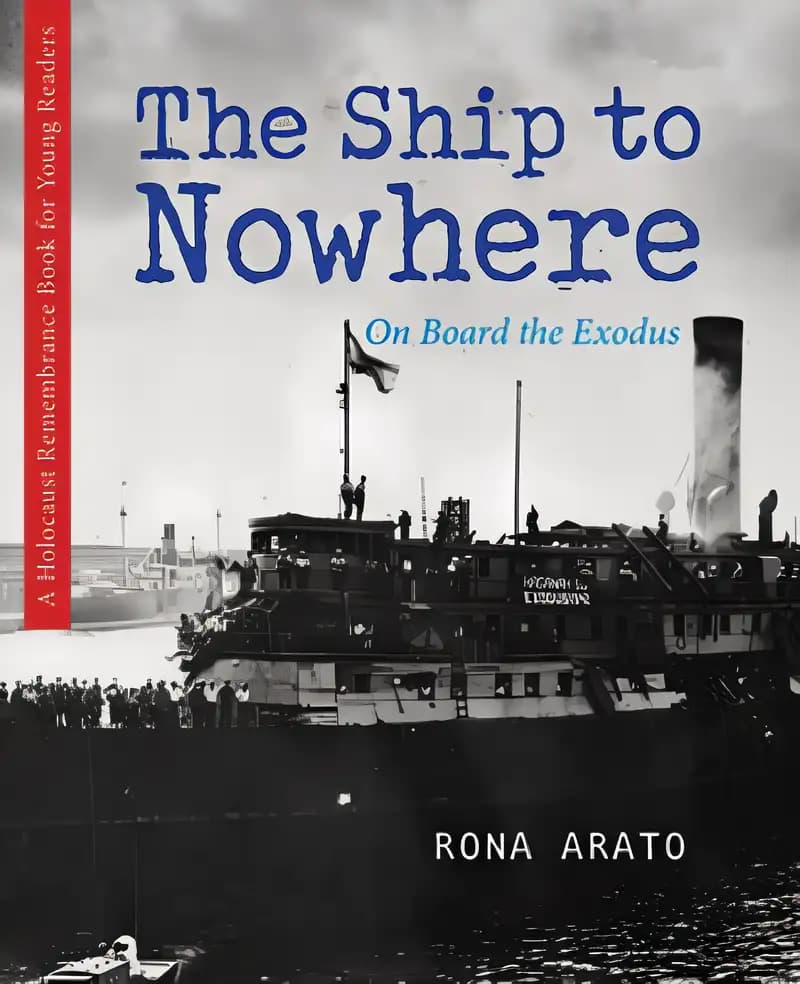
The Ship to Nowhere: On Board the Exodus (The Holocaust Remembrance Series for Young Readers 2016, 16)
#16 of 18 in The Holocaust Remembrance Series For Young Readers
on Goodreads (54)
What’s inside...
Rachel Landesman is eleven years old when she, her mother and sister are crammed on board the Exodus, a dilapidated vessel smuggling 4500 Jewish refugees risking their lives to reach Palestine, their biblical homeland. Despite all they had suffered during the Holocaust, Jewish refugees are still not wanted in many countries. Even a Canadian immigration officer famously said at the time "None is too many" when asked how many refugees Canada would take in. Nonetheless, Rachel and the other refugees refuse to give up hope when war ships surround them. Their fight, and the worldwide attention it brought, influenced the UN to vote for the creation of the state of Israel. Made famous by the Paul Newman film "Exodus", this is the first book for young people about the ship that helped make history.
Discussion points
Why do you think Rachel and her family decided to leave their home and board the Exodus?
How did the challenges faced by the passengers on the Exodus change their relationships and views on life?
What would you have done in Rachel’s situation and why?
In what ways did the passengers show strength and resilience during their journey?
How do you think this story helps us remember and honor the victims of the Holocaust?
Tip: Role play these questions
While reading 'The Ship to Nowhere' together, emphasize the historical context and the resilience shown by the characters. Ask your child to imagine themselves in the same situations, fostering empathy and deeper understanding. Connect the story to current events or personal experiences to make the discussion more relevant. Lastly, encourage your child to express their feelings about the story, and discuss the importance of remembrance and tolerance.
Key lessons
Example Lesson: Resilience in the face of adversity
Explanation: The story portrays the struggles of Jewish refugees attempting to escape Europe after World War II, showcasing their determination and perseverance.
Real-World Application: Children learn the importance of persevering through difficult situations, understanding that endurance can lead to positive outcomes even in tough circumstances.
Example Lesson: Empathy and compassion
Explanation: The book delves into the emotional and physical hardships faced by the passengers, allowing readers to empathize with their pain and hope.
Real-World Application: This encourages children to be understanding and supportive towards others who are in distress, promoting a kinder, more inclusive community.
Example Lesson: Understanding historical context
Explanation: Set during a pivotal time in history, the book educates young readers about the events of the Holocaust and its survivors.
Real-World Application: This knowledge encourages children to be informed about world history, promoting awareness and preventing ignorance about significant global events.
Example Lesson: The impact of collective action
Explanation: The passengers' shared efforts in their journey to freedom illustrate the power of working together towards a common goal.
Real-World Application: This teaches children the value of teamwork and cooperation in achieving objectives, highlighting how joint efforts can create significant change.
Example Lesson: Hope and the pursuit of freedom
Explanation: Amidst their dire circumstances, the characters in the book remain hopeful and strive for a life of freedom, demonstrating the human spirit's capacity to aspire and dream.
Real-World Application: Children learn the importance of hope and striving for personal freedoms, inspiring them to dream big and work towards achieving their own goals.