
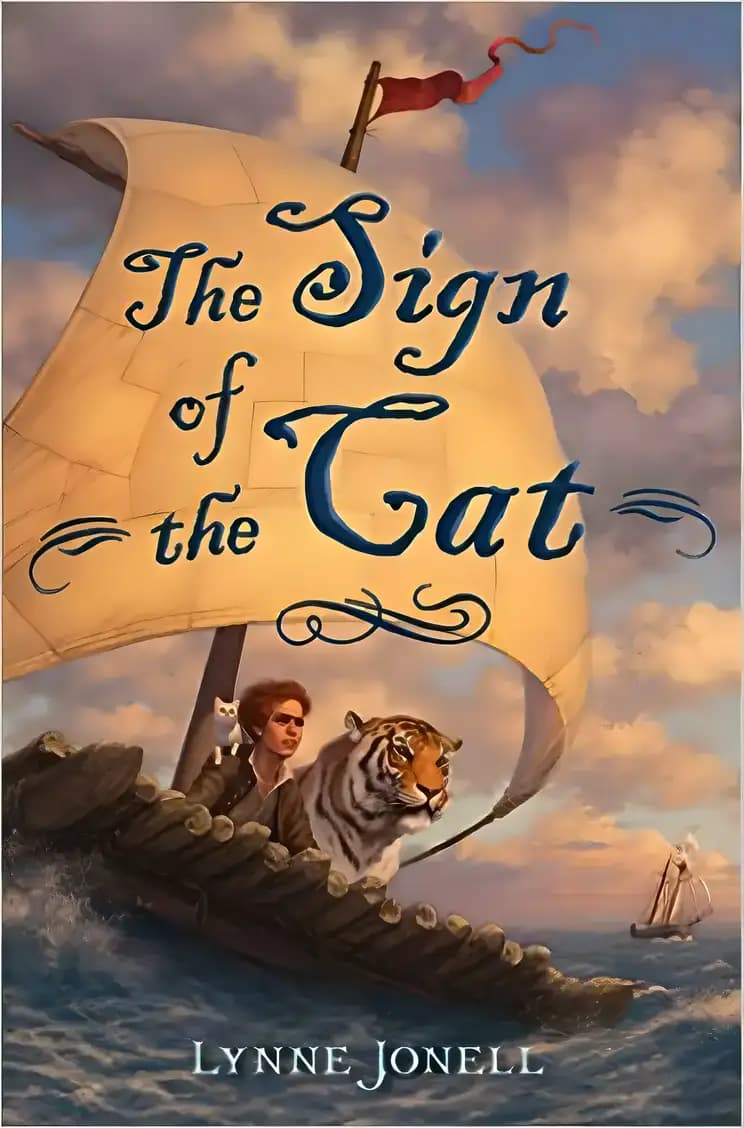
The Sign of the Cat
on Goodreads (265)
What’s inside...
Talking cats, a missing princess, swordfights with villains, and secret identities combine in this epic tale of bravery and self-discovery on the high seas. Duncan is very smart and has the unusual ability to talk to cats. Despite his mother's encouragement to be average and get mediocre grades, Duncan longs for academic success. When he rebels and scores perfectly on a test, he attracts attention from people with questionable intentions.
Age
8-12
Length
368 pages
Text complexity
Discussion points
What do you think makes Duncan different from other cats and people in the story?
How do you feel about the way Duncan handles challenges? What would you do in his place?
What role does trust play in Duncan's adventures? Can you think of a time when trust was important in your life?
How do the different characters in the story show bravery? Who do you think is the bravest character, and why?
What do you think is the main message of the story? How can you apply it to your own life?
Tip: Role play these questions
Encourage your child to think deeply about the characters and plot by asking them how they would feel or react in similar situations. Discuss the moral lessons woven through the story and relate them to everyday experiences. Use expressive reading to make the narrative come alive and keep your child engaged. Let them predict future events or alternate endings to stimulate their imagination. After reading, connect the themes of the story with real-life examples to reinforce the message and enhance understanding.
Key lessons
Example Lesson: Courage and bravery
Explanation: The protagonist, Duncan, demonstrates courage by embarking on an adventurous quest despite the dangers and uncertainties.
Real-World Application: Children learn the importance of facing their fears and standing up for what is right, even when it's challenging.
Example Lesson: The value of perseverance
Explanation: Duncan faces many obstacles during his journey, but his determination and perseverance help him to overcome them.
Real-World Application: This encourages children to stay persistent in their own goals and challenges, teaching them that hard work and resilience can lead to success.
Example Lesson: The importance of friendship
Explanation: Throughout the story, Duncan forms alliances and friendships that provide support and assistance during his quest.
Real-World Application: Children learn the significance of building and maintaining friendships and how teamwork can help overcome difficulties.
Example Lesson: Critical thinking and problem-solving
Explanation: Duncan often encounters problems that require thought and creativity to solve, emphasizing the need for strategic planning and quick thinking.
Real-World Application: This teaches children to think critically and find innovative solutions to problems they may face in daily life.
Example Lesson: Self-discovery and personal growth
Explanation: As he navigates through his adventures, Duncan learns more about his own strengths and weaknesses, leading to personal growth.
Real-World Application: Children can relate to this journey of self-discovery, understanding that they too can learn and grow from their experiences.