
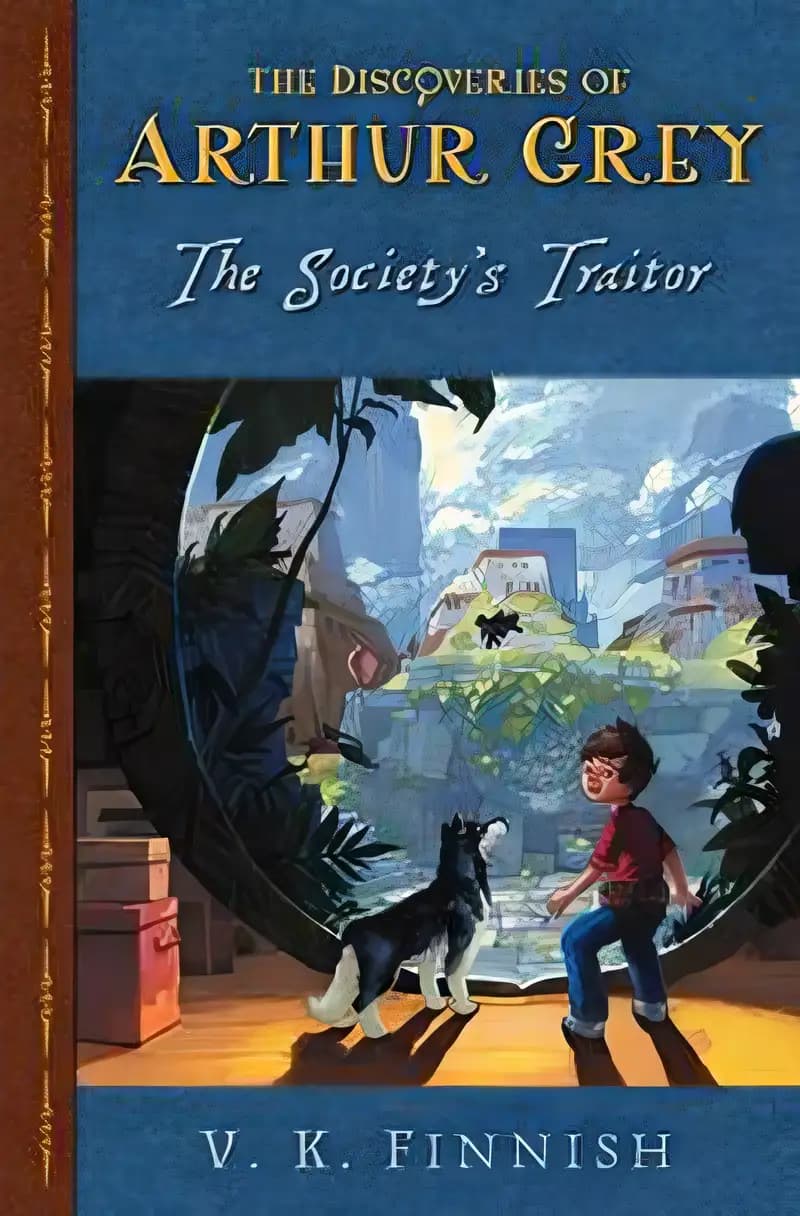
The Society's Traitor
#1 in The Discoveries Of Arthur Grey Series
What’s inside...
Eleven-year-old Arthur Grey has always dreamed of being a hero. He finds himself transported to a society that investigates the truth behind legends and myths, taking him on an adventure to Peru in search of a mysterious dragon-bird and its secret. However, he faces competition and must convince others of the truth before it's too late. Additionally, Arthur lives in an old mansion rumored to have hidden treasure. His quest to find it is interrupted by sneaky magician thieves, leading him through Transportal doors, odd powers, and magical creatures. Throughout these adventures, Arthur sees his chance to finally become the hero he has always wanted to be, if he can outsmart a traitor's cunning plot.
Discussion points
What did you think about the main character's decisions? Would you have done anything differently?
How do the characters in 'The Society's Traitor' show courage or fear? Can you give an example?
What role do friendships play in this story? How do they impact the events that unfold?
In what ways do the characters in the book change from the beginning to the end?
What is the most important lesson you learned from this story? Why do you think it is important?
Tip: Role play these questions
Encourage your child to relate the experiences of the characters to their own life. This builds empathy and deeper understanding.
Ask your child what they think a character might do next after a pivotal scene. This helps keep them engaged and thinking critically.
After discussing a significant event in the book, ask your child how they would feel in a similar situation. This fosters personal connection to the narrative.
Let your child predict potential endings for the book before finishing it. Discuss how their version compares to the author's conclusion.
Celebrate creative thinking by asking your child to come up with an alternative solution to a problem faced by the characters.
Key lessons
Example Lesson: Courage in the face of adversity
Explanation: The protagonist, Jak, displays bravery as he navigates the dangerous and mystical world of Pekesville to uncover secrets and defend his friends.
Real-World Application: Children reading this book may be encouraged to face their personal fears, whether it’s trying out for a school play, standing up to a bully, or tackling a difficult subject in school.
Example Lesson: The importance of teamwork
Explanation: Throughout the book, Jak collaborates with an ensemble of characters, each with unique skills, to solve puzzles and overcome obstacles which demonstrates the power of working together.
Real-World Application: This can translate to children learning to work cooperatively in group settings like school projects, sports teams, or during group play, understanding that each member contributes valuable input.
Example Lesson: Critical thinking and problem-solving
Explanation: Jak and his friends employ strategic thinking and problem-solving skills to navigate the challenges posed by the mystical elements of Pekesville.
Real-World Application: This encourages children to approach problems in their daily life with a thoughtful and analytical mindset, thinking through consequences and forming strategic solutions.
Example Lesson: Loyalty and the significance of friendships
Explanation: The strong bonds between characters in the story underline the importance of loyalty and support among friends, even in difficult times.
Real-World Application: Children can learn to nurture and value their friendships, offer support during tough times, and rely on each other for emotional and moral support.
Example Lesson: Resilience and perseverance
Explanation: Despite numerous setbacks, Jak remains determined to pursue his goals, showcasing resilience.
Real-World Application: This teaches children the value of persistence in achieving goals, whether in completing a difficult homework assignment, mastering a new skill, or improving in a sport.