
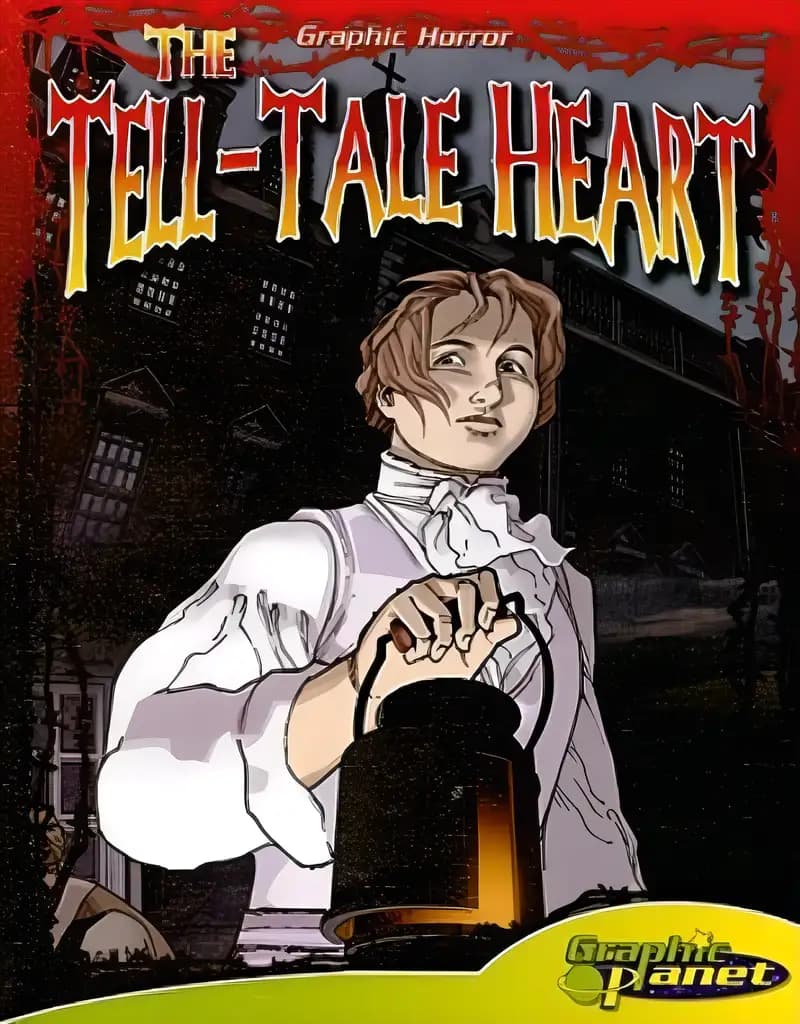
The Tell-Tale Heart (Graphic Horror Set 2)
What’s inside...
A graphic novel based on the Edgar Allan Poe classic, in which the murder of an old man is revealed by the continuing beating. of his heart.
Why read this book
- Engaging adaptation of Poe's classic horror tale.
- Illustrations enhance understanding of complex themes.
- Encourages deep thinking and emotional intelligence.
- Suitable for mature young readers exploring classic literature.
Age
10-13
Length
32 pages
Text complexity
Character compass
The Narrator
The Old Man
Discussion points
How do you think the narrator felt throughout the story? What clues in the illustrations or text helped you understand their emotions?
What do you think the heartbeat symbolizes in the story? Why do you think it becomes louder to the narrator?
Why do you think the narrator confesses at the end? How do you think they felt after confessing?
What lessons can we learn about guilt and conscience from the story?
Tip: Role play these questions
Encourage your child to describe different characters and their actions, then relate those actions to the story's deeper themes.
Ask your child to point out specific parts of the illustrations that amplify the mood of the story, helping them connect visual elements to the narrative.
Gently guide your child to consider the psychological aspects of the story, discussing what might drive someone to feel guilt or fear.
Discuss the moral implications presented in the story and ask your child what they might have done differently in the narrator’s situation.
Key lessons
Example Lesson: Consequences of dishonesty
Explanation: The protagonist's guilt about his deceitful actions leads to his mental anguish and ultimate confession of the crime.
Real-World Application: This teaches children the importance of honesty and that being untruthful can lead to undesirable consequences in real life.
Example Lesson: Impact of guilt on mental health
Explanation: The narrator's overwhelming guilt manifests as auditory hallucinations, showcasing how suppressed emotions can affect mental well-being.
Real-World Application: Children learn the significance of handling guilt properly and seeking help when overwhelmed by their feelings.
Example Lesson: Understanding empathy
Explanation: The story delves into the mind of a troubled character, offering readers a chance to develop empathy by understanding his perspective.
Real-World Application: This can help children develop the ability to empathize with others who may be going through mental or emotional challenges.
Example Lesson: Acknowledge the consequences of actions
Explanation: The narrator’s eventual confession demonstrates the acceptance of his actions' consequences.
Real-World Application: This encourages children to take responsibility for their actions and understand that every action has a reaction.