
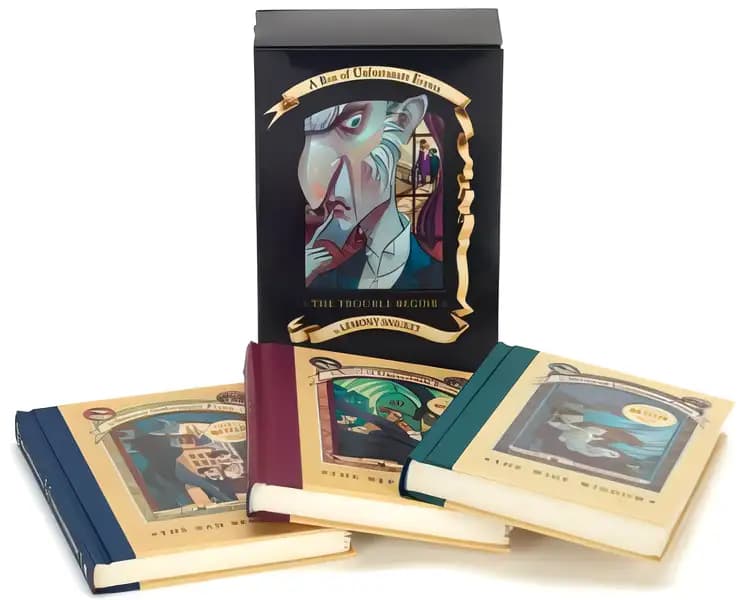
The Trouble Begins: A Box of Unfortunate Events, Books 1-3 (The Bad Beginning; The Reptile Room; The Wide Window)
#1 of 13 in A Series of Unfortunate Events
What’s inside...
NOW A NETFLIX ORIGINAL SERIES. Lemony Snicket’s unhappy tale of the unlucky Baudelaire siblings begins with The Bad Beginning. In this short bothersome book alone, the three orphans encounter a greedy and repulsive villain, itchy clothing, a disastrous fire, a plot to steal their fortune, and cold porridge for breakfast. Should you not mind deadly serpents, slippery salamanders, lumpy beds, large brass reading lamps, long knives, and terrible odors, then proceed with caution to the second book in the miserable series, The Reptile Room. Readers unbothered by inclement weather, hungry leeches, and cold cucumber soup will want to continue with the third installment, The Wide Window. Others will not. If you’ve got the stomach to wade through the first three tragic tales in Lemony Snicket’s A Series of Unfortunate Events, then this troubling collection might be the one for you. Several loathsome extras, including a compilation of unsettling quotations and a very disturbing portrait, await those who successfully complete the wretched journey. You’ve been warned!
Character compass
Violet Baudelaire
Sunny Baudelaire
Klaus Baudelaire
Mr. Poe
Aunt Josephine
Justice Strauss
Dr. Montgomery Montgomery
The Hook-Handed Man
Count Olaf
Discussion points
How do you think the Baudelaire orphans felt when they faced all those challenges? Can you relate to any of their feelings?
What would you have done differently if you were in the orphans' shoes during any of their adventures?
How do the characters develop throughout these stories? What changes do you notice in their personalities and actions?
What lessons do you think the Baudelaire orphans learned from their experiences?
How does the author use humor and irony to change the way we think about the orphans' misfortunes?
Tip: Role play these questions
Encourage your child to express their emotions related to the orphans’ experiences, fostering emotional intelligence and empathy.
Discuss with your child the decision-making and problem-solving strategies employed by the orphans, relating them to real-life scenarios.
Highlight the resilience demonstrated by the characters, instilling values of perseverance and courage in the face of adversity.
Use examples from the book to discuss the importance of family and support systems in overcoming challenges.
Ask your child to imagine alternative endings or scenarios to foster creativity and critical thinking.
Key lessons
Example Lesson: Resilience in the face of adversity
Explanation: The Baudelaire orphans consistently face challenges and setbacks, yet they continue to persevere and adapt.
Real-World Application: Children can learn the importance of determination and not giving up when facing difficulties in school or personal life.
Example Lesson: The value of resourcefulness
Explanation: Throughout the series, the siblings use their unique talents and intelligence to solve problems and protect themselves.
Real-World Application: This teaches children to think creatively and use their skills to navigate various challenges.
Example Lesson: The importance of family and teamwork
Explanation: The Baudelaire siblings rely on each other's strengths and work together to overcome obstacles.
Real-World Application: Children can learn to appreciate the strengths of others and the benefits of collaborating with siblings or peers.
Example Lesson: Critical thinking
Explanation: The orphans often question events and motives, leading them to uncover truths.
Real-World Application: Encourages children to ask questions and critically assess situations rather than accepting things at face value.
Example Lesson: Moral integrity
Explanation: Despite numerous temptations to take the easy way out, the Baudelaires often choose to do what is right.
Real-World Application: Instills the value of ethical decision-making and integrity in everyday dealings with others.