
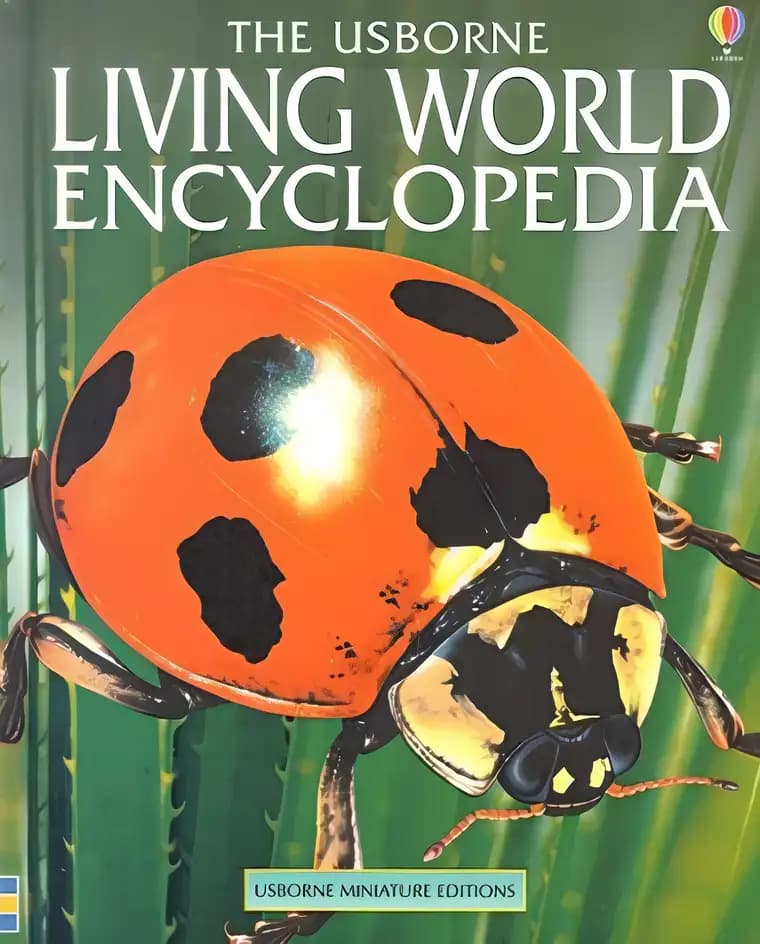
The Usborne Living World Encyclopedia (Encyclopedias)
on Goodreads (58)
What’s inside...
The Usborne Living World Encyclopedia is an informative and richly illustrated guide to the natural world for young readers. Authored by Leslie Colvin, this encyclopedia covers a wide range of topics related to the Earth's living organisms, including habitats, ecosystems, adaptation, and the diversity of life forms from single-celled organisms to complex mammals. The book is designed to be accessible and engaging, with clear explanations and an emphasis on the interconnectivity of life on our planet. It serves as an educational resource that encourages curiosity and a deeper understanding of biology and environmental science.
Why read this book
- Explores diverse ecosystems and wildlife.
- Enhances knowledge on global environmental issues.
- Encourages curiosity and learning through visuals.
- Ideal for interactive parent-child reading sessions.
Age
9-12
Length
128 pages
Text complexity
Discussion points
What is one new thing you learned about animals from this encyclopedia?
Can you explain how the different habitats affect the animals that live there?
Why do you think biodiversity is important for our planet?
Which animal in this book do you find the most fascinating and why?
How can we help to protect the habitats of these animals?
Tip: Role play these questions
Encourage your child to relate what they read to their own experiences, such as visits to a zoo or pets they may have.
Use praise to reinforce your child’s curiosity and enthusiasm about the new facts they're learning.
Turn the discussion into a fun activity, such as drawing their favorite animal from the book and explaining why they chose it.
Ask follow-up questions that encourage deeper thinking and connections, like how specific animal adaptations help them survive.
Discuss the importance of conservation and how each individual can contribute to the wellbeing of our planet.
Key lessons
Example Lesson: Understanding Ecosystems
Explanation: The book explores various ecosystems and how plants, animals, and weather interact within them.
Real-World Application: Children can apply this lesson by engaging in outdoor activities that foster a deeper appreciation and responsibility towards preserving their local environment.
Example Lesson: Importance of Biodiversity
Explanation: Through detailed illustrations and explanations, the book teaches about the wide variety of life forms on Earth and why each plays a critical role.
Real-World Application: This encourages children to learn about and participate in activities like recycling or wildlife conservation to help maintain biodiversity.
Example Lesson: Interdependence of Species
Explanation: The book illustrates how different species depend on each other for food, shelter, and survival.
Real-World Application: Kids can understand the impact of their actions on local wildlife and ecosystems, promoting environmentally conscious decisions from a young age.
Example Lesson: Scientific Observation Skills
Explanation: The encyclopedia encourages children to observe and question the world around them through scientific inquiry.
Real-World Application: This skill helps children in school projects and encourages a lifelong curiosity and learning about the natural world.
Example Lesson: Conservation and Environmental Protection
Explanation: The narrative includes discussions on environmental threats and the importance of conservation efforts.
Real-World Application: Children are motivated to be proactive in community clean-ups and other environmental protection activities, understanding their role in shaping a sustainable future.