
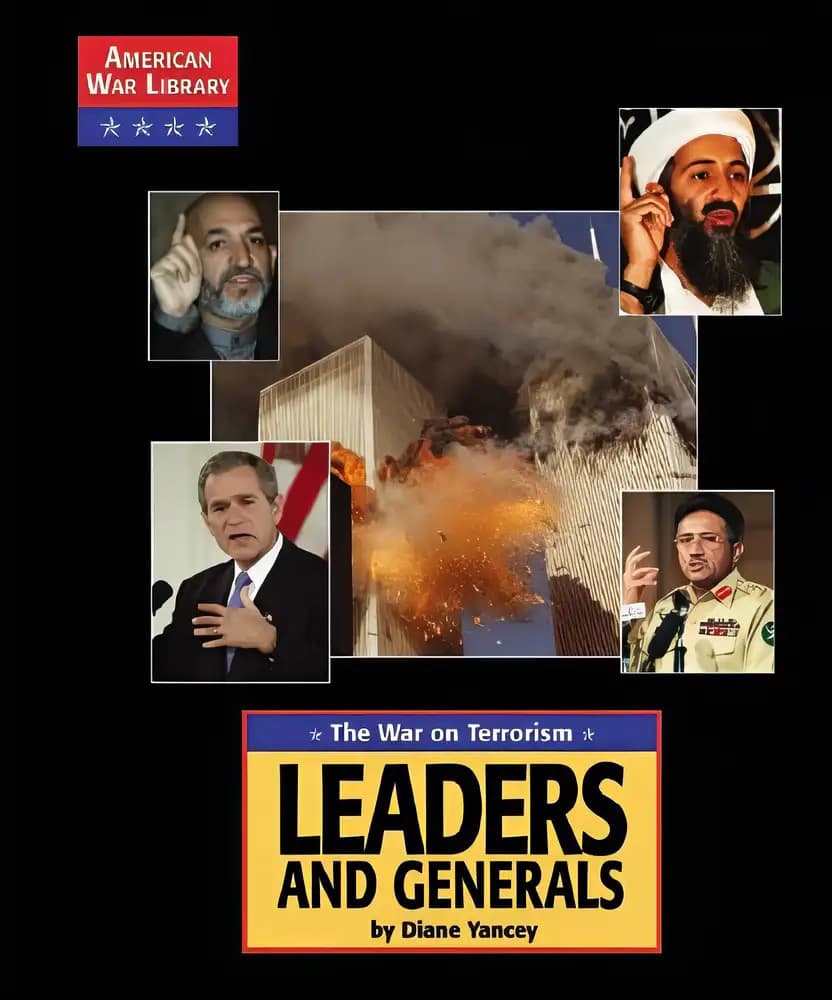
The War On Terrorism: Leaders and Generals
American war library Series
What’s inside...
Discusses the political and military leaders of the War on Terrorism, including George W. Bush, Tommy Franks, and Mohammad Omar.
Series reading
Non-Sequential
Age
10-11
Length
96 pages
Text complexity
Discussion points
How do leaders make decisions during difficult times?
What qualities do you think a good leader should have during a crisis?
Can you think of a time when a person has to be both strong and compassionate?
Why is it important to understand different perspectives in a conflict?
How can we learn from history to improve our future?
Tip: Role play these questions
Encourage your child to think critically by asking them how they would handle similar situations. Help them connect the historical events and leadership decisions in the book to current events. Discuss the moral and ethical dilemmas faced by leaders, and what your child might have done differently. Share your own insights and experiences with leadership and decision-making to make the conversation more relatable. Finally, emphasize the importance of learning from history to build a better future, making it a point to find examples in everyday life.
Key lessons
Example Lesson: The importance of leadership
Explanation: The book showcases various leaders and generals who played significant roles during the war on terrorism, highlighting their decision-making processes and courage.
Real-World Application: Children can learn the value of taking initiative and making decisions in challenging situations, traits that are applicable in both school leadership roles and daily problem solving.
Example Lesson: Understanding global perspectives
Explanation: Through detailed accounts of international events, readers gain insights into different cultural and political perspectives involved in global conflicts.
Real-World Application: This encourages children to be more open-minded and respectful towards people from different backgrounds and cultures, promoting a more inclusive attitude in their interactions.
Example Lesson: The impact of teamwork
Explanation: The book highlights how leaders and generals collaborated with allies and their own teams to strategize and execute plans effectively.
Real-World Application: Children can apply this understanding of teamwork to group projects at school or in community activities, learning that collaboration often leads to better outcomes.
Example Lesson: The consequences of conflict
Explanation: Readers learn about the serious implications of warfare, not just on a political scale but also on human lives, emphasizing the importance of peace.
Real-World Application: This lesson can help children understand the importance of resolving conflicts peacefully, whether it’s in their personal lives or in a broader societal context.
Example Lesson: Resilience in adversity
Explanation: The narratives of various leaders facing challenging times during the war on terrorism exemplify resilience and perseverance.
Real-World Application: Children can be inspired to adopt a resilient mindset when facing personal challenges, whether in academics, sports, or personal relationships.