
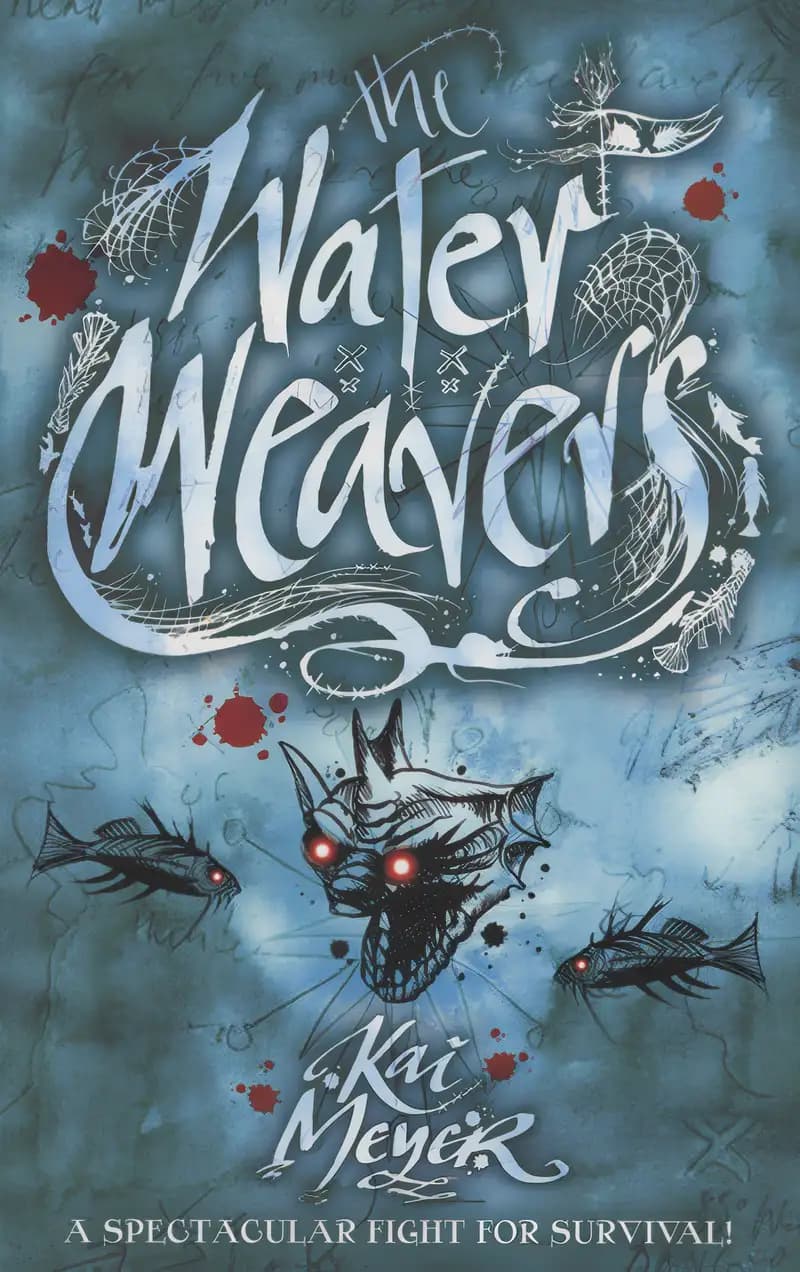
The Water Weavers (Wave Runners Trilogy)
#3 in Wellenläufer-Trilogie Series
on Goodreads (1,892)
What’s inside...
'The Water Weavers' concludes the thrilling piratical adventure that began in 'The Wave Runners'. Jolly, Griffin, and their pirate friends are back, battling to save the world from the evil Maelstrom. Griffin confronts the lord of the kobalins while leaving his magic room within a giant whale. Princess Soledad fights to protect the sea star city, encountering a mesmerizing serpent god. Jolly and Munk undertake a perilous underwater journey to the heart of the Maelstrom, where they meet Aina, a mysterious ancient polliwog. As battles rage and truths are uncovered, Jolly learns about Aina's identity and discovers what she must do to save the entire Caribbean. With explosive battles, intense struggles, and multiple transformations, this finale in Kai Meyer's Wave Walkers trilogy delivers a perfect blend of fantasy and adventure.
Character compass
Jolly
Munk
Captain Bannon
Discussion points
How do the magical elements in the story influence the characters’ decisions and actions?
What do you think the ocean represents in this story, and how do the characters interact with it?
How do Jolly and Munk’s adventures change their perspectives on friendship and bravery?
Can you think of a moment in the book where a character had to make a tough choice? What would you have done in their situation?
What lessons do you think we can learn from the Water Weavers about helping and understanding others?
Tip: Role play these questions
Encourage your child to imagine their own magical world, and ask how it might affect the lives of the people living there.
Discuss the importance of the ocean and other natural elements in our world, drawing parallels to the settings in the book.
Highlight the value of teamwork and courage by discussing pivotal scenes where characters had to rely on each other.
Help your child express empathy by exploring the emotions and motivations behind the characters’ decisions.
Focus the discussion on the moral lessons of the story, encouraging your child to apply these lessons in their own life.
Key lessons
Example Lesson: Teamwork and Cooperation
Explanation: In 'The Water Weavers', the characters Jolly and Munk unite their unique abilities to overcome challenges. Their collaboration showcases how working together can lead to greater achievements than working alone.
Real-World Application: Children learn the importance of cooperation during group activities in school or playing sports, understanding that success often relies on working effectively with others.
Example Lesson: Resilience in the Face of Adversity
Explanation: Throughout the story, Jolly faces numerous obstacles and threats but remains determined and resourceful. This resilience demonstrates the power of perseverance.
Real-World Application: This lesson encourages children to stay determined through difficulties in their own lives, be it in resolving conflicts with friends or tackling challenging school assignments.
Example Lesson: Understanding and Embracing Diversity
Explanation: The varied backgrounds and abilities of the characters in 'The Water Weavers' are pivotal to the plot, showing that diversity can bring strength and new perspectives.
Real-World Application: By appreciating individual differences at school and in their community, children learn to embrace and celebrate diversity, fostering a more inclusive environment.
Example Lesson: The Importance of Curiosity and Learning
Explanation: Jolly's quest is driven by her desire to learn more about her past and the mysteries of the sea. Her curiosity opens up new opportunities and solutions to problems.
Real-World Application: This teaches children to seek knowledge and stay curious about the world around them, enhancing their educational journey and problem-solving skills.
Example Lesson: Respect for Nature
Explanation: The story's setting and plot center around the sea, its creatures, and environments, illustrating the importance of respecting and protecting natural ecosystems.
Real-World Application: Children are encouraged to take actions that support environmental conservation, such as recycling, conserving water, and learning more about local wildlife and nature.