
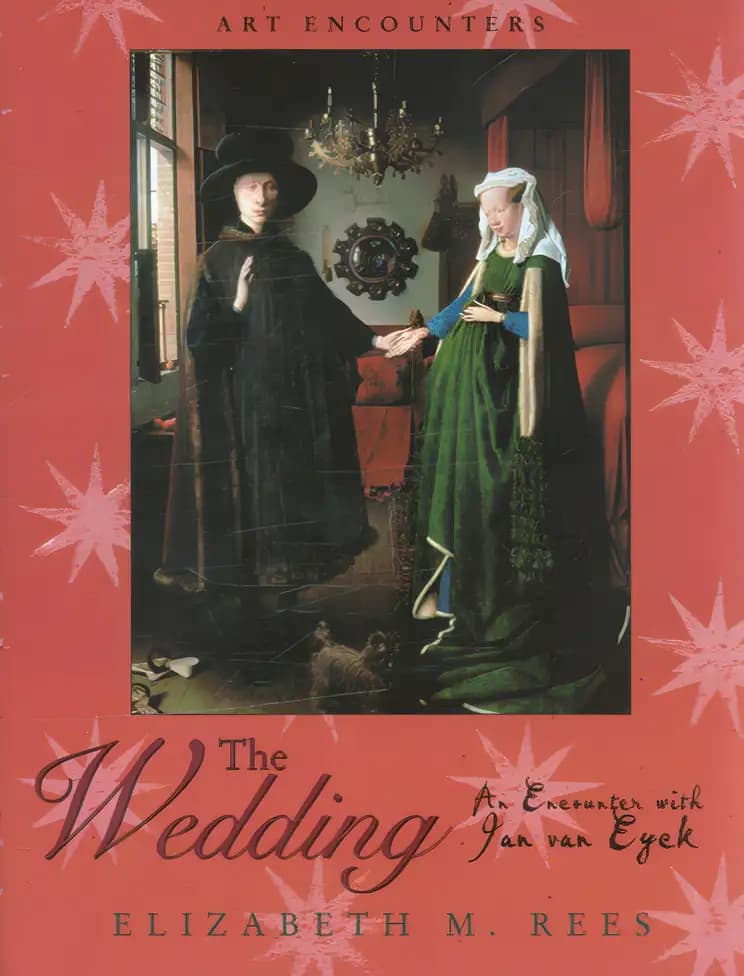
The Wedding: An Encounter with Jan Van Eyck (Art Encounters)
Art Encounters Series
on Goodreads (52)
What’s inside...
The Arnolfini Wedding is one of the most famous and most debated paintings of the Northern Renaissance. In this historical novel, E.M. Rees explores the story behind the painting, featuring young Giovanna Cenami who falls in love with a mysterious stranger at the Duke's court. However, her dreams are crushed when her father demands she marries a wealthy merchant to save their family from financial ruin. As Giovanna defies her family to follow her heart, she risks her reputation, honor, and life. Is the bride pregnant? Why does the groom look so old? What's reflected in the mirror? The Arnolfini Wedding is surely the most hotly debated painting of the Northern Renaissance—and one of the most beloved. In this historical novel, E. M. Rees weaves a rich story of love and honor that answers the questions about this great picture. At her first visit to the Duke's court, young Giovanna Cenami falls in love with a mysterious stranger employed by the famous Flemish painter Jan van Eyck. But Giovanna's romantic dreams are shattered when her father tells her she must marry a rich merchant to save them all from financial ruin. When she decides to pursue her own dreams, defying her family, she finds herself in grave danger of losing her reputation, her honor—and perhaps her life.
Series reading
Non-Sequential
Age
12-15
Length
176 pages
Text complexity
Discussion points
What do you think about the way Jan Van Eyck painted the wedding in the book?
How do the colors and details in the paintings make you feel?
Why do you think the author chose to tell a story about a painter from the past?
What can we learn about history and people’s lives from looking at their art?
If you were going to create a painting about a special event, what would you include and why?
Tip: Role play these questions
While discussing the book, point to specific illustrations and ask your child to describe what they see and how it makes them feel. This can help deepen their understanding and appreciation of art.
Encourage your child to imagine themselves in the setting of the painting. Ask questions like 'What would you hear? What would you smell?' to help them engage more deeply with the material.
After reading, consider visiting a local art museum or gallery with your child to view some real paintings. This can help bridge the connection between the book and the real world.
Discuss the historical context of Jan Van Eyck and the period he lived in. This can open up discussions about history and its impact on art.
Encourage your child to create their own artwork inspired by Jan Van Eyck’s style. Discuss what they would include in their own 'wedding' scene and why, linking it back to the themes in the book.
Key lessons
Example Lesson: Appreciation of Art and History
Explanation: The book introduces children to the famous painter Jan Van Eyck and provides insights into his artwork, which can cultivate an appreciation for historical figures and their contributions.
Real-World Application: Children can become more curious about exploring art and history, seeking information on historical figures and understanding their impact on today’s world.
Example Lesson: Attention to Details
Explanation: As children read about Jan Van Eyck’s meticulous attention to detail in his paintings, they learn the importance of observing and appreciating fine details.
Real-World Application: This lesson helps children to be more observant in their daily lives, enhancing their focus and attention to detail in tasks at school or during activities.
Example Lesson: Understanding Different Cultures
Explanation: The story is set around a historic period and events in a different cultural setting, exposing children to diverse ways of life and societal structures.
Real-World Application: Children can become more open-minded and respectful of different cultures, thereby promoting inclusivity and diversity in their interactions.
Example Lesson: Critical Thinking and Interpretation
Explanation: Through engaging with the story’s analysis of art, children learn to think critically about what a painting might signify or represent, encouraging them to develop interpretation skills.
Real-World Application: These skills can be applied in academic settings and personal life, as children learn to analyze and interpret information more effectively.