
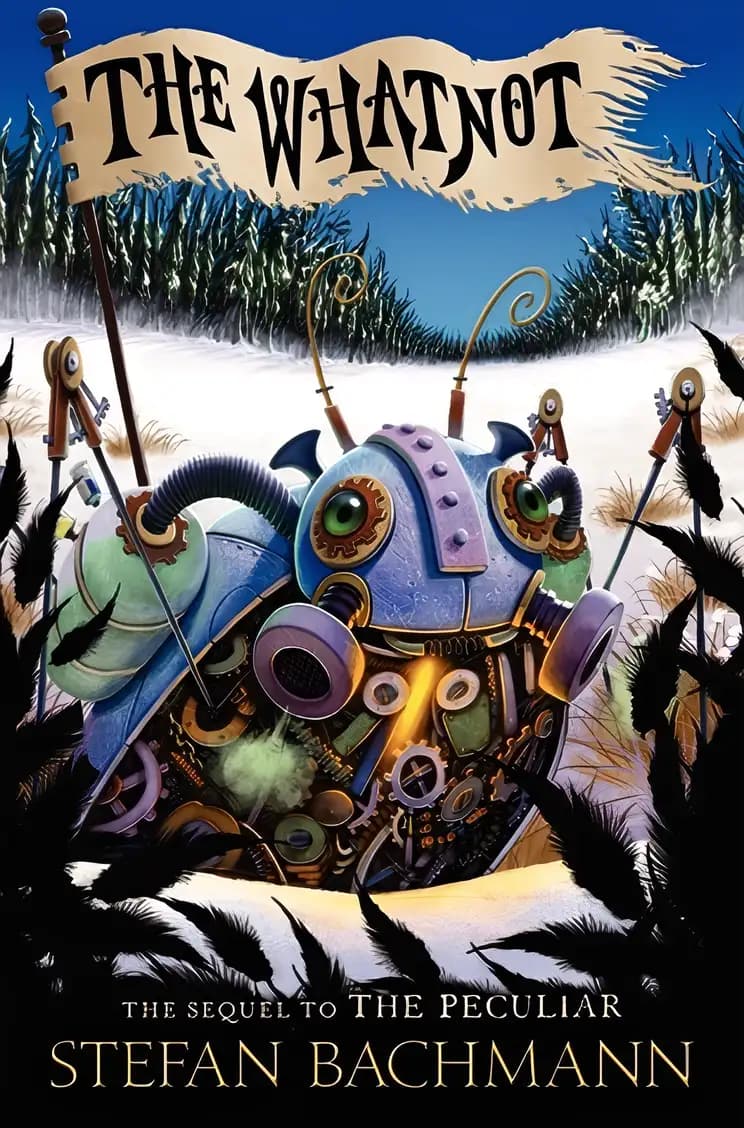
The Whatnot
#2 of 2 in The Peculiar Series
on Goodreads (993)
What’s inside...
In 'The Whatnot', Pikey Thomas discovers he can see a changeling girl named Henrietta Kettle, who appears to him in visions of an enchanted Old Country. Teaming up with her brave brother, Bartholomew Kettle, Pikey sets out on an adventure to find the doorway that will lead them to Hettie, all while navigating a world where faeries have been forced out of London and an army marches north. This companion novel to Stefan Bachmann’s 'The Peculiar' is a tale of adventure, mystery, and the quest for a life worth living.
Character compass
Pikey Thomas
Hettie Kettle
Discussion points
What do you think makes Pikey unique and how do you see your own uniqueness?
How do the different characters in the story show courage? Can you think of a time when you were brave?
The book blends magical elements with real-world settings. What was your favorite magical part and why?
What lessons do you think Pikey learned throughout his adventures? Have you learned similar lessons in your life?
How do the relationships in the book change from the beginning to the end? What does this say about friendship and trust?
Tip: Role play these questions
Encourage your child to describe their favorite character or part of the book, and why it resonated with them. This not only deepens their understanding but also enhances their ability to express thoughts and preferences.
As you discuss the book's various scenarios, relate them to real-life situations your child might encounter. This can help them apply the moral lessons of the story to their own experiences.
Use the book’s magical elements as a creative prompt. Ask your child how they might use magic to solve a problem they’ve faced, blending imagination with problem-solving skills.
Highlight moments in the story where characters have to make difficult choices, and ask your child what they would have done in the same situation to foster critical thinking.
After finishing the book, encourage your child to draw or write a short story about a new adventure for Pikey, helping them engage creatively with the content while practicing literacy skills.
Key lessons
Example Lesson: The importance of friendship and loyalty
Explanation: In 'The Whatnot', the characters illustrate deep bonds of friendship that help them navigate through challenging and perilous adventures. Their loyalty to each other provides strength and safety.
Real-World Application: Children can learn the value of supporting their friends and standing by them during difficult times, thereby building strong, supportive relationships in their own lives.
Example Lesson: Acceptance of differences
Explanation: The story showcases a variety of characters, each with unique qualities and differences. The narrative emphasizes how these differences contribute positively to the group's dynamics and their ability to overcome obstacles.
Real-World Application: This lesson encourages children to appreciate and embrace diversity among their peers, fostering an inclusive environment at school and in other social settings.
Example Lesson: Courage in the face of adversity
Explanation: The protagonists in 'The Whatnot' often face daunting challenges and threats. Despite their fears, they display courage and determination to protect their world and each other.
Real-World Application: Children can be inspired to confront their own fears and challenges bravely, understanding that courage is not the absence of fear, but the determination to act despite it.
Example Lesson: The power of curiosity and imagination
Explanation: The inventive and imaginative elements of 'The Whatnot' drive the plot and solve problems creatively. The characters' curiosity opens up new possibilities and solutions.
Real-World Application: This lesson teaches children the importance of thinking outside the box and using their imagination and curiosity to learn and discover new ideas in their daily activities and studies.
Example Lesson: Responsibility and decision-making
Explanation: Characters in 'The Whatnot' are often placed in situations where their choices impact not only themselves but their friends and the broader world. Their journey underscores the weight and consequences of their decisions.
Real-World Application: Children can learn to think critically about the effects of their decisions and to take responsibility for their actions in social and academic scenarios.