
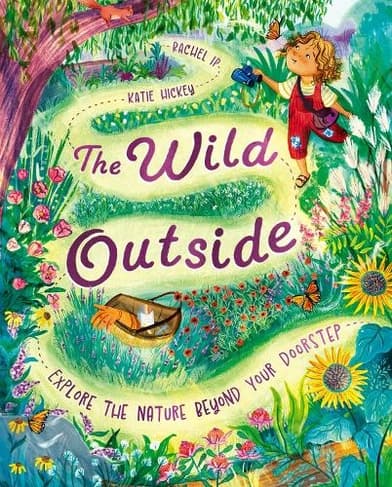
The Wild Outside
What’s inside...
The Wild Outside follows Maya, a young girl who discovers a magical world beyond her backyard. With her new animal friends, she embarks on a quest to save the enchanted realm from an impending threat. Similarly, Tulip, another curious child, loves exploring nature on her daily walks. She learns about the trees, plants, and flowers she encounters through a nature trail drawn in chalk on her street and a special book of nature she receives as a gift. Both stories highlight the spirit of adventure and the importance of learning about and preserving the natural world around us.
Age
8-12
Length
32 pages
Text complexity
Discussion points
What do you think it feels like to explore the wild outside?
Can you describe your favorite outdoor adventure and why it was special to you?
How do you think the characters felt during their journey in the story?
What would you do if you found yourself in a similar outdoor situation as in the book?
If you could ask the author one question about the book, what would it be?
Tip: Role play these questions
Before reading, ask your child what they know about the wilderness or exploring nature to gauge their initial thoughts.
While discussing the book, relate the themes to your child’s personal experiences with outdoor activities or family trips.
Encourage your child to imagine themselves in the story’s setting and ask them what they would do differently.
After reading, plan a family outing that mirrors an adventure from the book to bring the story to life.
Encourage your child to draw or write a short story about their ideal outdoor adventure, inspired by the book.
Key lessons
Example Lesson: Respect for nature
Explanation: The story showcases the protagonist's adventures in the wild, emphasizing a harmonious relationship with nature.
Real-World Application: Children can learn to appreciate and care for their natural environment, fostering a sense of responsibility towards Earth.
Example Lesson: Courage and bravery
Explanation: The protagonist faces various challenges in the wild, demonstrating courage in overcoming fears.
Real-World Application: This can inspire children to face their own fears and challenges, whether at school, in sports, or in social situations.
Example Lesson: The importance of curiosity
Explanation: The main character's curiosity leads them to explore new places and learn new things about the world.
Real-World Application: Encourages children to ask questions and seek out knowledge, enhancing their educational experience and personal growth.
Example Lesson: Problem-solving skills
Explanation: Throughout the book, the protagonist encounters problems that require creative solutions.
Real-World Application: Kids can apply problem-solving skills in everyday tasks and challenges, making them more independent and resourceful.
Example Lesson: Building friendships
Explanation: The story highlights the protagonist forming bonds with other characters encountered in the wild.
Real-World Application: Teaches children the value of friendship and how to cultivate relationships through empathy and mutual respect.