
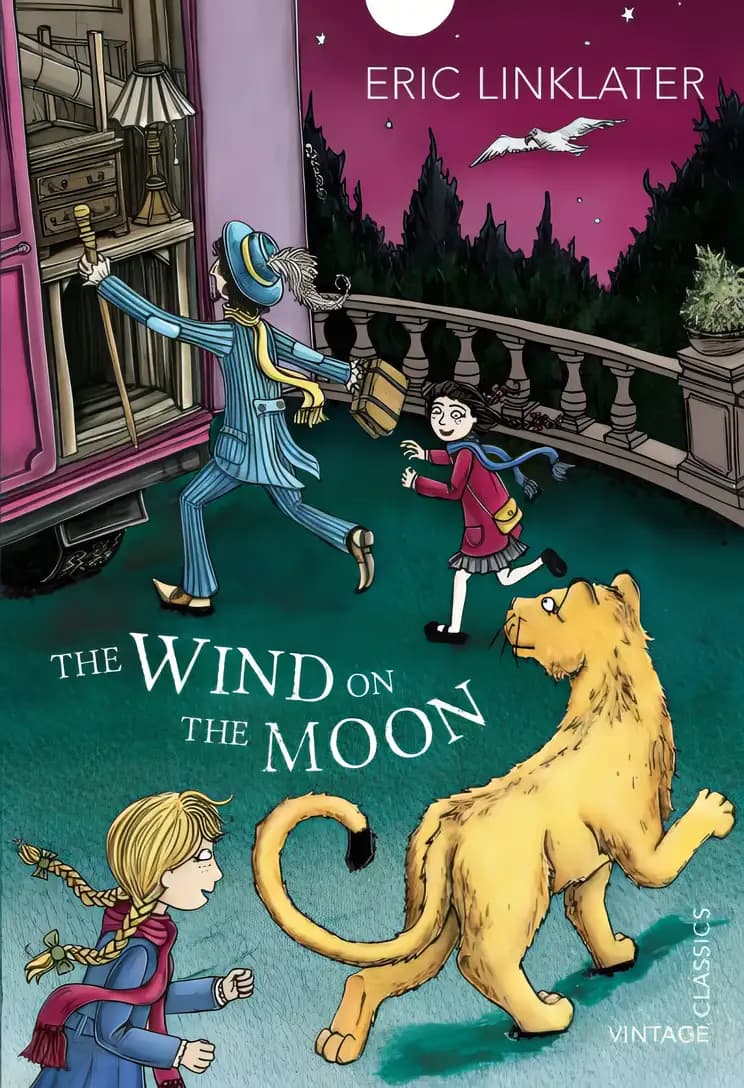
The Wind on the Moon (New York Review Children's Collection)
The New York Review children's collection Series
What’s inside...
In the English village of Midmeddlecum, two mischievous sisters, Dinah and Dorinda, are transformed into kangaroos by a witch's potion and embark on a thrilling adventure to rescue their father from Count Hulagu Bloot, the tyrant of Bombardy. Along the way, they stage an escape from the local zoo, team up with a golden puma and a silver falcon, and fight for freedom and justice. The Wind on the Moon, a winner of the Carnegie Medal, is a tale of hilarity, adventure, and the importance of freedom.
Series reading
Non-Sequential
Age
11-12
Length
448 pages
Text complexity
Character compass
Dinah Palfrey
Dorinda Palfrey
Major Palfrey
Count Hulagu Bloot
Discussion points
What do you think motivated the girls to have the adventures they did?
How did Dinah and Dorinda change by the end of the story?
What does freedom mean to you after reading about their experiences?
How do you think the sisters felt when they could finally do what they wanted?
Which part of their adventure would you like to experience and why?
Tip: Role play these questions
While discussing the themes, allow your child to express their thoughts freely without correcting them immediately. This can lead to a deeper understanding of the text.
Relate the sisters' adventures to your child's personal experiences, asking if they've ever wished for similar freedom or faced similar consequences.
Encourage your child to think about what 'freedom' and 'responsibility' mean to them, drawing parallels to the characters' journey in the book.
Ask your child to consider the different character traits exhibited by Dinah and Dorinda and explore how these traits influenced the story’s outcome.
Use expressive reading to bring the adventures to life, making it more engaging and aiding in their comprehension of the narrative.
Key lessons
Example Lesson: The importance of curiosity and adventure
Explanation: In 'The Wind on the Moon', the protagonists, Dinah and Dorinda, are driven by their curiosity and sense of adventure which leads them to explore and understand their world better.
Real-World Application: Encourages children to explore new hobbies and learn about different cultures, broadening their perspectives and understanding of the world.
Example Lesson: Consequences of misbehavior
Explanation: Throughout the book, the sisters’ mischievous acts often lead to unintended consequences, teaching them about responsibility.
Real-World Application: Helps children understand that their actions have consequences and teaches them to think before acting.
Example Lesson: Value of resilience and problem-solving
Explanation: Dinah and Dorinda face numerous challenges but their resilience helps them to find creative solutions.
Real-World Application: Instills the value of perseverance and creative thinking in overcoming obstacles in everyday life.
Example Lesson: Empathy and kindness
Explanation: The sisters learn to empathize with other characters' feelings and situations, which changes their outlook and actions towards others.
Real-World Application: Teaches children the importance of understanding others' emotions and perspectives, fostering empathy and social skills.
Example Lesson: The power of teamwork
Explanation: Many of the problems the sisters face are solved through working together, highlighting the benefits of collaboration.
Real-World Application: Encourages children to cooperate with others to achieve common goals, enhancing their ability to work in teams.