
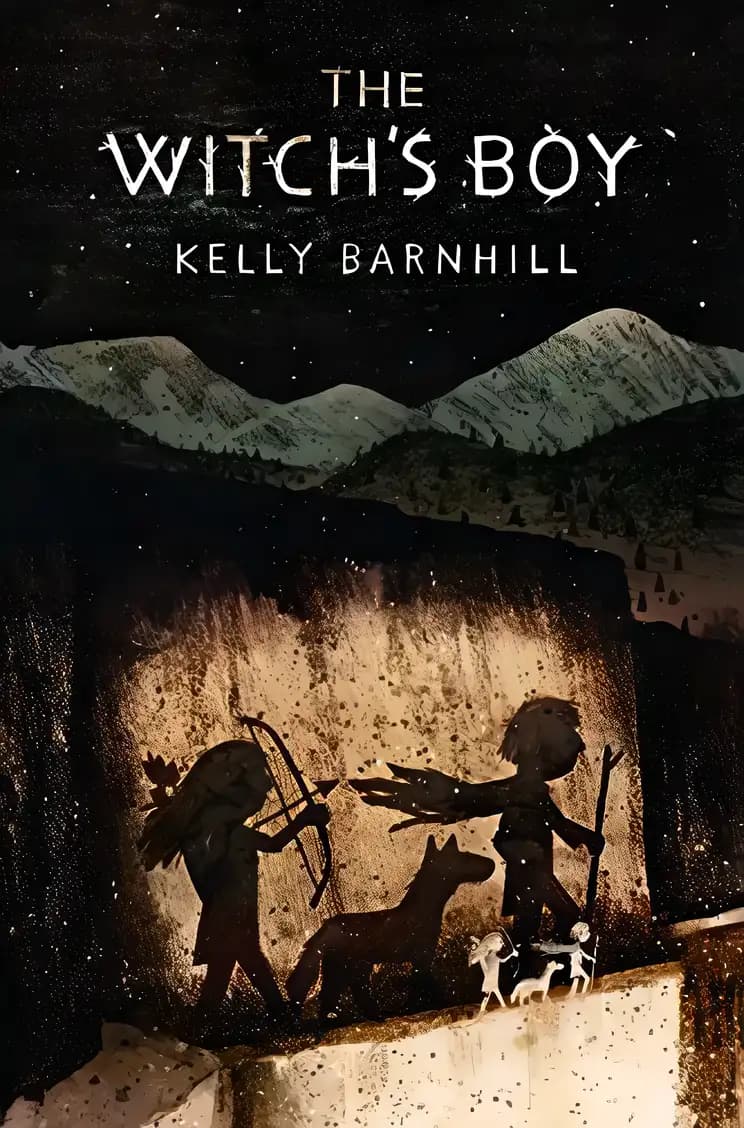
The Witch's Boy
#1 in The Witch's Boy Series
on Goodreads (7,219)
What’s inside...
The story follows a boy named Ned, who is the child of a witch, and Ærin, a girl who loves magic. When bandits seek to steal the witch's magic, Ned and Ærin must work together to protect it. Their journey leads them on an epic adventure full of self-discovery, magic, and friendship. Along the way, they encounter speaking stones, a friendly wolf, and a spoiled young king. The narrative, rich in classic fairy tale elements, delves into themes of good and evil, love and hate, and the power of friendship.
Character compass
Ned
Ainé
Sister Witch
The Bandit King
Discussion points
How do you think Ned felt being called the 'wrong boy'? How would you feel in his place?
What do you think the magical stones represent in the story?
Why do you think Sister Witch decided to save Ned? What does this tell us about her character?
How do the characters in the book demonstrate bravery? Can you think of a time when you were brave?
What lessons did Ned learn throughout his journey? How do you think these lessons changed him?
Tip: Role play these questions
Start the conversation by sharing your own thoughts on the book's themes and characters to create an open environment for discussion.
Encourage your child to express their thoughts and feelings about the story, even if they are different from your own.
Ask follow-up questions based on your child's responses to deepen the conversation and enhance their critical thinking skills.
Relate the book's themes to real-life scenarios your child might encounter to help them connect and empathize with the characters.
Praise your child's insights and contributions to the discussion to boost their confidence and engagement in reading.
Key lessons
Example Lesson: The importance of self-acceptance
Explanation: In 'The Witch's Boy', the main character, Ned, learns to accept his perceived imperfections and understands that they do not define his entire being.
Real-World Application: Children can learn to appreciate their unique traits and understand that everyone has strengths and weaknesses, fostering a healthy self-esteem.
Example Lesson: The power of friendship and trust
Explanation: Throughout the book, Ned forms a deep bond with Áine, demonstrating that trust and collaboration can overcome great obstacles.
Real-World Application: This encourages children to nurture friendships and build trust with peers, which is crucial for developing social skills and emotional intelligence.
Example Lesson: The consequences of greed
Explanation: The story showcases how the desire for power, represented by the magic that many seek to control, leads to destructive outcomes.
Real-World Application: Children learn the value of contentment and the risks associated with greed, promoting moral integrity and decision-making skills.
Example Lesson: Courage to face fears
Explanation: Ned's journey is fraught with challenges that he must overcome, illustrating that bravery is not the absence of fear, but the ability to move forward in spite of it.
Real-World Application: This lesson helps children understand that facing fears is a part of growth and encourages them to tackle their own challenges confidently.
Example Lesson: The impact of kindness and compassion
Explanation: Characters in the book who act with kindness, such as Ned and his mother, bring about positive change and healing, showing how compassion can influence others.
Real-World Application: This teaches children the importance of empathy and helping others, which are essential for building meaningful relationships and community connections.