
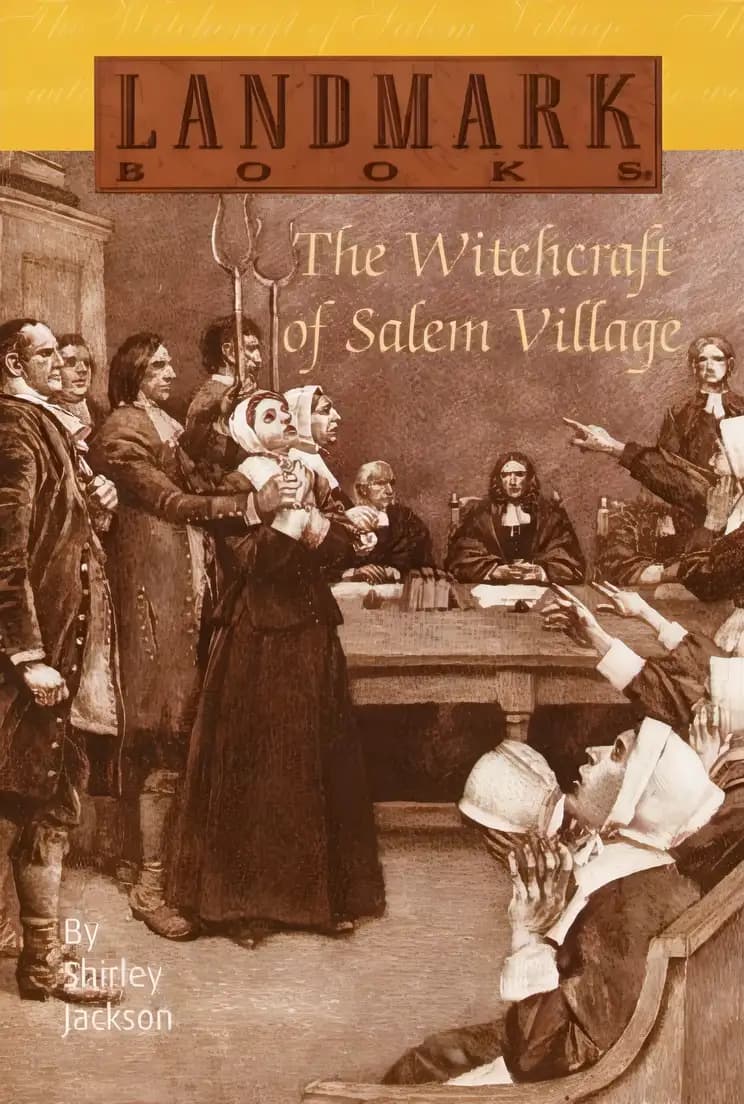
The Witchcraft of Salem Village (Landmark Books)
#69 in Landmark Books Series
on Goodreads (4,522)
What’s inside...
Stories of magic, superstition, and witchcraft were strictly forbidden in the little town of Salem Village. But a group of young girls ignored those rules, spellbound by the tales told by a woman named Tituba. When questioned about their activities, the terrified girls set off a whirlwind of controversy as they accused townsperson after townsperson of being witches. Author Shirley Jackson examines in careful detail this horrifying true story of accusations, trials, and executions that shook a community to its foundations.
Discussion points
Why do you think the people of Salem Village were so afraid of witchcraft?
What can we learn from how the accused witches were treated?
How do you think the story would change if it happened in today’s world?
What feelings do you think the characters experienced during the trials?
Can you think of a situation where it's important to stand up for what is right, even if it's difficult?
Tip: Role play these questions
Encourage your child to express their thoughts and feelings about the story, affirming their views and gently expanding on their ideas.
Draw parallels between the historical events in the book and current events, fostering a deeper understanding of the story’s relevance.
Ask your child to imagine alternative outcomes in the story, which can help develop their critical thinking and creativity.
Discuss the importance of fairness and justice, relating these themes to the child’s everyday experiences at school or at home.
Highlight the significance of understanding history to prevent the repetition of past mistakes, making the discussion both educational and meaningful.
Key lessons
Example Lesson: Critical thinking
Explanation: The book explores the events of the Salem Witch Trials, prompting readers to think critically about the consequences of hysteria and false accusations.
Real-World Application: Children can learn to question information, think critically about sources, and form their own opinions before passing judgment.
Example Lesson: Empathy
Explanation: By witnessing the struggles and unfair treatment of accused individuals, readers develop a sense of empathy for those who were misunderstood or wrongfully blamed.
Real-World Application: This helps children understand the importance of being compassionate and considerate in their interactions with others, particularly in situations involving conflicts or accusations.
Example Lesson: Importance of justice and fairness
Explanation: The book illustrates the grave outcomes that can arise from a lack of fairness in the judicial process, teaching about the importance of legal rights and equality before the law.
Real-World Application: Children are encouraged to value and advocate for fair treatment not only for themselves but also for others in their community and daily interactions.
Example Lesson: History’s lessons
Explanation: Through the historical account of the Salem Witch Trials, readers learn how history can teach us valuable lessons about human nature and societal behavior.
Real-World Application: This lesson aids children in understanding the relevance of history in contemporary society and the importance of learning from past mistakes to prevent them in the future.