
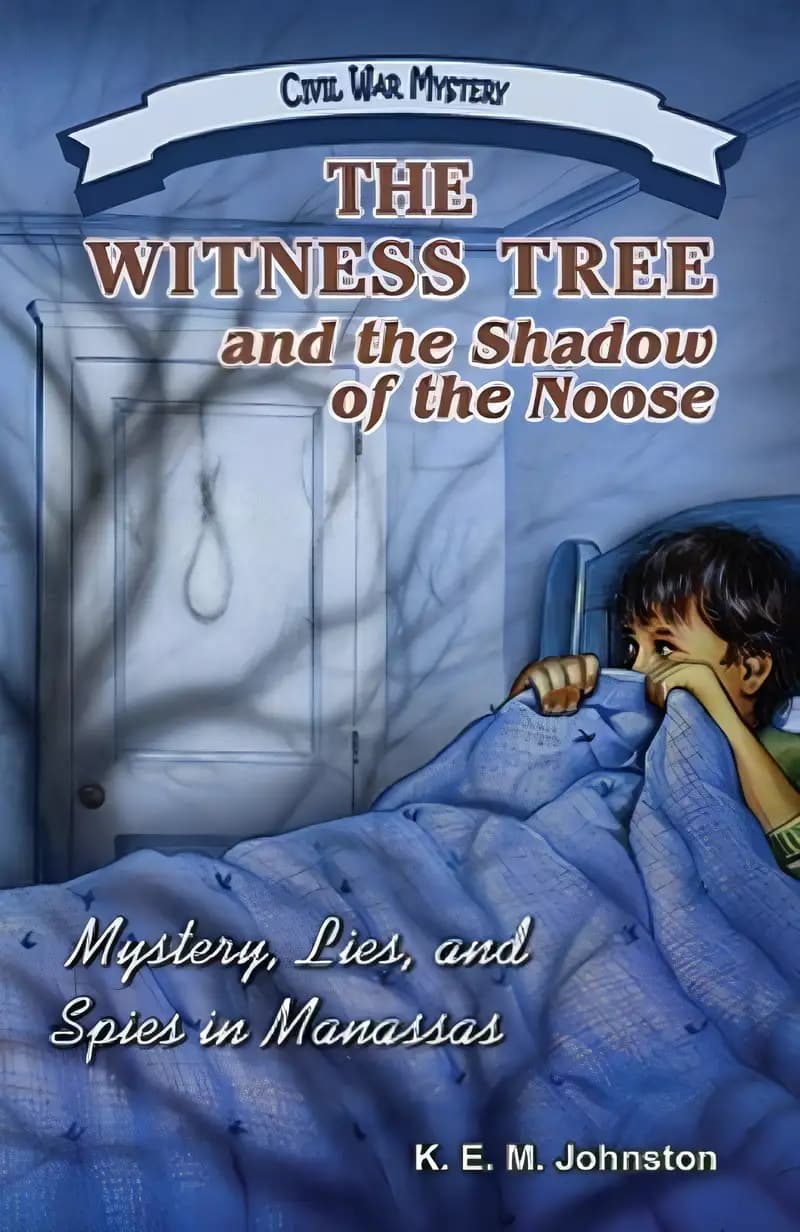
The Witness Tree and the Shadow of the Noose: Mystery, Lies, and Spies in Manassas (Civil War Mystery)
The Civil War Series
What’s inside...
When twelve-year-old Jake's family moves to a creepy, cramped house in historic Manassas, Virginia, on the outskirts of the famous Civil War battlefield, Jake encounters the ghost of a Confederate soldier and sets out to solve the mystery of his death. Jake Salmon's family has moved to a creepy, cramped house in historic Manassas, on the outskirts of the famous Civil War battlefield. Outside his bedroom window stands an old oak tree where, by night, a street lamp throws a shadow from the tree onto his closet door in the appearance of a hang-man's noose. Late one night, Jake hears footsteps in the basement. Convinced there's a killer hiding in his house, he does what any other twelve-year-old would do. He ducks under his pillow and hides. But when he witnesses a man running across their snow-covered lawn without leaving any footprints, Jake is faced with the possibility that the axe-wielding madman may in fact be a ghost. Not exactly something you're open to in middle school. Ghosts aren't real. They're right up there with fairies and goblins and monsters in the closet. Right? However, after the previous homeowner confirms dangerous encounters with the ghost of Confederate soldier Thomas Garnet, Jake, along with his friend Raj, and his younger brother and Civil War buff, Danny, sets out to uncover the mystery. At the Manassas battlefield museum where Jake's mom works as a curator, the boys discover diary entries shedding light on Tom Garnet's fate. Can the boys solve this mystery of history?
Series reading
Non-Sequential
Age
10-12
Length
111 pages
Text complexity
Discussion points
What do you think motivates the characters to solve the mystery in the story?
How do the characters change throughout the book, and what do you think causes these changes?
What lessons do the characters learn about trust and friendship?
How does the setting in Manassas during the Civil War impact the story?
If you were in the story, what would you have done differently?
Tip: Role play these questions
Encourage your child to put themselves in the shoes of the characters, promoting empathy and understanding. Use the historical setting as a springboard to discuss the importance of history and its impact on personal stories. Highlight the themes of trust and friendship, asking your child to relate them to their own experiences. Lastly, applaud your child's insights and responses to foster confidence and a deeper connection with the reading material.
Key lessons
Example Lesson: The importance of critical thinking
Explanation: The book's plot revolves around unraveling the truth from a mesh of lies and deception, illustrating the necessity of critical thinking.
Real-World Application: Children can apply this skill to distinguish between fact and fiction in their daily interactions and academic pursuits.
Example Lesson: Understanding historical context
Explanation: Set during the Civil War, the story deepens understanding of this significant historical period, emphasizing how past events shape societies.
Real-World Application: This lesson helps children appreciate history and recognize its impact on current social and political environments.
Example Lesson: The value of perseverance
Explanation: Characters in the book face numerous challenges and adversities, demonstrating perseverance towards achieving goals despite obstacles.
Real-World Application: Children learn the merit of persistence in overcoming personal challenges, whether in education, sports, or relationships.
Example Lesson: Ethics and making morally sound decisions
Explanation: The protagonists often face moral dilemmas, stressing the importance of ethical decision-making.
Real-World Application: Children are encouraged to think about the consequences of their actions and strive to make choices that reflect integrity and respect for others.